

Conscious Chemist
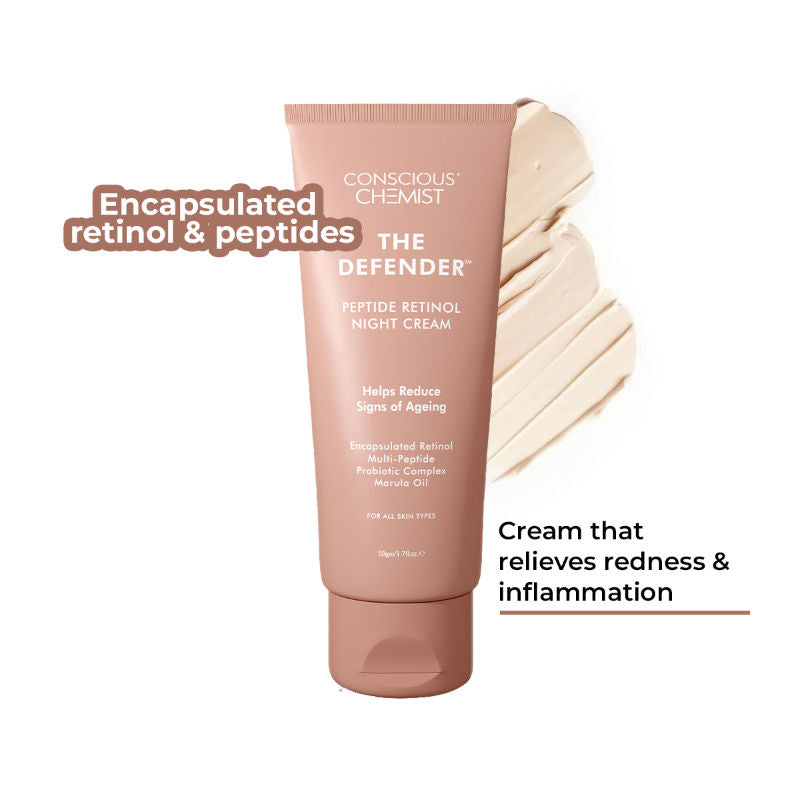
The Defender Multi Peptide Retinol Anti Aging Night Gel Cream For Fine Lines & Sagging Skin

The Defender Multi Peptide Retinol Anti Aging Night Gel Cream For Fine Lines & Sagging Skin
Conscious Chemist
the-defender-multi-peptide-retinol-anti-aging-night-gel-cream-for-fine-lines-sagging-skin
Moisturize
10084794827045
Morning or Evening?
How often will you use this product?
Notes


Highlights
WHAT IS IT?
Night Cream, contains multiple peptides and retinol
FEATURES
Lightweight gel formula, anti-aging properties, smoothens fine lines, nourishes, non-sticky and non-greasy
BEST FOR
sensitive
CHECKS
No parabens, No harsh chemical preservatives
Who Is It For?
Both Men And Women All Skin TypesWhat Does It Help With?
Fine Lines Reduction Anti-aging Skin Nourishment Sagging SkinBudget
Affordable (under $30)How To Use
Which routine should it be used in?
Instructions:
Key Information


What Conscious Chemist Says
Product Description:
Anti-aging night gel cream with multi peptides and retinol for fine lines and sagging skin.
About the Brand:
Ingredients Overview
Ingredients List
Aqua,Propylene-glycol,Isopropyl-myristate,Glyceryl-monostearate,Cetearyl-olivate,Sorbitan-olivate,Cetostearyl-alcohol,Dimethicone,Caprylic/Capric-triglyceride,Cocos-nucifera-coconut-oil,Sodium-acrylates/Beheneth-25-methacrylate-crosspolymer,Hydrogenated-polydecene,Lauryl-glucoside,Phenoxyethanol,Helianthus-annuus-seed-oil,Alcohol,Glyceryl-monooleate,Glycyrrhiza-glabra-licorice-root-extract,Allantoin,Mauritia-flexuosa-buriti-fruit-oil,Retinol,Polysorbate-20,Butylated-hydroxy-anisol,Lecithin,Acetyl-glutamine,SH-Oligopeptide-1,SH-Oligopeptide-2,SH-Polypeptide-1,SH-Polypeptide-9,SH-Polypeptide-11,Bacillus/soybean-ferment-extract,Sodium-hyaluronate,Caprylyl-glycol,Butylene-glycol,Hexapeptide-11,Leuconostoc/radish-root-ferment-filtrate,Tocopheryl-acetate,Bisabolol,Adansonia-digitate-baobab-oil,Caffeine,Butylated-hydroxytoluene,Disodium-EDTA,Sclerocarya-birrea-marula-fruit-oil,Ubiquinone
Key Ingredients
Multi Peptides, Retinol, Licorice Root Extract, Sodium Hyaluronate, Baobab Oil, Caffeine
Ingredients Details
Alcohol
Common Name(s): Alcohol,cosmetic active,functional ingredient
CAS Number: N/a
DESCRIPTION
What It Does: Delivers characteristic cosmetic function at recommended use concentration.
Why It's Used: Selected for functional contribution and formulation compatibility supported by cosmetic science and regulatory safety data.
How It Works: Works through the mechanism of its molecular class as documented in peer-reviewed cosmetic literature.
Typically Found In: Skin care formulations
TECHNICAL DETAILS
Primary Category: Active ingredient – cosmetic active
Secondary Functions: Skin conditioning
Application Areas:

Facial Skincare

Body Care
Hair Care
Beard Care
Color Cosmetics (Makeup)
Dietary/Oral Supplements
Typical Concentration Range: 0.1%–10%
SOURCING & ETHICS
Vegan Status: Yes - standard ethanol routes are non-animal; confirm denaturant origin
Halal Status: Conditional - ethanol production route and residual concentration; jurisdiction-dependent, refer to certifier stance
Source Notes: Commercially produced for cosmetic use. verify vegan/halal status with supplier. [audit 2026-07-29 rev2: ethanol pathway; determination depends on route, on whether the plant also produces beverage alcohol, and on residual concentration. determination requires shariah-panel sign-off.]
SKIN COMPATIBILITY
Irritancy Rating: 1/5 – very low
Comedogenicity Rating: 0/5 – non-comedogenic
Sensitivity Concerns: Well-tolerated by most skin types.
Safe for Sensitive Skin: Yes
SAFETY & COMPATIBILITY
Safety Profile: Good safety profile at recommended concentrations. ewg score: 1–2.
Works Well With: Standard skincare actives
Avoid Combining With: No known significant incompatibilities
SCIENTIFIC NOTE
Alcohol has an established safety profile within the cosmetic regulatory framework at standard use concentrations.
Last Verified: 2026-03-12
Primary Sources: Cosing database,alcohol technical literature
Allantoin
Common Name(s): 5-ureidohydantoin,glyoxyldiureide,aluminum dihydroxy allantoinate
CAS Number: 97-59-6
DESCRIPTION
What It Does: Soothes irritation, accelerates wound healing, promotes skin cell renewal, and provides mild keratolytic exfoliation.
Why It's Used: Gold standard multi-function soothing active – one of the most widely used cosmetic ingredients across all product types for its exceptional tolerability and clinically proven multi-action skin conditioning.
How It Works: Promotes keratinocyte proliferation and fibroblast migration for wound healing. mild keratolytic activity by disrupting corneocyte binding. anti-irritant via direct protein binding and anti-inflammatory cytokine reduction. humectant activity via hydroxyl groups.
Typically Found In: Post-procedure products,sensitive skin formulas,wound care,anti-acne treatments,baby products
TECHNICAL DETAILS
Primary Category: Active ingredient – soothing / anti-inflammatory
Secondary Functions: Wound healing,keratolytic,anti-irritant
Application Areas:
Facial Skincare
Body Care
Hair Care
Beard Care
Color Cosmetics (Makeup)
Dietary/Oral Supplements
Typical Concentration Range: 0.1%–2%
SOURCING & ETHICS
Vegan Status: Conditional - feedstock declaration required
Halal Status: Unverified - feedstock declaration required (plant, animal and petrochemical routes all exist)
Source Notes: Plant-derived extract or synthetic. [audit 2026-07-29 rev2: origin-dependent: the same inci exists in plant, animal and petrochemical versions and the name does not discriminate. determination requires shariah-panel sign-off.]
SKIN COMPATIBILITY
Irritancy Rating: 1/5 – very low
Comedogenicity Rating: 0/5 – non-comedogenic
Sensitivity Concerns: Exceptionally well-tolerated; suitable for all skin types including baby and compromised skin.
Safe for Sensitive Skin: Yes – particularly recommended for sensitive skin
SAFETY & COMPATIBILITY
Safety Profile: Excellent safety profile. ewg score: 1.
Works Well With: Ceramides,panthenol,allantoin,hyaluronic acid,centella asiatica
Avoid Combining With: No significant incompatibilities
SCIENTIFIC NOTE
Allantoin's keratinocyte proliferation stimulation occurs via receptor-mediated signaling (possibly machr activation) rather than non-specific irritation-driven proliferation, making it a true wound-healing stimulant rather than a pro-inflammatory proliferative signal.
Last Verified: 2026-03-12
Primary Sources: Cosing database,cir safety assessment,araújo et al. allantoin review
Bisabolol
Common Name(s): Alpha-bisabolol,levomenol,(-)-alpha-bisabolol
CAS Number: 515-69-5
DESCRIPTION
What It Does: Reduces skin inflammation, soothes irritation, promotes wound healing, and enhances penetration of co-formulated actives.
Why It's Used: Premium natural soothing active with combined anti-inflammatory, wound healing, and penetration-enhancing activity – clinically validated across sensitive, reactive, and irritated skin types.
How It Works: Inhibits nf-kb pathway reducing pro-inflammatory cytokines il-1β, il-6, tnf-α. enhances stratum corneum lipid fluidity increasing penetration of co-delivered actives. antimicrobial against s. aureus and c. albicans. promotes keratinocyte migration for wound healing.
Typically Found In: Sensitive skin products,post-procedure formulations,anti-irritant formulas,wound healing
TECHNICAL DETAILS
Primary Category: Active ingredient – soothing / anti-inflammatory
Secondary Functions: Anti-inflammatory,penetration enhancement,antimicrobial
Application Areas:
Facial Skincare
Body Care
Hair Care
Beard Care
Color Cosmetics (Makeup)
Dietary/Oral Supplements
Typical Concentration Range: 0.1%–1%
SOURCING & ETHICS
Vegan Status: Conditional - supplier confirmation required
Halal Status: Unverified - supplier confirmation required
Source Notes: Natural (-)-alpha-bisabolol from brazilian candeia tree is more sustainable and potent than chamomile-derived bisabolol. synthetic (±)-bisabolol is racemic with slightly lower anti-inflammatory potency. [audit 2026-07-29 rev2: status downgraded on audit. determination requires shariah-panel sign-off.]
SKIN COMPATIBILITY
Irritancy Rating: 1/5 – very low
Comedogenicity Rating: 0/5 – non-comedogenic
Sensitivity Concerns: Non-irritating; ideal for reactive and sensitive skin.
Safe for Sensitive Skin: Yes – particularly recommended for sensitive skin
SAFETY & COMPATIBILITY
Safety Profile: Excellent safety profile. ewg score: 1.
Works Well With: Ceramides,panthenol,allantoin,hyaluronic acid,centella asiatica
Avoid Combining With: No significant incompatibilities
SCIENTIFIC NOTE
Bisabolol's dual function as both an anti-inflammatory and a penetration enhancer is synergistic – by reducing the inflammatory response that increases barrier tightness while simultaneously fluidizing stratum corneum lipids, it provides enhanced delivery of co-formulated actives in the very conditions where delivery is most needed.
Last Verified: 2026-03-12
Primary Sources: Cosing database,piazza et al. bisabolol anti-inflammatory study,cir safety assessment
Caffeine
Common Name(s): Caffeine,methylxanthine anti-cellulite,antioxidant vasoactive
CAS Number: N/a
DESCRIPTION
What It Does: Stimulates lipolysis in adipocytes by inhibiting phosphodiesterase (preventing camp breakdown), reduces eye puffiness through vasoconstriction of periorbital capillaries, and provides antioxidant dna repair stimulation for photoprotective benefit.
Why It's Used: The only cosmetic active with a well-defined mechanism for anti-cellulite claims — phosphodiesterase inhibition elevating adipocyte camp is the documented biochemical pathway, providing mechanism-based efficacy substantiation superior to most slimming actives.
How It Works: Caffeine inhibits phosphodiesterase (pde3, pde4) preventing camp hydrolysis → elevated camp activates protein kinase a → phosphorylates hormone-sensitive lipase → lipolysis of triglycerides in adipocytes. for eye puffiness: caffeine's adenosine receptor antagonism reduces prostaglandin-mediated capillary dilation in periorbital tissue, reducing fluid accumulation.
Typically Found In: Anti-cellulite,eye creams,antioxidant products
TECHNICAL DETAILS
Primary Category: Active ingredient – antioxidant
Secondary Functions: Free radical scavenging,anti-aging
Application Areas:
Facial Skincare
Body Care
Hair Care
Beard Care
Color Cosmetics (Makeup)
Dietary/Oral Supplements
Typical Concentration Range: 0.1%–3%
SOURCING & ETHICS
Vegan Status: Conditional - supplier confirmation required
Halal Status: Unverified - supplier confirmation required
Source Notes: Plant-derived extract or synthetic. [audit 2026-07-29 rev2: status downgraded on audit. determination requires shariah-panel sign-off.]
SKIN COMPATIBILITY
Irritancy Rating: 1/5 – very low
Comedogenicity Rating: 0/5 – non-comedogenic
Sensitivity Concerns: Non-irritating; well-tolerated.
Safe for Sensitive Skin: Yes
SAFETY & COMPATIBILITY
Safety Profile: Excellent safety profile. ewg score: 1.
Works Well With: Vitamin c,vitamin e,ferulic acid,spf,other antioxidants
Avoid Combining With: No significant incompatibilities
SCIENTIFIC NOTE
Caffeine has one of the highest sc penetration rates of any cosmetic active (logp -0.07, mw 194 da) — the combination of small size and moderate logp providing excellent aqueous solubility with sufficient sc lipid partitioning for effective transdermal delivery to adipose tissue.
Last Verified: 2026-03-12
Primary Sources: Cosing database,caffeine pde inhibitor anti-cellulite lipolysis review