

The Derma co.
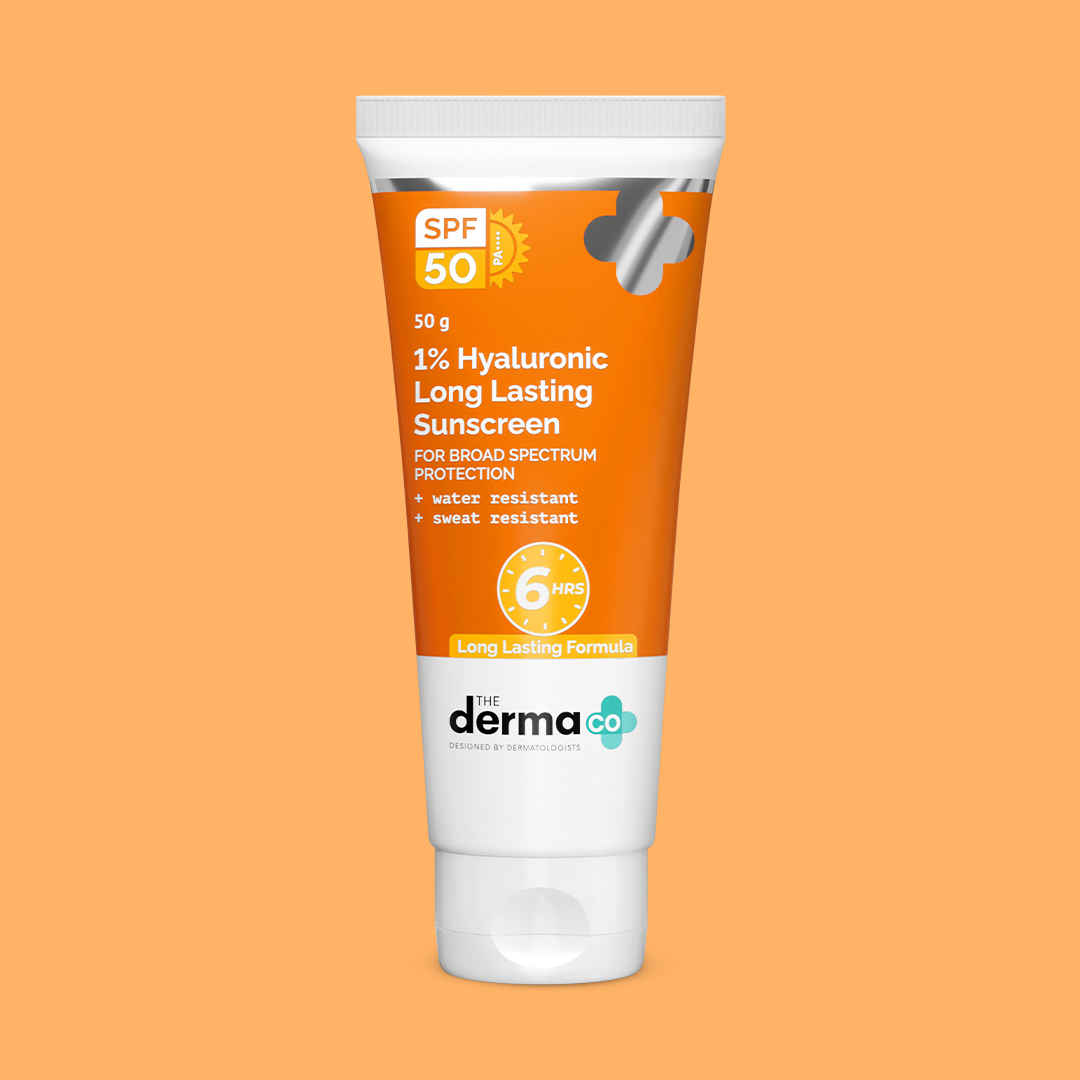
The Derma Co. 1% Hyaluronic Long Lasting Sunscreen SPF 50 & PA++++ with Hyaluronic Acid & Vitamin E for Upto 6-Hour Sun Protection- 50 gm

The Derma Co. 1% Hyaluronic Long Lasting Sunscreen SPF 50 & PA++++ with Hyaluronic Acid & Vitamin E for Upto 6-Hour Sun Protection- 50 gm
The Derma co.
the-derma-co-1-hyaluronic-long-lasting-sunscreen-spf-50-pa-with-hyaluronic-acid-vitamin-e-for-upto-6-hour-sun-protection-50-gm
Suncare
10084868981029
Morning or Evening?
How often will you use this product?
Notes


Highlights
WHAT IS IT?
Sunscreen with multiple key actives including Hyaluronic Acid and Vitamin E
FEATURES
SPF 50 & PA++++ for broad spectrum protection, protects for up to 6 hours without reapplication, Heat Shield Technology for temperature regulation, hydrates skin, fights free radical damage, supports skin barrier function, lightweight, non-greasy, sweat & water resistant.
BEST FOR
normal
CHECKS
No white cast, no need for frequent reapplication, sweat & water resistant, super lightweight and non-greasy
Who Is It For?
General Adult Use Gender Not SpecifiedWhat Does It Help With?
Broad Spectrum Uv Protection Hydration Antioxidant Protection Skin Barrier SupportBudget
Mid-range ($30-$75)How To Use
Which routine should it be used in?
Instructions:
Key Information


What The Derma co. Says
Product Description:
Sun Protection for upto 6 hours without any reapplication Yes we made it happen Introducing 1 Hyaluronic Long Lasting Sunscreen with SPF 50 & PA that protects your skin from the harsh UVAUVB rays for 6 whole hours. Powered with cuttingedge Heat Shield Technology it autoregulates temperature and protects against external aggressors. So no white cast & no need for frequent reapplication either. Formulated with Hyaluronic Acid this sunscreen deeply hydrates your skin keeping dryness at bay. Also enriched with Vitamin E a powerful antioxidant our sunscreen also fights free radical damage & supports skin barrier function. And what makes it even better This super lightweight & nongreasy sunscreen is sweat & water resistant too. All set to make 1 Hyaluronic Long Lasting Sunscreen your SPF partner for life We bet you are.
About the Brand:
Ingredients Overview
Ingredients List
Aqua, Cyclopentasiloxane, Ethylhexyl Methoxycinnamate, Titanium Dioxide, Diethylhexyl Butamido Triazone, Cetyl PEG/PPG-10/1 Dimethicone, Aluminum Chlorohydrate, Dimethicone/Vinyl Dimethicone Crosspolymer, Zinc Oxide, Coco-Caprylate/Caprate, Polyglyceryl-3 Polyricinoleate, Isostearic Acid, Isododecane, Disteardimonium Hectorite, Propylene Carbonate, Bis-Ethylhexyloxyphenol Methoxyphenyl Triazine, Hyaluronic Acid, Physalis Angulata Extract, Caprylic/Capric Triglyceride , Vitamin E, Fructooligosaccharides, Beta Vulgaris Root Extract, Glycerin, Butylene Glycol, Sodium Benzoate, Phenoxyethanol
Key Ingredients
Hyaluronic Acid,Vitamin E,Niacinamide,Titanium Dioxide,Vitamin C,Zinc Oxide,Glycerin
Ingredients Details
Aluminum Chlorohydrate
Common Name(s): Ach,aluminium chlorohydrate
CAS Number: 1327-41-9
DESCRIPTION
What It Does: Provides eccrine sweat gland occlusion for sweat and odour reduction.
Why It's Used: The global standard antiperspirant active with extensive safety assessment and reliable efficacy used by billions daily.
How It Works: Ach (al₂(oh)₅cl) hydrolyses in sweat to form aluminium hydroxide gel al(oh)₃. gel occludes upper eccrine duct lumen reducing sweat output by 20–40%. odour reduction from reduced moisture supporting bacterial growth. reversible — duct clears within days of cessation.
Typically Found In: Antiperspirant deodorants,roll-on,spray antiperspirants
TECHNICAL DETAILS
Primary Category: Active ingredient – antiperspirant
Secondary Functions: Skin conditioning
Application Areas:

Facial Skincare

Body Care
Hair Care
Beard Care
Color Cosmetics (Makeup)
Dietary/Oral Supplements
Typical Concentration Range: 15%–25%
SOURCING & ETHICS
Vegan Status: Yes – synthetic
Halal Status: Yes
Source Notes: Commercially produced for cosmetic use. verify vegan/halal status with supplier.
SKIN COMPATIBILITY
Irritancy Rating: 1/5 – very low
Comedogenicity Rating: 0/5 – non-comedogenic
Sensitivity Concerns: Well-tolerated by most skin types.
Safe for Sensitive Skin: Yes
SAFETY & COMPATIBILITY
Safety Profile: Fda otc antiperspirant drug. sccs assessed safe. concerns about breast cancer and alzheimer's disease links are not supported by scientific evidence.
Works Well With: Standard skincare actives
Avoid Combining With: No known significant incompatibilities
SCIENTIFIC NOTE
Ach's antiperspirant mechanism creates a self-limiting occlusion: the sweat that triggers al(oh)₃ gel formation also stops further sweat from passing through the occluded duct — a self-regulating mechanism driven by the eccrine gland's own secretions.
Last Verified: Cosing database,fda otc antiperspirant monograph,sccs aluminum safety assessment
Primary Sources: 2026-03-12
Beta Vulgaris Root Extract
Common Name(s): Beta vulgaris root extract,botanical extract,phytochemical active
CAS Number: N/a
DESCRIPTION
What It Does: Provides antioxidant protection, anti-inflammatory activity, and skin conditioning from polyphenols, terpenoids, and phytochemicals in the extract.
Why It's Used: Natural plant extracts provide multi-functional phytochemical profiles supporting concurrent skin care claims from one ingredient with authentic botanical heritage.
How It Works: Polyphenols scavenge ros via h• donation; terpenoids inhibit nf-kb or cox inflammatory pathways; vitamins and minerals provide cofactor skin nutrition.
Typically Found In: Botanical skin care,natural products
TECHNICAL DETAILS
Primary Category: Active ingredient – antioxidant
Secondary Functions: Free radical scavenging,anti-aging
Application Areas:
Facial Skincare
Body Care
Hair Care
Beard Care
Color Cosmetics (Makeup)
Dietary/Oral Supplements
Typical Concentration Range: 0.1%–30%
SOURCING & ETHICS
Vegan Status: Conditional
Halal Status: Conditional
Source Notes: Plant-derived extract or synthetic.
SKIN COMPATIBILITY
Irritancy Rating: 1/5 – very low
Comedogenicity Rating: 0/5 – non-comedogenic
Sensitivity Concerns: Non-irritating; well-tolerated.
Safe for Sensitive Skin: Yes
SAFETY & COMPATIBILITY
Safety Profile: Excellent safety profile. ewg score: 1.
Works Well With: Vitamin c,vitamin e,ferulic acid,spf,other antioxidants
Avoid Combining With: No significant incompatibilities
SCIENTIFIC NOTE
Plant secondary metabolites evolved for uv photoprotection and pathogen defence — mechanisms directly applicable to cosmetic antioxidant and anti-inflammatory activity in human skin.
Last Verified: Cosing database,beta vulgaris root extract botanical review
Primary Sources: 2026-03-12
Bis-ethylhexyloxyphenol Methoxyphenyl Triazine
Common Name(s): Bis-ethylhexyloxyphenol methoxyphenyl triazine,antimicrobial biocide,broad-spectrum preservative-grade
CAS Number: N/a
DESCRIPTION
What It Does: Kills bacteria, fungi, and viruses on skin and within formulations through membrane disruption, protein denaturation, or enzyme inhibition — providing antiseptic, preservation, or therapeutic antimicrobial protection.
Why It's Used: Chosen when broad-spectrum antimicrobial coverage including gram-negative bacteria (particularly pseudomonas) is required, where standard cosmetic preservatives provide insufficient protection for challenge tests.
How It Works: Cationic biocides (qacs) adsorb electrostatically to negative microbial surfaces then insert hydrophobic chains into lipid bilayers, collapsing membrane potential. non-ionic biocides (triclosan) inhibit fatty acid synthesis (fabi enoyl reductase). oxidants (h₂o₂, chlorine dioxide) oxidise microbial thiol enzymes non-specifically.
Typically Found In: Antiseptics,therapeutic skin care
TECHNICAL DETAILS
Primary Category: Active ingredient – cosmetic active
Secondary Functions: Skin conditioning
Application Areas:
Facial Skincare
Body Care
Hair Care
Beard Care
Color Cosmetics (Makeup)
Dietary/Oral Supplements
Typical Concentration Range: Check regulatory limits
SOURCING & ETHICS
Vegan Status: Yes
Halal Status: Yes
Source Notes: Commercially produced for cosmetic use. verify vegan/halal status with supplier.
SKIN COMPATIBILITY
Irritancy Rating: 1/5 – very low
Comedogenicity Rating: 0/5 – non-comedogenic
Sensitivity Concerns: Well-tolerated by most skin types.
Safe for Sensitive Skin: Yes
SAFETY & COMPATIBILITY
Safety Profile: Good safety profile at recommended concentrations. ewg score: 1–2.
Works Well With: Standard skincare actives
Avoid Combining With: No known significant incompatibilities
SCIENTIFIC NOTE
Regulatory limits vary significantly by compound and application — formulators must verify permitted concentrations in target market (eu annex v, fda otc monographs) before formulating at functional concentrations.
Last Verified: Cosing database,bis-ethylhexyloxyphenol methoxyphenyl triazine antimicrobial regulatory review
Primary Sources: 2026-03-12
Butylene Glycol
Common Name(s): 1,3-butanediol,bg,1,3-butylene glycol
CAS Number: 107-88-0
DESCRIPTION
What It Does: Provides humectant hydration and active ingredient solubilization with excellent skin feel.
Why It's Used: Preferred glycol humectant in premium and k-beauty formulations for superior skin feel vs propylene glycol with equivalent functionality.
How It Works: Two hydroxyl groups at 1,3-positions provide water binding and solvent activity. better tolerated than propylene glycol with minimal sensitization risk. 4-carbon backbone provides slightly greater hydrophobic character enabling dissolution of less polar actives vs pg.
Typically Found In: Toners,essences,serums,k-beauty formulas
TECHNICAL DETAILS
Primary Category: Functional ingredient – glycol humectant
Secondary Functions: Tewl reduction,skin plumping
Application Areas:
Facial Skincare
Body Care
Hair Care
Beard Care
Color Cosmetics (Makeup)
Dietary/Oral Supplements
Typical Concentration Range: 1%–10%
SOURCING & ETHICS
Vegan Status: Yes – synthetic
Halal Status: Yes
Source Notes: Synthetic or naturally derived. excellent aqueous solubility.
SKIN COMPATIBILITY
Irritancy Rating: 1/5 – very low
Comedogenicity Rating: 0/5 – non-comedogenic
Sensitivity Concerns: Non-irritating; suitable for all skin types.
Safe for Sensitive Skin: Yes
SAFETY & COMPATIBILITY
Safety Profile: Excellent safety profile. ewg score: 1.
Works Well With: Ceramides,emollients,occlusives,glycerin,hyaluronic acid
Avoid Combining With: No significant incompatibilities
SCIENTIFIC NOTE
K-beauty's preference for butylene glycol over propylene glycol is driven by two factors: bg's superior skin feel (less tacky than pg's higher viscosity) and its lower sensitization potential (1,3-bg has better spatial distribution of hydroxyl groups that reduces protein interaction vs pg's 1,2-position oh groups).
Last Verified: Cosing database,cir safety assessment
Primary Sources: 2026-03-12
