

The Derma co.
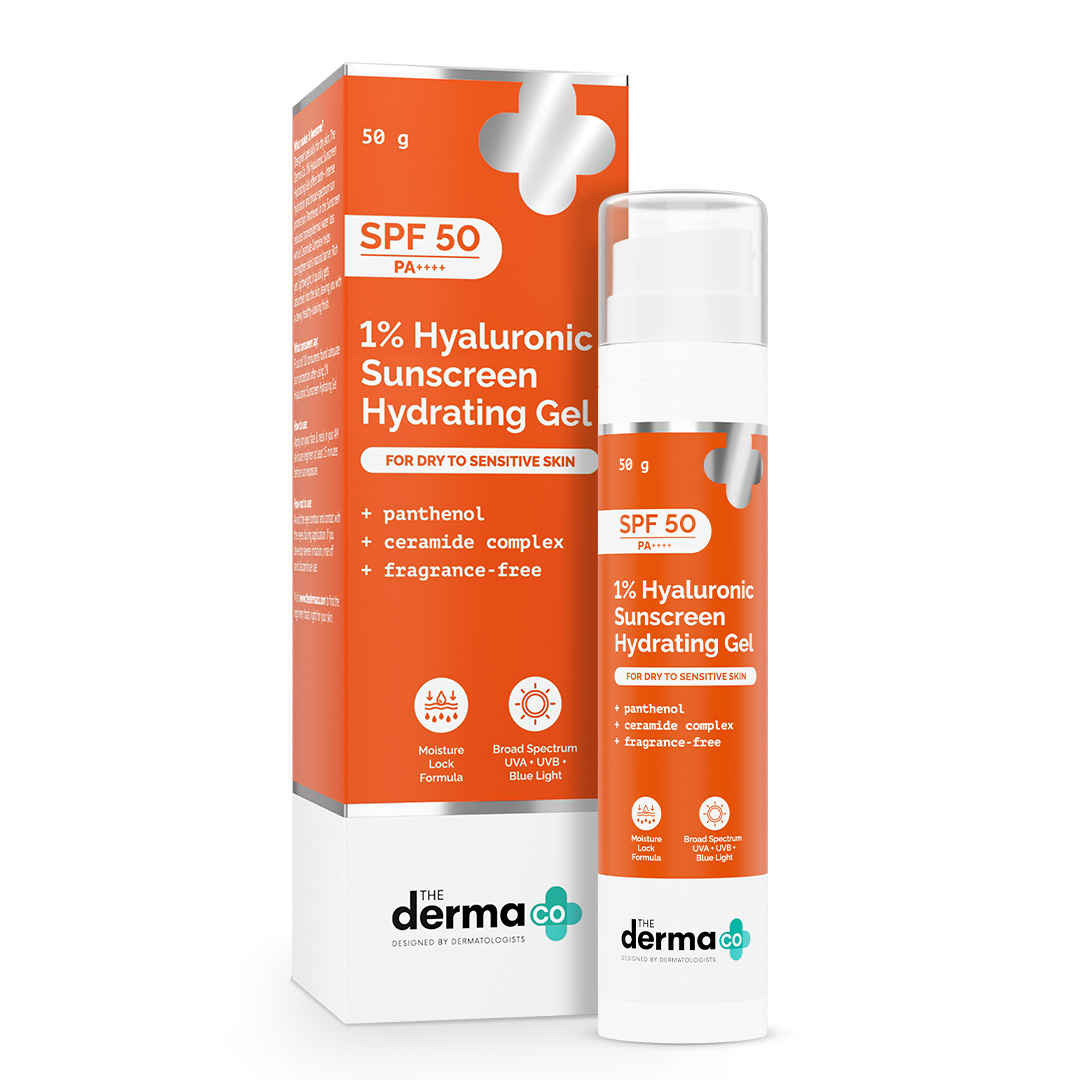
The Derma Co. 1% Hyaluronic Sunscreen Hydrating Gel SPF 50 PA ++++ Hydrating sunscreen | For dry & sensitive skin | SPF 50 & PA++++ | Safe & effective 50 gm

The Derma Co. 1% Hyaluronic Sunscreen Hydrating Gel SPF 50 PA ++++ Hydrating sunscreen | For dry & sensitive skin | SPF 50 & PA++++ | Safe & effective 50 gm
The Derma co.
the-derma-co-1-hyaluronic-sunscreen-hydrating-gel-spf-50-pa-hydrating-sunscreen-for-dry-sensitive-skin-spf-50-pa-safe-effective-50-gm
Suncare
10084758552869
Morning or Evening?
How often will you use this product?
Notes


Highlights
WHAT IS IT?
Hydrating Sunscreen with 4 active ingredients
FEATURES
Blocks sun effectively with SPF 50 PA++++, Ultra-hydrating, Reduces transepidermal water loss, Strengthens skin barrier, Blend of antioxidants reduces UV damage, Lightweight texture, Dewy finish, Dermatologically tested
BEST FOR
dry
CHECKS
No greasy after-feel
Who Is It For?
All Genders Skin Types Including Oily Dry Normal To CombinationWhat Does It Help With?
Sun Protection Hydration Strengthened Skin Barrier Uv Damage ReductionBudget
Affordable (under $30)How To Use
Which routine should it be used in?
Instructions:
Key Information


What The Derma co. Says
Product Description:
Sun Protection? High. Hydration? Intense. Texture? Barely there. Introducing 1% Hyaluronic Sunscreen Hydrating Gel – it blocks the sun, just like a solar eclipse! Specially re-formulated for dry & sensitive skin, it’s ultra-hydrating, and offers SPF 50 PA++++ protection to lock out the sun damage, effectively. Formulated to deliver real results, the sunscreen combines the power of 4 active ingredients that work together in the perfect harmony. Hyaluronic Acid and Panthenol provide a hydration boost, reducing the transepidermal water loss. But hydration is just the beginning - a strong skin barrier is also important for optimal skin health. To take care of that, Ceramide Complex comes in & strengthens skin's natural barrier, while the Blend of Antioxidants reduces UV damage. The result? Protected, hydrated, and healthier-looking skin that's ready for whatever the sun throws its way. The rich-yet-lightweight texture of the sunscreen absorbs quickly into the skin and leaves you with a dewy finish, without any greasy after-feel. Dermatologically-tested, 1% Hyaluronic Sunscreen Hydrating Gel is safe to use, and just right to tone down the damage & amp up the hydration. So whether one has oily, dry or normal to combination skin, now there's tailored sun-protection, for every skin type.
About the Brand:
Ingredients Overview
Ingredients List
Aqua, Ethylhexyl Methoxycinnamate, Ethylhexyl Salicylate, Caprylic Capric Triglyceride, Propylene Glycol, Isododecane, Phenylbenzimidazole Sulfonic Acid, Cetearyl Alcohol, Ceteareth-20, Glycerine, Diethylamino Hydroxybenzoyl Hexyl Benzoate, Methylene Bis-Benzotriazolyl Tetramethylbutylphenol, Decyl Glucoside, Xanthan Gum, Cetearyl Olivate, Sorbitan Olivate, Glyceryl Monostearate, Triethanolamine, Ammonium Acryloyldimethyltaurate/VP Copolymer, Xylitylglucoside, Anhydroxylitol, Xylitol, Sodium Hyaluronate, Laminaria Digitata Extract, Lecithin Hydrogenated, Cetyl-PG Hydroxyethyl Palmitamide, Ceramide EOP, Ceramide NG, Ceramide NP, Ceramide AS, Ceramide AP, Cholesterol, 1,2-Hexanediol, Dicaprylyl Carbonate, Phenoxyethanol, Ethylhexylglycerin, Niacinamide, Panthenol, Tocopheryl Acetate, Blueberry Extract, Ethoxydiglycol, Capsicum Annuum Fruit Extract, Biosaccharide Gum-4, Sodium Gluconate, Ethoxydiglycol, Sucrose Distearate and Butylated Hydroxytoluene
Key Ingredients
hyaluronic-acid, panthenol, ceramide-complex, antioxidants
Ingredients Details
1-2-hexanediol
Common Name(s): 1-2-hexanediol,cosmetic active,functional ingredient
CAS Number: N/a
DESCRIPTION
What It Does: Delivers characteristic cosmetic function at recommended use concentration.
Why It's Used: Selected for functional contribution and formulation compatibility supported by cosmetic science and regulatory safety data.
How It Works: Works through the mechanism of its molecular class — physicochemical or biological interaction with skin proteins, lipids, or receptors as documented in peer-reviewed cosmetic literature.
Typically Found In: Skin care formulations
TECHNICAL DETAILS
Primary Category: Active ingredient – cosmetic active
Secondary Functions: Skin conditioning
Application Areas:

Facial Skincare

Body Care
Hair Care
Beard Care
Color Cosmetics (Makeup)
Dietary/Oral Supplements
Typical Concentration Range: 0.1%–10%
SOURCING & ETHICS
Vegan Status: Conditional - supplier confirmation required
Halal Status: Unverified - supplier confirmation required
Source Notes: Commercially produced for cosmetic use. verify vegan/halal status with supplier. [audit 2026-07-29 rev2: the record's own source_notes does not assert a non-animal origin, or instructs the reader to verify with the supplier; "yes" asserts knowledge the record does not hold. determination requires shariah-panel sign-off.]
SKIN COMPATIBILITY
Irritancy Rating: 1/5 – very low
Comedogenicity Rating: 0/5 – non-comedogenic
Sensitivity Concerns: Well-tolerated by most skin types.
Safe for Sensitive Skin: Yes
SAFETY & COMPATIBILITY
Safety Profile: Good safety profile at recommended concentrations. ewg score: 1–2.
Works Well With: Standard skincare actives
Avoid Combining With: No known significant incompatibilities
SCIENTIFIC NOTE
1-2-hexanediol has an established safety and efficacy profile within the cosmetic regulatory framework at standard use concentrations.
Last Verified: 2026-03-12
Primary Sources: Cosing database,1-2-hexanediol technical literature
Ammonium Acryloyldimethyltaurate/vp Copolymer
Common Name(s): Ammonium acryloyldimethyltaurate/vp copolymer
DESCRIPTION
What It Does: Delivers targeted skin-conditioning or bioactive benefits through a specific mechanism of action suited to the formulation's intended purpose.
Why It's Used: Specialty actives address specific skin concerns through targeted molecular mechanisms, providing efficacy beyond what base formulation ingredients alone can achieve.
How It Works: The bioactive compound interacts with specific molecular targets in skin cells or the extracellular matrix — enzymes, receptors, structural proteins, or signaling molecules — triggering beneficial biological responses.
Typically Found In: Serums,treatments,moisturizers,specialty products
TECHNICAL DETAILS
Primary Category: Specialty actives
Secondary Functions: Skin-conditioning,anti-aging
Application Areas:
Facial Skincare
Body Care
Hair Care
Beard Care
Color Cosmetics (Makeup)
Dietary/Oral Supplements
Typical Concentration Range: 0.01–5%
SOURCING & ETHICS
Vegan Status: Conditional - supplier confirmation required
Halal Status: Unverified - supplier confirmation required
Source Notes: Specialty active ingredient; check individual sourcing for vegan status. [audit 2026-07-29 rev2: the record's own source_notes does not assert a non-animal origin, or instructs the reader to verify with the supplier; "yes" asserts knowledge the record does not hold. determination requires shariah-panel sign-off.]
SKIN COMPATIBILITY
Irritancy Rating: 1
Comedogenicity Rating: 0
Sensitivity Concerns: Low sensitization potential at recommended use concentrations.
Safe for Sensitive Skin: Yes
SAFETY & COMPATIBILITY
Safety Profile: Well-characterized cosmetic ingredient with established safety profile. generally non-irritating at typical use concentrations. suitable for leave-on and rinse-off cosmetics.
Works Well With: Niacinamide,hyaluronic acid,vitamin c,peptides
Avoid Combining With: Incompatible with oxidizing agents; check ph stability
SCIENTIFIC NOTE
Specialty actives typically work through enzyme inhibition (e.g., tyrosinase inhibition for brightening, mmp inhibition for anti-aging), receptor activation (e.g., retinoid receptors, ppar-γ for barrier genes), or transcription factor modulation (e.g., nrf2 for antioxidant gene upregulation). structure-activity relationships determine potency and selectivity.
Last Verified: 2025-01-15
Primary Sources: Cosing eu database; pcpc cosmetic ingredient safety reviews; ingredient-specific safety and efficacy literature
Anhydroxylitol
Common Name(s): Anhydroxylitol,cosmetic active,functional ingredient
CAS Number: N/a
DESCRIPTION
What It Does: Delivers characteristic cosmetic function at recommended use concentration.
Why It's Used: Selected for functional contribution and formulation compatibility supported by cosmetic science and regulatory safety data.
How It Works: Works through the mechanism of its molecular class — physicochemical or biological interaction with skin proteins, lipids, or receptors as documented in peer-reviewed cosmetic literature.
Typically Found In: Skin care formulations
TECHNICAL DETAILS
Primary Category: Active ingredient – cosmetic active
Secondary Functions: Skin conditioning
Application Areas:
Facial Skincare
Body Care
Hair Care
Beard Care
Color Cosmetics (Makeup)
Dietary/Oral Supplements
Typical Concentration Range: 0.1%–10%
SOURCING & ETHICS
Vegan Status: Conditional - supplier confirmation required
Halal Status: Unverified - supplier confirmation required
Source Notes: Commercially produced for cosmetic use. verify vegan/halal status with supplier. [audit 2026-07-29 rev2: the record's own source_notes does not assert a non-animal origin, or instructs the reader to verify with the supplier; "yes" asserts knowledge the record does not hold. determination requires shariah-panel sign-off.]
SKIN COMPATIBILITY
Irritancy Rating: 1/5 – very low
Comedogenicity Rating: 0/5 – non-comedogenic
Sensitivity Concerns: Well-tolerated by most skin types.
Safe for Sensitive Skin: Yes
SAFETY & COMPATIBILITY
Safety Profile: Good safety profile at recommended concentrations. ewg score: 1–2.
Works Well With: Standard skincare actives
Avoid Combining With: No known significant incompatibilities
SCIENTIFIC NOTE
Anhydroxylitol has an established safety and efficacy profile within the cosmetic regulatory framework at standard use concentrations.
Last Verified: 2026-03-12
Primary Sources: Cosing database,anhydroxylitol technical literature
Biosaccharide Gum-4
Common Name(s): Biosaccharide gum-4,biosaccharide gum-4,microbial exopolysaccharide,biotechnology polysaccharide active
CAS Number: N/a
DESCRIPTION
What It Does: Provides moisture retention from the polysaccharide's multiple hydroxyl groups, film-forming conditioning from the polymer chain architecture, and in some grades prebiotic selective fermentation by beneficial skin microbiome organisms.
Why It's Used: Microbial biosaccharides provide pharmaceutical-grade consistency unavailable from plant polysaccharides — controlled fermentation delivers the same polysaccharide structure and mw distribution every batch for reproducible clinical performance.
How It Works: Microbial eps fermentation in defined bioreactor medium → specific polysaccharide backbone structure determined by organism's transferase enzymes → consistent mw distribution (mw/mn < 1.5) → reproducible rheological and biological properties. the specific polysaccharide structure determines: moisture retention (h-bonding density), film quality (chain flexibility), and prebiotic selectivity (monosaccharide composition).
Typically Found In: Skin care,microbiome formulas
TECHNICAL DETAILS
Primary Category: Active ingredient – skin microbiome support
Secondary Functions: Microbiome balance,prebiotic effect
Application Areas:
Facial Skincare
Body Care
Hair Care
Beard Care
Color Cosmetics (Makeup)
Dietary/Oral Supplements
Typical Concentration Range: 0.1%–5%
SOURCING & ETHICS
Vegan Status: Yes
Halal Status: Yes
Source Notes: Fermentation-derived or plant-extracted.
SKIN COMPATIBILITY
Irritancy Rating: 1/5 – very low
Comedogenicity Rating: 0/5 – non-comedogenic
Sensitivity Concerns: Non-irritating; beneficial for sensitive skin.
Safe for Sensitive Skin: Yes
SAFETY & COMPATIBILITY
Safety Profile: Excellent safety profile. ewg score: 1.
Works Well With: Ceramides,niacinamide,soothing actives
Avoid Combining With: No significant incompatibilities
SCIENTIFIC NOTE
Biosaccharide gum grades are organism-specific — each biosaccharide gum number designates a specific organism and structure with distinct functional properties. formulators should characterise the specific grade's viscosity, water retention, and prebiotic activity for target application.
Last Verified: 2026-03-22
Primary Sources: Cosing database,biosaccharide gum-4 microbial eps review