

The Derma co.
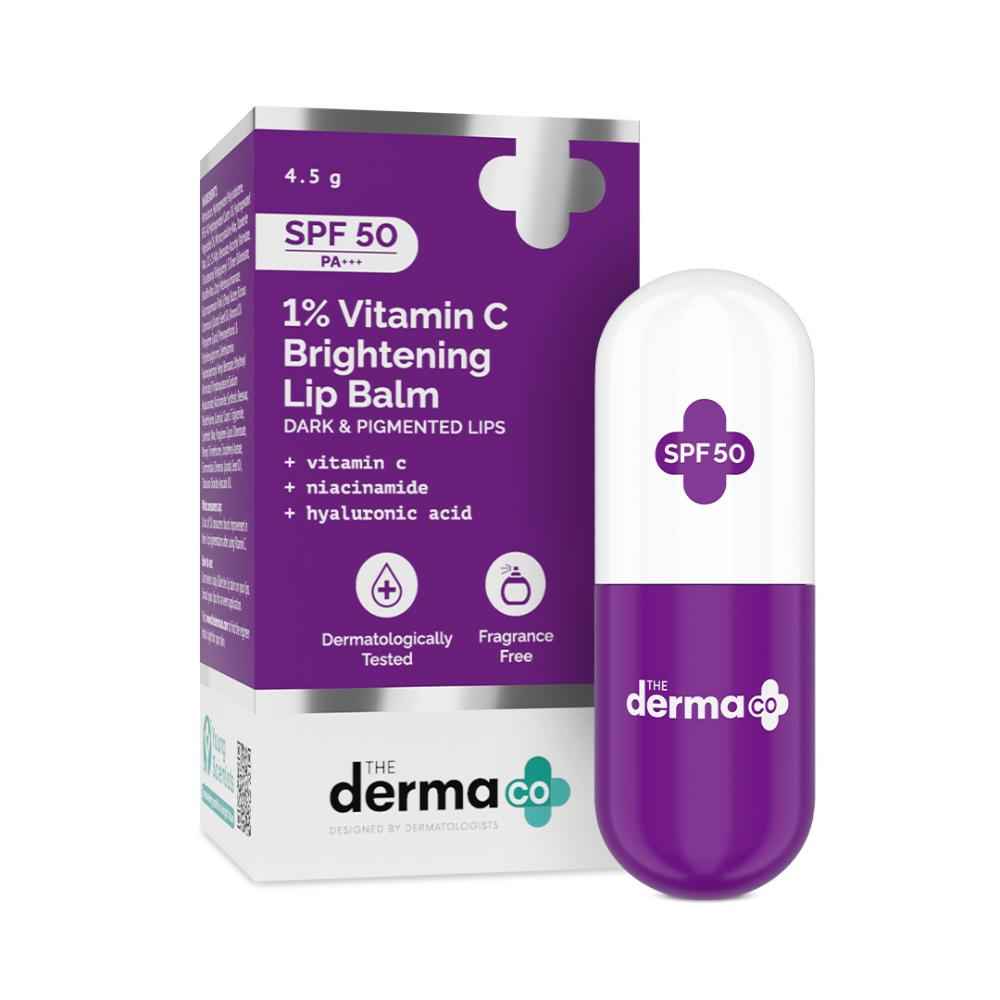
The Derma Co. 1% Vitamin C Brightening Lip Balm 4.5 gm Reduces Lip Pigmentation | Protects from Sun Damage

The Derma Co. 1% Vitamin C Brightening Lip Balm 4.5 gm Reduces Lip Pigmentation | Protects from Sun Damage
The Derma co.
the-derma-co-1-vitamin-c-brightening-lip-balm-4-5-gm-reduces-lip-pigmentation-protects-from-sun-damage
Lip care
10084847223077
Morning or Evening?
How often will you use this product?
Notes


Highlights
WHAT IS IT?
Lip Balm enriched with Vitamin C, Niacinamide, and Hyaluronic Acid
FEATURES
Reduces lip pigmentation, protects from sun damage (SPF 50 & PA+++), ultra-hydrating, boosts barrier, detoxifies lips, smoothens texture, reduces lip peeling, brightens and softens lips, lightweight and plumping
BEST FOR
sensitive
CHECKS
Does not contain fragrance (implied, fragrance-free)
Who Is It For?
No Explicit Age Or Gender MentionedWhat Does It Help With?
Lip Pigmentation Sun Damage Protection Dryness Environmental Stressors Lip Peeling Texture Smoothing Plumping And Brightening LipsBudget
Affordable (under ₹30)How To Use
Which routine should it be used in?
Instructions:
Key Information


What The Derma co. Says
Product Description:
Lip Care Alert! Are you so busy perfecting your facial skincare routine that you forgot about your lips? Well, It's time to give your lips the tender loving care they deserve, protecting them from sun damage, dryness and environmental stressors. Introducing the ultra-hydrating & barrier boosting, 1% Vitamin C Brightening Lip Balm SPF 50 & PA+++ that has the power to reveal your lips' natural radiance! Enriched with potent antioxidants Vitamin C, Niacinamide, and Hyaluronic Acid, this nourishing balm tackles lip pigmentation, protects against UV rays, and more. This powerhouse lip balm also acts like a detox, smoothing the texture and reducing lip peeling. Additionally, Vitamin C's brightening properties and Niacinamide's barrier-strengthening abilities work together to soften & brighten the lips. So wait no more and add to your kit, the ultimate treat for your lips that keeps them plump & comfy and feels lightweight.
About the Brand:
Ingredients Overview
Ingredients List
Petrolatum,Hydrogenated Polyisobutene,PEG-40 Hydrogenated Castor Oil, Hydrogenated Vegetable Oil, Microcrystalline Wax, Ozokerite Wax, C12-15 Alkyl Benzoate, Ascorbyl Palmitate,Triisostearoyl Polyglyceryl-3 Dimer Dilinoleate,Paraffin Wax, Octyl Methoxycinnamate, Butyrospermum Parkii (Shea) Butter, Ricinus Communis (Castor) Seed Oil, Almond Oil, Propylene Glycol, Phenoxyethanol & Ethylhexylglycerin, Diethylamino Hydroxybenzoyl Hexyl Benzoate, Ethylhexyl Palmitate/Trihydroxystearin/Sodium Hyaluronate, Niacinamide, Synthetic Beeswax, Polyethylene, Caprylic/ Capric Triglyceride,Synthetic Wax, Propylene Glycol Dibenzoate, Phenyl Trimethicone, Tocopheryl Acetate, Simmondsia Chinensis (Jojoba) Seed Oil, Titanium Dioxide, Avocado Oil
Key Ingredients
Vitamin C, Niacinamide, Hyaluronic Acid
Ingredients Details
Almond Oil
Common Name(s): Almond oil,botanical carrier oil,emollient fatty acid delivery
CAS Number: N/a
DESCRIPTION
What It Does: Softens and conditions skin by integrating into sc lipid bilayers, delivers essential fatty acids (oleic, linoleic, linolenic) for barrier lipid synthesis, and provides rich, non-stripping moisturisation.
Why It's Used: Natural carrier oils provide the closest compositional match to endogenous sc lipids, delivering emolliency through genuine barrier integration rather than simple surface occlusion.
How It Works: Fatty acid triglycerides partition into sc lipid bilayers — oleic acid (c18:1) provides fluid, emollient integration; linoleic acid (c18:2) acts as essential ceramide precursor; saturated fatty acids provide more occlusive barrier reinforcement.
Typically Found In: Moisturisers,facial oils,natural skin care
TECHNICAL DETAILS
Primary Category: Functional ingredient – emollient
Secondary Functions: Barrier sealing,softening
Application Areas:

Facial Skincare
Body Care
Hair Care

Beard Care
Color Cosmetics (Makeup)
Dietary/Oral Supplements
Typical Concentration Range: 1%–100%
SOURCING & ETHICS
Vegan Status: Conditional
Halal Status: Yes
Source Notes: Plant-derived, synthetic or animal-derived. verify source.
SKIN COMPATIBILITY
Irritancy Rating: 1/5 – very low
Comedogenicity Rating: 1/5 – low; formulation-dependent
Sensitivity Concerns: Non-irritating.
Safe for Sensitive Skin: Yes
SAFETY & COMPATIBILITY
Safety Profile: Excellent safety profile. ewg score: 1.
Works Well With: Humectants,ceramides,actives as carrier
Avoid Combining With: No significant incompatibilities
SCIENTIFIC NOTE
Essential fatty acids — linoleic (c18:2, n-6) and α-linolenic (c18:3, n-3) acids — cannot be synthesised by the body; topical delivery through carrier oils provides direct substrate for ceramide and eicosanoid biosynthesis in the epidermis.
Last Verified: Cosing database,almond oil carrier oil botanical review
Primary Sources: 2026-03-12
Ascorbyl Palmitate
Common Name(s): L-ascorbyl-6-palmitate,vitamin c palmitate,fat-soluble vitamin c
CAS Number: 137-66-6
DESCRIPTION
What It Does: Provides lipid-soluble antioxidant protection in skin and oil-based formulations.
Why It's Used: Oil-based formulations as fat-soluble vitamin c active and formulation antioxidant preservative (e304).
How It Works: Skin esterases cleave the bond releasing ascorbic acid and palmitic acid. lipophilic form may integrate into cell membranes for lipid-phase antioxidant protection.
Typically Found In: Oil serums,emulsions,sunscreens,anti-aging creams
TECHNICAL DETAILS
Primary Category: Active ingredient – vitamin c derivative
Secondary Functions: Lipid-soluble antioxidant,formulation preservative
Application Areas:
Facial Skincare
Body Care
Hair Care
Beard Care
Color Cosmetics (Makeup)
Dietary/Oral Supplements
Typical Concentration Range: 0.1%–1%
SOURCING & ETHICS
Vegan Status: Yes – synthetic
Halal Status: Yes
Source Notes: Esterification of ascorbic acid with palmitic acid. gras food additive (e304).
SKIN COMPATIBILITY
Irritancy Rating: 1/5 – very low
Comedogenicity Rating: 1/5 – very low; palmitic acid minor concern
Sensitivity Concerns: Non-irritating; suitable for all skin types.
Safe for Sensitive Skin: Yes
SAFETY & COMPATIBILITY
Safety Profile: Excellent safety profile. ewg score: 1.
Works Well With: Tocopherol,ferulic acid,niacinamide,spf
Avoid Combining With: No significant incompatibilities
SCIENTIFIC NOTE
Debate exists about efficiency of ester hydrolysis in intact skin and prooxidant potential of uv degradation products. formulating with the antioxidant triad (c+e+ferulic) mitigates this concern.
Last Verified: Cosing database,cir safety assessment,ewg skin deep
Primary Sources: 2026-03-12
Avocado Oil
Common Name(s): Avocado oil,avocado butter (solid fraction)
CAS Number: 8024-32-6
DESCRIPTION
What It Does: Provides deep moisturization with rich oleic acid, phytosterols, and lutein antioxidants for mature, dry skin.
Why It's Used: Rich, deeply penetrating oil for dry and mature skin requiring intensive emolliency beyond lightweight oils.
How It Works: Very high oleic acid (55-74%) penetrates deeply into stratum corneum for conditioning. beta-sitosterol and other phytosterols provide barrier repair and mild anti-inflammatory activity. lutein provides antioxidant protection. high unsaponifiable fraction (2-11%) provides unique skin bioactives.
Typically Found In: Rich moisturizers,dry skin oils,anti-aging formulas,body butters
TECHNICAL DETAILS
Primary Category: Functional ingredient – emollient
Secondary Functions: Deep penetrating emollient,phytosterol activity,anti-aging
Application Areas:
Facial Skincare
Body Care
Hair Care
Beard Care
Color Cosmetics (Makeup)
Dietary/Oral Supplements
Typical Concentration Range: 1%–50%
SOURCING & ETHICS
Vegan Status: Yes – from persea gratissima fruits
Halal Status: Yes
Source Notes: Cold-pressed from avocado fruit flesh. high unsaponifiable fraction (unsaponified lipids) makes avocado oil uniquely bioactive vs other oils with low unsaponifiable content.
SKIN COMPATIBILITY
Irritancy Rating: 1/5 – very low
Comedogenicity Rating: 3/5 – moderate; high oleic acid; test for skin type
Sensitivity Concerns: Non-irritating.
Safe for Sensitive Skin: Yes
SAFETY & COMPATIBILITY
Safety Profile: Excellent safety profile. ewg score: 1.
Works Well With: Humectants,ceramides,actives as carrier
Avoid Combining With: No significant incompatibilities
SCIENTIFIC NOTE
Avocado oil's unusually high unsaponifiable fraction (2-11% vs <2% for most plant oils) contains phytosterols, terpenes, vitamin e, and chlorophyll that remain after saponification and provide skin-active benefits not present in most other plant oils. this unsaponifiable fraction is what makes avocado oil pharmacologically distinct from simple fatty acid triglyceride oils.
Last Verified: Cosing database,dreher & davenport avocado review,cir safety assessment
Primary Sources: 2026-03-12
C12-15 Alkyl Benzoate
Common Name(s): C12-15 alkyl benzoate,cosmetic active,functional ingredient
CAS Number: N/a
DESCRIPTION
What It Does: Delivers characteristic cosmetic function at recommended use concentration.
Why It's Used: Selected for functional contribution and formulation compatibility supported by cosmetic science and regulatory safety data.
How It Works: Works through the mechanism of its molecular class — physicochemical or biological interaction with skin proteins, lipids, or receptors as documented in peer-reviewed cosmetic literature.
Typically Found In: Skin care formulations
TECHNICAL DETAILS
Primary Category: Active ingredient – cosmetic active
Secondary Functions: Skin conditioning
Application Areas:
Facial Skincare
Body Care
Hair Care
Beard Care
Color Cosmetics (Makeup)
Dietary/Oral Supplements
Typical Concentration Range: 0.1%–10%
SOURCING & ETHICS
Vegan Status: Conditional
Halal Status: Yes
Source Notes: Commercially produced for cosmetic use. verify vegan/halal status with supplier.
SKIN COMPATIBILITY
Irritancy Rating: 1/5 – very low
Comedogenicity Rating: 0/5 – non-comedogenic
Sensitivity Concerns: Well-tolerated by most skin types.
Safe for Sensitive Skin: Yes
SAFETY & COMPATIBILITY
Safety Profile: Good safety profile at recommended concentrations. ewg score: 1–2.
Works Well With: Standard skincare actives
Avoid Combining With: No known significant incompatibilities
SCIENTIFIC NOTE
C12-15 alkyl benzoate has an established safety and efficacy profile within the cosmetic regulatory framework at standard use concentrations.
Last Verified: Cosing database,c12-15 alkyl benzoate technical literature
Primary Sources: 2026-03-12
