

The Good Hygiene Co.
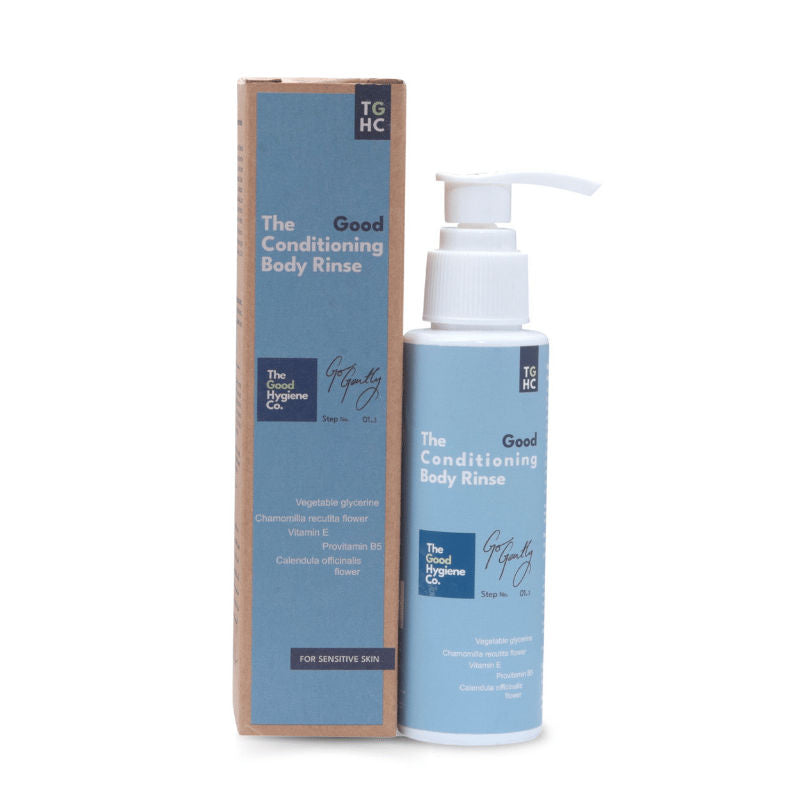
The Good Hygiene Co. Conditioning Body Rinse Cleanser

The Good Hygiene Co. Conditioning Body Rinse Cleanser
The Good Hygiene Co.
the-good-hygiene-co-conditioning-body-rinse-cleanser
Cleanse
10084932845861
Morning or Evening?
How often will you use this product?
Notes


Highlights
WHAT IS IT?
Conditioning Body Rinse Cleanser with 24 ingredients
FEATURES
Mild creamy cleanser, lifts impurities without stripping moisture, soothes irritated skin with organic calendula and chamomile, deeply hydrates, antioxidant protection, non-fragranced, free from harsh chemicals, parabens, harmful silicones, sulfates, mineral oils, SLS, petroleum, artificial preservatives, synthetic fragrances, organic, plant-based, biodegradable, with COSMOS-approved preservative.
BEST FOR
dry
CHECKS
No colorants, No fragrances, No soap, No harsh chemicals, No parabens, No harmful silicones, No cyclopentasiloxane, No sulfates, No mineral oils, No SLS, No petroleum, No artificial preservatives, No synthetic fragrances
Who Is It For?
No Specific Age Or Gender MentionedWhat Does It Help With?
Dry Skin Sensitive Skin Rashes Redness Flaky Skin Irritation Skin Barrier ProtectionBudget
Mid-range ($30-$75)How To Use
Which routine should it be used in?
Instructions:
Key Information


What The Good Hygiene Co. Says
Product Description:
A gentle, soothing body rinse that cleanses while preserving your skin's natural moisture, providing immediate comfort right from the shower. Specially formulated by a planet-conscious dermatologist and certified organic skincare formulator, this mild body rinse is perfect for individuals with dry skin, sensitive skin, rashes, redness, and flaky skin. Free from colorants, fragrances, soap, and harsh chemicals, it ensures a soothing and irritation-free cleansing experience. This plant-based cleanser is formulated with coconut-extracted surfactant, soothes dry and irritated skin with organic calendula and chamomile, and locks in moisture with plant-based glycerin. Provitamin B5 hydrates, heals, repairs, and protects the skin barrier. Dermatologically approved and crafted with a COSMOS-approved preservative.
About the Brand:
Ingredients Overview
Ingredients List
Organic-Calendula-Officinalis-Flower-Water,Organic-Chamomilla-Recutita-Flower-Water,Glycerin-(Plant-Extracted),1,3-Propanediol,Sodium-Cocoyl-Isethionate-(Coconut-Extracted),Coca-Amidopropyl-Betaine,Cetearyl-Alcohol,Provitamin-B5,Calendula-Officinalis-Flower-Oil,Phenoxyethanol,Caprylyl-Glycol,Sorbic-Acid,Tocopherol,Citric-Acid,Aqua,Caprylyl-Glucoside,Stearic-Acid,Glyceryl-Monostearate,Xanthan-Gum
Key Ingredients
Organic Calendula Flower Water,Organic Chamomile Flower Water,Plant Extracted Glycerin,Coconut Oil Derived Surfactant,Calendula Oil,Vitamin E
Ingredients Details
Phenoxyethanol
Common Name(s): 2-phenoxyethanol,rose ether,ethylene glycol monophenyl ether
CAS Number: 122-99-6
DESCRIPTION
What It Does: Prevents microbial contamination and spoilage in cosmetic formulations.
Why It's Used: The benchmark cosmetic preservative – eu-permitted up to 1%, effective against virtually all cosmetically relevant microorganisms, and excellent tolerability.
How It Works: Phenol ring provides broad antimicrobial activity via disruption of bacterial and fungal cell membranes and inhibition of enzymatic activity. effective against gram-positive and gram-negative bacteria, yeasts (candida), and molds (aspergillus). activity ph range: 3-9.
Typically Found In: All cosmetic formulations as primary preservative
TECHNICAL DETAILS
Primary Category: Functional ingredient – broad-spectrum preservative
Secondary Functions: Skin conditioning
Application Areas:

Facial Skincare

Body Care
Hair Care
Beard Care
Color Cosmetics (Makeup)
Dietary/Oral Supplements
Typical Concentration Range: 0.1%–1% (eu max 1%)
SOURCING & ETHICS
Vegan Status: Yes – synthetic
Halal Status: Yes
Source Notes: Commercially produced for cosmetic use. verify vegan/halal status with supplier.
SKIN COMPATIBILITY
Irritancy Rating: 1/5 – very low
Comedogenicity Rating: 0/5 – non-comedogenic
Sensitivity Concerns: Well-tolerated by most skin types.
Safe for Sensitive Skin: Yes
SAFETY & COMPATIBILITY
Safety Profile: Eu cosmetics regulation max 1%. sccs assessed as safe at ≤1%. avoid use around eyes in baby products per some country regulations. ewg score: 4.
Works Well With: Standard skincare actives
Avoid Combining With: No known significant incompatibilities
SCIENTIFIC NOTE
Phenoxyethanol's widespread adoption as the primary cosmetic preservative followed the phaseout of parabens from many formulations in the 2000s-2010s. despite having a comparable or better safety profile to parabens, it is often cited in 'free-from' formulations – a consumer perception issue rather than a scientific safety concern.
Last Verified: Cosing database,sccs opinion on phenoxyethanol,cir safety assessment
Primary Sources: 2026-03-12
Tocopherol
Common Name(s): Vitamin e,alpha-tocopherol,d-alpha-tocopherol,(+)-alpha-tocopherol
CAS Number: 59-02-9
DESCRIPTION
What It Does: Tocopherol neutralizes free radicals that damage skin cells, protects cell membranes from lipid peroxidation, moisturizes, and helps maintain a healthy skin barrier.
Why It's Used: It is used as both a skin-active antioxidant and a formulation stabilizer (preventing oxidation of other ingredients). it has decades of safety and efficacy evidence and works synergistically with vitamin c.
How It Works: As a chain-breaking antioxidant, tocopherol donates hydrogen atoms to interrupt lipid peroxidation chain reactions. it is regenerated by vitamin c (ascorbic acid) in the vitamins c+e antioxidant cycle, creating a more durable antioxidant defense.
Typically Found In: Moisturizers,serums,oils,sunscreens,eye creams,lip balms,antioxidant formulations,haircare products
TECHNICAL DETAILS
Primary Category: Active ingredient – antioxidant/vitamin e
Secondary Functions: Emollient,formulation stabilizer,barrier support
Application Areas:
Facial Skincare
Body Care
Hair Care
Beard Care
Color Cosmetics (Makeup)
Dietary/Oral Supplements
Typical Concentration Range: 0.1%–1% (typical: 0.1–0.5% as active; higher as formulation antioxidant)
SOURCING & ETHICS
Vegan Status: Yes – plant-derived (soybean, sunflower, wheat germ oil) or synthetic
Halal Status: Yes – plant-derived or synthetic
Source Notes: Natural d-alpha-tocopherol is derived from plant oils and is more bioactive. synthetic dl-alpha-tocopherol is less expensive. tocopherol acetate (tocopheryl acetate) is the more stable ester form.
SKIN COMPATIBILITY
Irritancy Rating: 1/5 – very low; rare contact sensitivity reported
Comedogenicity Rating: 2/5 – mildly comedogenic at higher concentrations; formulation-dependent
Sensitivity Concerns: A small percentage of people report contact sensitization to tocopherol, particularly with leave-on products. comedogenicity risk is higher in oil-heavy formulations.
Safe for Sensitive Skin: Generally yes; perform patch test if history of vitamin e sensitivity
SAFETY & COMPATIBILITY
Safety Profile: Very safe; widely used. ewg hazard score: 2–3 (depending on concentration). no significant systemic concerns from topical use.
Works Well With: Ascorbic acid (vitamin c) – synergistic antioxidant pair,ferulic acid – stabilizes and boosts both c and e,ceramides,spf,retinol
Avoid Combining With: Very high concentrations of benzoyl peroxide may oxidize tocopherol; potential comedogenicity concerns in acne-prone skin when in heavy oil bases
SCIENTIFIC NOTE
The combination of vitamin c, vitamin e, and ferulic acid (the 'ce ferulic' formulation) provides fourfold photoprotection against uv-induced free radical damage – a synergy documented in landmark research by pinnell et al.
Last Verified: Cosing database,cir safety assessment,pinnell et al. (2005) journal of investigative dermatology,efsa panel on food additives
Primary Sources: 2026-03-12
