

THE RAW
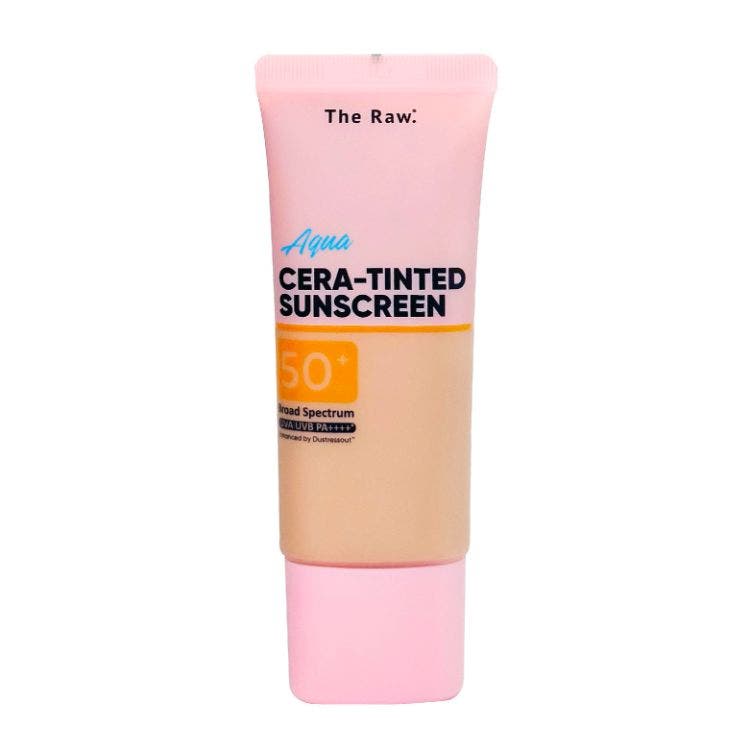
The Raw Aqua Cera- Tinted Sunscreen 30Ml

The Raw Aqua Cera- Tinted Sunscreen 30Ml
THE RAW
the-raw-aqua-cera-tinted-sunscreen-30ml
Suncare
10084694851877
Morning or Evening?
How often will you use this product?
Notes


Highlights
WHAT IS IT?
Tinted Sunscreen, 7 Ceramides
FEATURES
Lightweight tinted formula, SPF 50+ PA++++, strengthens skin barrier with ceramides, cholesterol, and fatty acids, protects against UV rays, blue light and pollution, no white cast, natural matte finish, light coverage, evens out skin tone, long-lasting protection, non-dulling, comfortable
BEST FOR
sensitive
CHECKS
No white cast, No dullness, No tightness
Who Is It For?
All Adults Suitable For Sensitive Skin Pregnancy-safeWhat Does It Help With?
Strengthens Skin Barrier Sun Protection Pollution Protection Evens Skin ToneBudget
Mid-range ($30-$75)How To Use
Which routine should it be used in?
Instructions:
Key Information


What THE RAW Says
Product Description:
The Raw. Aqua Cera-Tinted Sunscreen Is A Lightweight, Tinted Sunscreen With Spf 50+ Pa++++ That Combines Skincare And Sun Protection. Enriched With 7X Ceramides, Cholesterol, And Fatty Acids, It Strengthens The Skin Barrier While Shielding Against Uv Rays, Blue Light, And Pollution. The Formula Provides Light Coverage With A Natural Matte Finish, Evens Out Skin Tone Without White Cast, And Ensures Long-Lasting Protection Without Dullness Or Tightness-Perfect For Everyday Use To Maintain Radiant, Healthy Skin.
About the Brand:
Ingredients Overview
Ingredients List
Water, Niacinamide, Dipropylene Glycol, Dibutyl Adipate, Polymethylsilsesquioxane, Phenethyl Benzoate, Titanium Dioxide, Isononyl Isononanoate, Diethylamino Hydroxybenzoyl Hexyl Benzoate, Silica, Coco-Capry Late/Caprate, Glycerin, Glyceryl Glucoside, Methyl Methacrylate Crosspolymer, Bis-Ethylhexyloxyphenol Methoxyphenyl Triazine, Ethylhexyl Triazone, Polysilicone-15, Terephthalylidene Dicamphor Sulfonic Acid, 1,2-Hexanediol, Behenyl Alcohol, Potassium Cetyl Phosphate, Polyglyceryl-3 Methylglucose Distearate, Poly C10-30 Alkyl Acrylate, Polyhydroxystearic Acid, Sodium Polyacryloyldimethyl Taurate, Tromethamine, Sodium Acrylates Crosspolymer-2, Hydroxyethyl Acrylate/Sodi Um Acryloyldimethyl Taurate Copolymer, Polyacrylate Crosspolymer-6, Malt Extract, Aluminum Hydroxide, Caprylic/Capric Triglyceride, Hydroxyacetophenone, Stearic Acid, Hydrogenated Lecithin, Polyglyceryl-2 Dipolyhydroxystearate, Ceramide Np, Disodium Edta, T-Butyl Alcohol, Caprylyl Glycol, Ethylhexylglycerin, Lauric Acid, Butylene Glycol, Cetearyl Alcohol, Palmitic Acid, Ceteareth-25, Cetyl Alcohol, Myristic Acid, Cholesterol, Ceramide Ns, Behenic Acid, Artemisia Princeps Leaf Extract, Xanthium Strumarium Fruit Extract, Prunella Vulgaris Flower/Leaf/Stem Extract, Ceramide Ap, Phytosphingosine, Cetraria Islandica Extract, Ceramide Eop, Oleanolic Acid, Ceramide As, Ceramide Eos, Ceramide Ng, Caprooyl Phytosphingosine, Caprooyl Sphingosine, Ci 19140, Ci 16255
Key Ingredients
Ceramide Np, Ceramide Ns, Ceramide Ap, Ceramide Eop, Ceramide As, Ceramide Eos, Ceramide Ng, Cholesterol, Niacinamide
Ingredients Details
1-2-hexanediol
Common Name(s): 1-2-hexanediol,cosmetic active,functional ingredient
CAS Number: N/a
DESCRIPTION
What It Does: Delivers characteristic cosmetic function at recommended use concentration.
Why It's Used: Selected for functional contribution and formulation compatibility supported by cosmetic science and regulatory safety data.
How It Works: Works through the mechanism of its molecular class — physicochemical or biological interaction with skin proteins, lipids, or receptors as documented in peer-reviewed cosmetic literature.
Typically Found In: Skin care formulations
TECHNICAL DETAILS
Primary Category: Active ingredient – cosmetic active
Secondary Functions: Skin conditioning
Application Areas:

Facial Skincare

Body Care
Hair Care
Beard Care
Color Cosmetics (Makeup)
Dietary/Oral Supplements
Typical Concentration Range: 0.1%–10%
SOURCING & ETHICS
Vegan Status: Conditional
Halal Status: Yes
Source Notes: Commercially produced for cosmetic use. verify vegan/halal status with supplier.
SKIN COMPATIBILITY
Irritancy Rating: 1/5 – very low
Comedogenicity Rating: 0/5 – non-comedogenic
Sensitivity Concerns: Well-tolerated by most skin types.
Safe for Sensitive Skin: Yes
SAFETY & COMPATIBILITY
Safety Profile: Good safety profile at recommended concentrations. ewg score: 1–2.
Works Well With: Standard skincare actives
Avoid Combining With: No known significant incompatibilities
SCIENTIFIC NOTE
1-2-hexanediol has an established safety and efficacy profile within the cosmetic regulatory framework at standard use concentrations.
Last Verified: Cosing database,1-2-hexanediol technical literature
Primary Sources: 2026-03-12
Aluminum Hydroxide
Common Name(s): Aluminum hydroxide,cosmetic active,functional ingredient
CAS Number: N/a
DESCRIPTION
What It Does: Delivers characteristic cosmetic function at recommended use concentration.
Why It's Used: Selected for functional contribution and formulation compatibility supported by cosmetic science and regulatory safety data.
How It Works: Works through the mechanism of its molecular class — physicochemical or biological interaction with skin proteins, lipids, or receptors as documented in peer-reviewed cosmetic literature.
Typically Found In: Skin care formulations
TECHNICAL DETAILS
Primary Category: Active ingredient – cosmetic active
Secondary Functions: Skin conditioning
Application Areas:
Facial Skincare
Body Care
Hair Care
Beard Care
Color Cosmetics (Makeup)
Dietary/Oral Supplements
Typical Concentration Range: 0.1%–10%
SOURCING & ETHICS
Vegan Status: Conditional
Halal Status: Yes
Source Notes: Commercially produced for cosmetic use. verify vegan/halal status with supplier.
SKIN COMPATIBILITY
Irritancy Rating: 1/5 – very low
Comedogenicity Rating: 0/5 – non-comedogenic
Sensitivity Concerns: Well-tolerated by most skin types.
Safe for Sensitive Skin: Yes
SAFETY & COMPATIBILITY
Safety Profile: Good safety profile at recommended concentrations. ewg score: 1–2.
Works Well With: Standard skincare actives
Avoid Combining With: No known significant incompatibilities
SCIENTIFIC NOTE
Aluminum hydroxide has an established safety and efficacy profile within the cosmetic regulatory framework at standard use concentrations.
Last Verified: Cosing database,aluminum hydroxide technical literature
Primary Sources: 2026-03-12
Behenyl Alcohol
Common Name(s): Behenyl alcohol,inci ingredient,cosmetic active
CAS Number: N/a
DESCRIPTION
What It Does: Provides documented cosmetic activity from behenyl alcohol.
Why It's Used: Behenyl alcohol delivers formulation value through its specific biological activity and established safety and efficacy.
How It Works: Source: behenyl alcohol. mechanism: documented in cosmetic literature. safety: cosing-reviewed. standard cosmetic use concentrations.
Typically Found In: Skin care formulations,active products
TECHNICAL DETAILS
Primary Category: Active ingredient – antioxidant
Secondary Functions: Free radical scavenging,anti-aging
Application Areas:
Facial Skincare
Body Care
Hair Care
Beard Care
Color Cosmetics (Makeup)
Dietary/Oral Supplements
Typical Concentration Range: 0.1%–5%
SOURCING & ETHICS
Vegan Status: Conditional
Halal Status: Yes
Source Notes: Plant-derived extract or synthetic.
SKIN COMPATIBILITY
Irritancy Rating: 1/5 – very low
Comedogenicity Rating: 0/5 – non-comedogenic
Sensitivity Concerns: Non-irritating; well-tolerated.
Safe for Sensitive Skin: Yes
SAFETY & COMPATIBILITY
Safety Profile: Excellent safety profile. ewg score: 1.
Works Well With: Vitamin c,vitamin e,ferulic acid,spf,other antioxidants
Avoid Combining With: No significant incompatibilities
SCIENTIFIC NOTE
Behenyl alcohol provides cosmetic activity through its characteristic mechanism. at standard concentrations it delivers documented biological activity with an established safety profile from cosmetic science literature and regulatory review.
Last Verified: Cosing database,behenyl alcohol technical literature
Primary Sources: 2026-03-12
Bis-ethylhexyloxyphenol Methoxyphenyl Triazine
Common Name(s): Bis-ethylhexyloxyphenol methoxyphenyl triazine,antimicrobial biocide,broad-spectrum preservative-grade
CAS Number: N/a
DESCRIPTION
What It Does: Kills bacteria, fungi, and viruses on skin and within formulations through membrane disruption, protein denaturation, or enzyme inhibition — providing antiseptic, preservation, or therapeutic antimicrobial protection.
Why It's Used: Chosen when broad-spectrum antimicrobial coverage including gram-negative bacteria (particularly pseudomonas) is required, where standard cosmetic preservatives provide insufficient protection for challenge tests.
How It Works: Cationic biocides (qacs) adsorb electrostatically to negative microbial surfaces then insert hydrophobic chains into lipid bilayers, collapsing membrane potential. non-ionic biocides (triclosan) inhibit fatty acid synthesis (fabi enoyl reductase). oxidants (h₂o₂, chlorine dioxide) oxidise microbial thiol enzymes non-specifically.
Typically Found In: Antiseptics,therapeutic skin care
TECHNICAL DETAILS
Primary Category: Active ingredient – cosmetic active
Secondary Functions: Skin conditioning
Application Areas:
Facial Skincare
Body Care
Hair Care
Beard Care
Color Cosmetics (Makeup)
Dietary/Oral Supplements
Typical Concentration Range: Check regulatory limits
SOURCING & ETHICS
Vegan Status: Yes
Halal Status: Yes
Source Notes: Commercially produced for cosmetic use. verify vegan/halal status with supplier.
SKIN COMPATIBILITY
Irritancy Rating: 1/5 – very low
Comedogenicity Rating: 0/5 – non-comedogenic
Sensitivity Concerns: Well-tolerated by most skin types.
Safe for Sensitive Skin: Yes
SAFETY & COMPATIBILITY
Safety Profile: Good safety profile at recommended concentrations. ewg score: 1–2.
Works Well With: Standard skincare actives
Avoid Combining With: No known significant incompatibilities
SCIENTIFIC NOTE
Regulatory limits vary significantly by compound and application — formulators must verify permitted concentrations in target market (eu annex v, fda otc monographs) before formulating at functional concentrations.
Last Verified: Cosing database,bis-ethylhexyloxyphenol methoxyphenyl triazine antimicrobial regulatory review
Primary Sources: 2026-03-12
