

The Skin Story
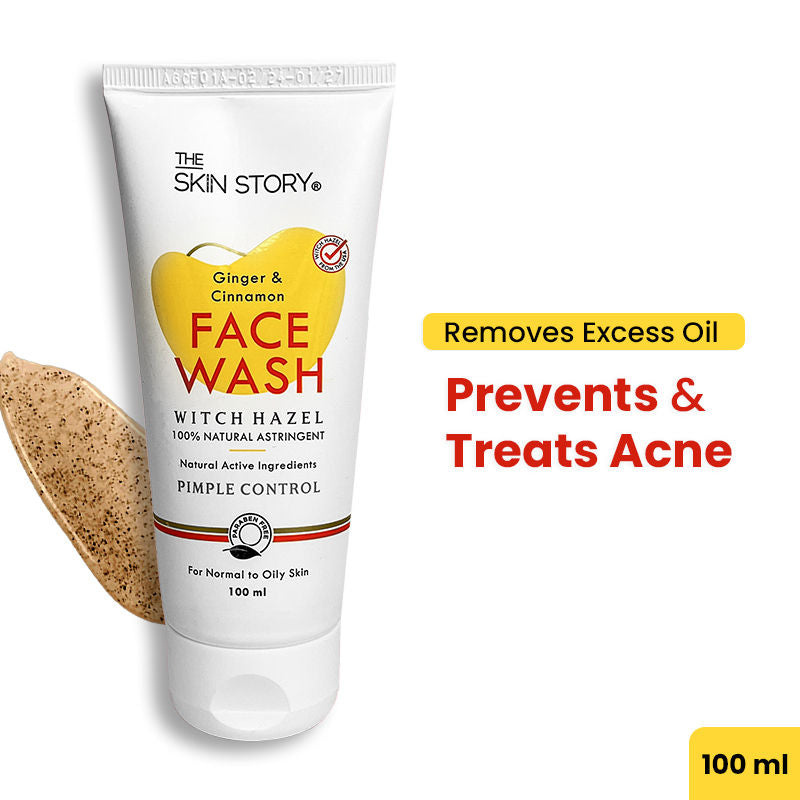
The Skin Story Oil & Pimple Control Ginger Cinnamon Face Wash For Acne Prone - Oily Skin, Dark Spots

The Skin Story Oil & Pimple Control Ginger Cinnamon Face Wash For Acne Prone - Oily Skin, Dark Spots
The Skin Story
the-skin-story-oil-pimple-control-ginger-cinnamon-face-wash-for-acne-prone-oily-skin-dark-spots
Cleanse
10085485183269
Morning or Evening?
How often will you use this product?
Notes


Highlights
WHAT IS IT?
Face Wash, 4 key ingredients
FEATURES
Pore minimiser with witch hazel, acne prevention with ginger and cinnamon extracts, pimple control formula, paraben-free, suitable for normal to oily skin
BEST FOR
oily
CHECKS
Parabens, Oil
Who Is It For?
All Genders No Specific Age Range StatedWhat Does It Help With?
Acne Pimples Blemishes Excess Oil Control Oxidative StressBudget
Affordable (under $30)How To Use
Which routine should it be used in?
Instructions:
Key Information


What The Skin Story Says
Product Description:
The Skin Story Ginger & Cinnamon Face Wash is gentle on your skin yet tough on acne, this specialized oil-free formula cleanses your skin from deep within. Ginger and cinnamon gets rid of acne and prevents future breakouts. Get rid of dirt, excess oil and pamper your skin.
About the Brand:
Ingredients Overview
Ingredients List
witch-hazel,ginger-extract,cinnamon-extract,shea-butter
Key Ingredients
Witch hazel,Ginger extract,Cinnamon extract,Shea butter
Ingredients Details
Ginger Extract
Common Name(s): Ginger extract,botanical extract,phytochemical active
CAS Number: N/a
DESCRIPTION
What It Does: Provides antioxidant protection, anti-inflammatory activity, and skin conditioning from polyphenols, terpenoids, and phytochemicals in the extract.
Why It's Used: Natural plant extracts provide multi-functional phytochemical profiles supporting concurrent skin care claims from one ingredient with authentic botanical heritage.
How It Works: Polyphenols scavenge ros via h• donation; terpenoids inhibit nf-kb or cox inflammatory pathways; vitamins and minerals provide cofactor skin nutrition.
Typically Found In: Botanical skin care,natural products
TECHNICAL DETAILS
Primary Category: Active ingredient – antioxidant
Secondary Functions: Free radical scavenging,anti-aging
Application Areas:

Facial Skincare
Body Care

Hair Care
Beard Care
Color Cosmetics (Makeup)
Dietary/Oral Supplements
Typical Concentration Range: 0.1%–30%
SOURCING & ETHICS
Vegan Status: Conditional - supplier confirmation required
Halal Status: Conditional - basis not stated in source record; supplier origin confirmation required to determine what evidence applies
Source Notes: Plant-derived extract or synthetic. [audit 2026-07-29 rev2: status downgraded on audit. determination requires shariah-panel sign-off.]
SKIN COMPATIBILITY
Irritancy Rating: 1/5 – very low
Comedogenicity Rating: 0/5 – non-comedogenic
Sensitivity Concerns: Non-irritating; well-tolerated.
Safe for Sensitive Skin: Yes
SAFETY & COMPATIBILITY
Safety Profile: Excellent safety profile. ewg score: 1.
Works Well With: Vitamin c,vitamin e,ferulic acid,spf,other antioxidants
Avoid Combining With: No significant incompatibilities
SCIENTIFIC NOTE
Plant secondary metabolites evolved for uv photoprotection and pathogen defence — mechanisms directly applicable to cosmetic antioxidant and anti-inflammatory activity in human skin.
Last Verified: 2026-03-12
Primary Sources: Cosing database,ginger extract botanical review
Shea Butter
Common Name(s): Shea butter,karite butter
CAS Number: 91080-23-8
DESCRIPTION
What It Does: Provides deep nourishing emolliency with anti-inflammatory cinnamic acid esters and a uniquely rich unsaponifiable fraction.
Why It's Used: The most nutritious plant butter – unique cinnamic acid esters, lupeol, and rich unsaponifiable fraction provide anti-inflammatory and wound healing benefits beyond standard fatty acid emolliency.
How It Works: Cinnamic acid esters absorb uv radiation providing mild natural uv filtering (spf 3-4). lupeol inhibits nf-kb for anti-inflammatory activity. high stearic acid provides occlusive barrier function. rich unsaponifiable fraction (4-9%) provides phytosterols, tocopherols, and triterpenes for bioactive skin benefits.
Typically Found In: Body butters,rich moisturizers,baby products,hair conditioners,lip balms
TECHNICAL DETAILS
Primary Category: Functional ingredient – emollient
Secondary Functions: Cinnamic acid uv support,lupeol anti-inflammatory,rich emolliency
Application Areas:
Facial Skincare
Body Care
Hair Care
Beard Care
Color Cosmetics (Makeup)
Dietary/Oral Supplements
Typical Concentration Range: 1%–100%
SOURCING & ETHICS
Vegan Status: Conditional - supplier confirmation required
Halal Status: Unverified - supplier confirmation required
Source Notes: Unrefined (raw) shea retains more unsaponifiable fraction and stronger natural scent/color. refined shea is odorless, white, and cleaner for formulation. certified fair trade supports west african women's cooperatives. [audit 2026-07-29 rev2: the record's own source_notes does not assert a non-animal origin, or instructs the reader to verify with the supplier; "yes" asserts knowledge the record does not hold. determination requires shariah-panel sign-off.]
SKIN COMPATIBILITY
Irritancy Rating: 1/5 – very low
Comedogenicity Rating: 0/5 – non-comedogenic (refined); 2/5 – low (raw/unrefined)
Sensitivity Concerns: Non-irritating.
Safe for Sensitive Skin: Yes
SAFETY & COMPATIBILITY
Safety Profile: Excellent safety profile. ewg score: 1.
Works Well With: Humectants,ceramides,actives as carrier
Avoid Combining With: No significant incompatibilities
SCIENTIFIC NOTE
Shea butter's unsaponifiable fraction (4-9%, vs coconut oil's 0.5% and olive oil's 1-2%) is exceptionally rich in triterpenes, phytosterols, and tocopherols. this fraction is responsible for shea's anti-inflammatory and wound healing properties that simple fatty acid analysis fails to reveal.
Last Verified: 2026-03-12
Primary Sources: Cosing database,lin et al. shea butter cinnamic acid study,cir safety assessment