

Soumis Can Product
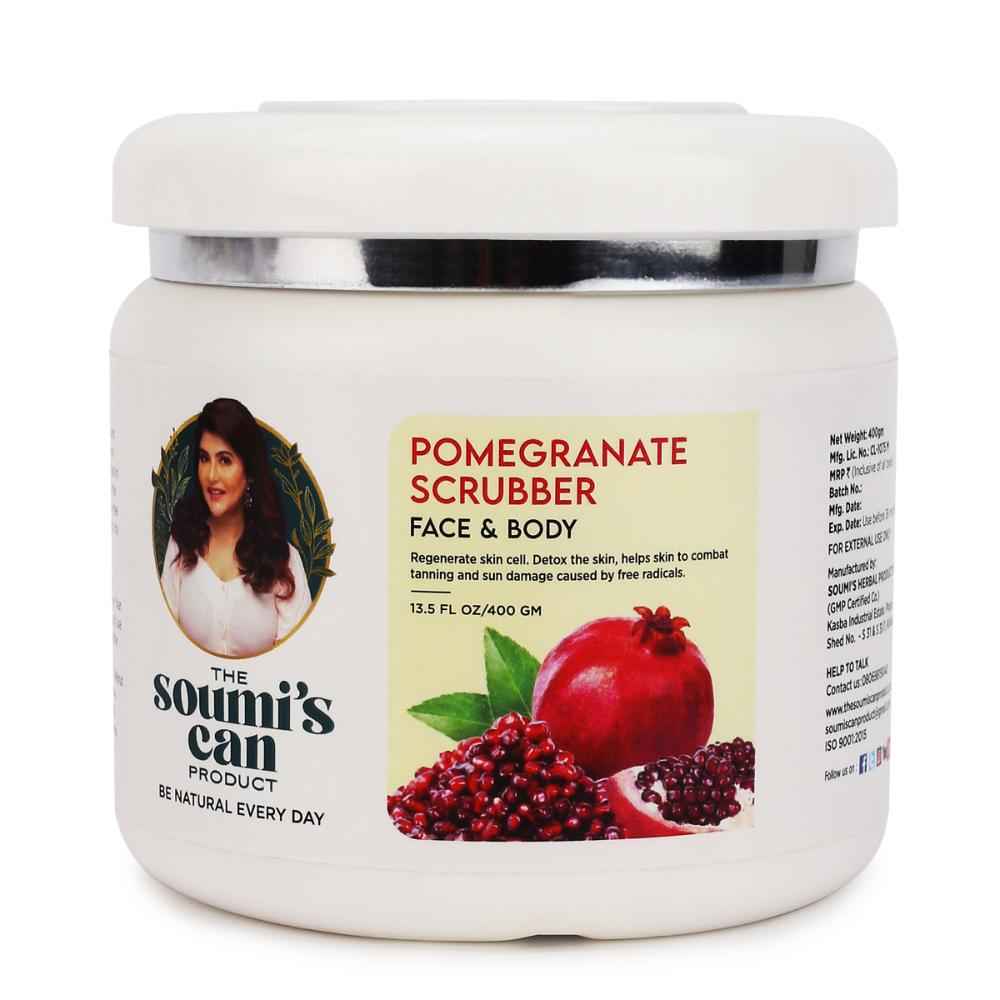
The Soumi'S Can Product Pomegranate Scrubber Face & Body (400 gm)

The Soumi'S Can Product Pomegranate Scrubber Face & Body (400 gm)
Soumis Can Product
the-soumis-can-product-pomegranate-scrubber-face-body-400-gm
Exfoliation
10085498061093
Morning or Evening?
How often will you use this product?
Notes


Highlights
WHAT IS IT?
Pomegranate scrubber face & body with natural exfoliant walnut shell; 6 key benefits highlighted
FEATURES
Rich in skin-loving nutrients, natural exfoliant with walnut shell, combats tanning and sun damage, detoxifies skin, protects epidermis, supports skin cell regeneration
BEST FOR
sensitive
CHECKS
Does not contain harmful chemicals (specifics not provided)
Who Is It For?
All Ages All GendersWhat Does It Help With?
Detoxifying Skin Combating Tanning Repairing Sun Damage Removing Dull And Dry Skin Cells Promoting Skin Cell RegenerationBudget
Affordable (under $30)How To Use
Which routine should it be used in?
Instructions:
Key Information


What Soumis Can Product Says
Product Description:
RICH IN SKINLOVING NUTRIENTS Loaded with Pomegranate this scrubber is a powerhouse of anthocyanins and ellagic acid and many other plant polyphenols providing essential nutrients that nourish and revitalize the skin.NATURAL EXFOLIANT With walnut shell as a gentle exfoliant it effectively removes dull and dry skin cells revealing soft smooth and healthy skin beneath.COMBATS TANNING AND SUN DAMAGE It helps reduce tanning and repairs sun damage caused by free radicals restoring the skins natural glow and even tone.DETOXIFIES THE SKIN This scrubber aids in detoxifying the skin removing impurities and toxins helping to combat dullness and promoting a clearer complexion.PROTECTS THE EPIDERMIS Pomegranate helps safeguard the epidermis outer skin layer offering protection against environmental damage and maintaining overall skin health.SUPPORTS SKIN CELL REGENERATION The unique formulation promotes skin cell regeneration in both the epidermis and dermis inner layer leading to fresher more youthfullooking skin.
About the Brand:
Ingredients Overview
Ingredients List
Key Ingredients
pomegranate, walnut shell, anthocyanins, ellagic acid, plant polyphenols
Ingredients Details
Anthocyanins
Common Name(s): Natural colorant,plant/animal-derived pigment,cosmos-acceptable colorant
CAS Number: N/a
DESCRIPTION
What It Does: Provides natural colour in cosmetics while simultaneously delivering bioactive antioxidant activity from the pigment molecule's radical-scavenging chromophore structure — a dual functionality unavailable from synthetic fd&c/d&c colorants.
Why It's Used: Natural colorants provide authentic clean-label positioning with genuine bioactive benefit — cosmos-accepted natural pigments like chlorophyllin and anthocyanins serve as both colorant and antioxidant from the same molecule.
How It Works: Natural pigment chromophores absorb visible light through π→π* transitions of extended conjugated systems (anthocyanin flavylium, chlorophyll porphyrin, carotenoid polyene). the same extended conjugation providing colour also provides radical-scavenging antioxidant activity through electron delocalisation that stabilises phenoxyl/carotenyl radical intermediates.
Typically Found In: Natural and cosmos cosmetics
TECHNICAL DETAILS
Primary Category: Active ingredient – mineral / metal active
Secondary Functions: Antimicrobial,sebum regulation,antioxidant enzyme cofactor
Application Areas:

Facial Skincare

Body Care
Hair Care
Beard Care
Color Cosmetics (Makeup)
Dietary/Oral Supplements
Typical Concentration Range: Check annex iv permitted status
SOURCING & ETHICS
Vegan Status: Conditional - supplier confirmation required
Halal Status: Conditional - basis not stated in source record; supplier origin confirmation required to determine what evidence applies
Source Notes: Mineral/inorganic compound. cosmetic or pharmaceutical grade. [audit 2026-07-29 rev2: status downgraded on audit. determination requires shariah-panel sign-off.]
SKIN COMPATIBILITY
Irritancy Rating: 1/5 – very low
Comedogenicity Rating: 0/5 – non-comedogenic
Sensitivity Concerns: Non-irritating at recommended concentrations.
Safe for Sensitive Skin: Yes at recommended concentrations
SAFETY & COMPATIBILITY
Safety Profile: Excellent safety profile at cosmetic concentrations. ewg score: 1–2.
Works Well With: Niacinamide,salicylic acid,other actives
Avoid Combining With: No significant incompatibilities at standard concentrations
SCIENTIFIC NOTE
Natural colorant stability is generally lower than synthetic pigments — anthocyanins degrade at ph >5 (colour shifts from red to blue-green); chlorophylls oxidise to pheophytins; carotenoids photo-oxidise. formulation must protect natural pigments from ph, light, and oxidative degradation.
Last Verified: 2026-03-12
Primary Sources: Cosing database,eu annex iv natural colorant permitted status review
Ellagic Acid
Common Name(s): 2,3,7,8-tetrahydroxy[1]benzopyrano[5,4,3-cde][1]benzopyran-5,10-dione
CAS Number: 476-66-4
DESCRIPTION
What It Does: Provides tyrosinase inhibiting brightening with antioxidant and anti-inflammatory anti-aging benefits.
Why It's Used: Multi-benefit natural brightening polyphenol combining tyrosinase inhibition with antioxidant and anti-inflammatory activity for a comprehensive brightening formulation approach.
How It Works: Inhibits tyrosinase via hydroxyl group binding to copper active site. antioxidant via phenol radical scavenging. inhibits nf-kb for anti-inflammatory activity. uv-absorbing structure provides mild photoprotective antioxidant activity.
Typically Found In: Natural brightening products,pomegranate skincare,anti-aging brightening
TECHNICAL DETAILS
Primary Category: Active ingredient – polyphenol brightening agent
Secondary Functions: Melanin inhibition,hyperpigmentation reduction
Application Areas:
Facial Skincare
Body Care
Hair Care
Beard Care
Color Cosmetics (Makeup)
Dietary/Oral Supplements
Typical Concentration Range: 0.1%–2%
SOURCING & ETHICS
Vegan Status: Yes – from pomegranate, strawberry ellagitannins
Halal Status: Yes
Source Notes: Synthetic or plant-derived.
SKIN COMPATIBILITY
Irritancy Rating: 1/5 – very low
Comedogenicity Rating: 0/5 – non-comedogenic
Sensitivity Concerns: Non-irritating; well-tolerated.
Safe for Sensitive Skin: Yes
SAFETY & COMPATIBILITY
Safety Profile: Excellent safety profile. use with spf for maximum efficacy. ewg score: 1.
Works Well With: Niacinamide,vitamin c,alpha-arbutin,tranexamic acid,spf
Avoid Combining With: No significant incompatibilities
SCIENTIFIC NOTE
Ellagic acid from pomegranate is produced via hydrolysis of ellagitannins (punicalagins) by skin esterases after topical application — it functions as a prodrug in cosmetic formulations. the hydrolysis to free ellagic acid in skin provides the active tyrosinase inhibitor from an initially less bioavailable but more stable polyphenol precursor.
Last Verified: 2026-03-12
Primary Sources: Cosing database,choi et al. ellagic acid brightening study