

TNW The Natural Wash
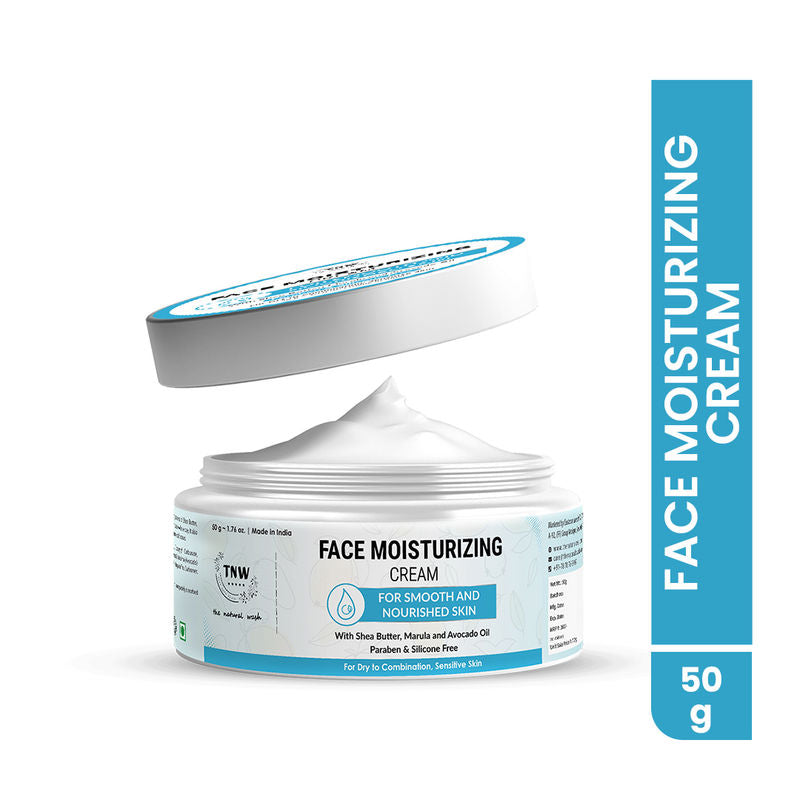
TNW The Natural Wash Face Moisturizing Cream With Shea Butter For Dry And Sensitive Skin

TNW The Natural Wash Face Moisturizing Cream With Shea Butter For Dry And Sensitive Skin
TNW The Natural Wash
tnw-the-natural-wash-face-moisturizing-cream-with-shea-butter-for-dry-and-sensitive-skin
Moisturize
10085496029477
Morning or Evening?
How often will you use this product?
Notes


Highlights
WHAT IS IT?
Face Moisturizing Cream with 5 ingredients
FEATURES
Boosts moisture and nourishment, Suitable for dry to combination and sensitive skin, Heals and hydrates skin from deep within, Locks in moisture all day, Calms redness and irritation
BEST FOR
dry
CHECKS
No parabens, No sulphates, No silicones
Who Is It For?
All Genders Suitable For Sensitive Skin TypeWhat Does It Help With?
Dryness Redness Irritation Hydration Smooth And Healthy Looking SkinBudget
Affordable (under $30)How To Use
Which routine should it be used in?
Instructions:
Key Information


What TNW The Natural Wash Says
Product Description:
Give your skin a boost of moisture and nourishment with TNW- The Natural Wash Face Moisturizing Cream with Shea Butter, Marula Oil, and Avocado Oil. Ideal for Dry to Combination and Sensitive Skin, this moisturizer helps heal and hydrate skin from deep within. This moisturizer gives healthy looking smooth skin while locking in moisture whole day. This moisturizer is also powered with Hydrolyzed Soy Protein and Aloe Vera Extracts that help calm redness and irritation.
About the Brand:
Ingredients Overview
Ingredients List
Shea-Butter,Marula-Oil,Avocado-Oil,Hydrolyzed-Soy-Protein,Aloe-Vera-Extracts
Key Ingredients
Shea Butter, Marula Oil, Avocado Oil, Hydrolyzed Soy Protein, Aloe Vera Extracts
Ingredients Details
Avocado Oil
Common Name(s): Avocado oil,avocado butter (solid fraction)
CAS Number: 8024-32-6
DESCRIPTION
What It Does: Provides deep moisturization with rich oleic acid, phytosterols, and lutein antioxidants for mature, dry skin.
Why It's Used: Rich, deeply penetrating oil for dry and mature skin requiring intensive emolliency beyond lightweight oils.
How It Works: Very high oleic acid (55-74%) penetrates deeply into stratum corneum for conditioning. beta-sitosterol and other phytosterols provide barrier repair and mild anti-inflammatory activity. lutein provides antioxidant protection. high unsaponifiable fraction (2-11%) provides unique skin bioactives.
Typically Found In: Rich moisturizers,dry skin oils,anti-aging formulas,body butters
TECHNICAL DETAILS
Primary Category: Functional ingredient – emollient
Secondary Functions: Deep penetrating emollient,phytosterol activity,anti-aging
Application Areas:

Facial Skincare
Body Care
Hair Care

Beard Care
Color Cosmetics (Makeup)
Dietary/Oral Supplements
Typical Concentration Range: 1%–50%
SOURCING & ETHICS
Vegan Status: Yes – from persea gratissima fruits
Halal Status: Yes
Source Notes: Cold-pressed from avocado fruit flesh. high unsaponifiable fraction (unsaponified lipids) makes avocado oil uniquely bioactive vs other oils with low unsaponifiable content.
SKIN COMPATIBILITY
Irritancy Rating: 1/5 – very low
Comedogenicity Rating: 3/5 – moderate; high oleic acid; test for skin type
Sensitivity Concerns: Non-irritating.
Safe for Sensitive Skin: Yes
SAFETY & COMPATIBILITY
Safety Profile: Excellent safety profile. ewg score: 1.
Works Well With: Humectants,ceramides,actives as carrier
Avoid Combining With: No significant incompatibilities
SCIENTIFIC NOTE
Avocado oil's unusually high unsaponifiable fraction (2-11% vs <2% for most plant oils) contains phytosterols, terpenes, vitamin e, and chlorophyll that remain after saponification and provide skin-active benefits not present in most other plant oils. this unsaponifiable fraction is what makes avocado oil pharmacologically distinct from simple fatty acid triglyceride oils.
Last Verified: 2026-03-12
Primary Sources: Cosing database,dreher & davenport avocado review,cir safety assessment
Hydrolyzed Soy Protein
Common Name(s): Hydrolysed protein,conditioning amino acid complex,film-forming active
CAS Number: N/a
DESCRIPTION
What It Does: Deposits a conditioning, moisture-retaining film on skin and hair from substantive protein-surface adsorption, delivers amino acids for sc keratin compatibility, and provides temporary firming from the protein film's tensile properties.
Why It's Used: Provides the conditioning benefits of structural proteins in a topically deliverable form — molecular weight distribution determines whether surface film formation (high mw) or sc penetration with deeper conditioning (low mw <500 da) predominates.
How It Works: Low-mw protein hydrolysate fractions (<500 da) penetrate the sc via aqueous channels; high-mw fractions adsorb substantively to negative hair and skin surfaces through h-bonding and electrostatic interactions. film formation reduces tewl and provides mechanical smoothing.
Typically Found In: Hair conditioners,skin serums,conditioning
TECHNICAL DETAILS
Primary Category: Functional ingredient – humectant
Secondary Functions: Tewl reduction,skin plumping
Application Areas:
Facial Skincare
Body Care
Hair Care
Beard Care
Color Cosmetics (Makeup)
Dietary/Oral Supplements
Typical Concentration Range: 0.1%–5%
SOURCING & ETHICS
Vegan Status: Conditional - supplier confirmation required
Halal Status: Unverified - supplier confirmation required
Source Notes: Synthetic or naturally derived. excellent aqueous solubility. [audit 2026-07-29 rev2: status downgraded on audit. determination requires shariah-panel sign-off.]
SKIN COMPATIBILITY
Irritancy Rating: 1/5 – very low
Comedogenicity Rating: 0/5 – non-comedogenic
Sensitivity Concerns: Non-irritating; suitable for all skin types.
Safe for Sensitive Skin: Yes
SAFETY & COMPATIBILITY
Safety Profile: Excellent safety profile. ewg score: 1.
Works Well With: Ceramides,emollients,occlusives,glycerin,hyaluronic acid
Avoid Combining With: No significant incompatibilities
SCIENTIFIC NOTE
Optimal hydrolysis degree for hair conditioning: mw 1,000–5,000 da — large enough for adsorption to hair cuticle, small enough to penetrate the cuticle surface and access cortex damage sites.
Last Verified: 2026-03-12
Primary Sources: Cosing database,hydrolyzed soy protein hydrolysed protein review
Marula Oil
Common Name(s): Marula oil,african marula seed oil
CAS Number: N/a
DESCRIPTION
What It Does: Provides rapid-absorbing, lightweight emolliency with high oleic acid skin conditioning.
Why It's Used: Ultra-lightweight premium oil for rapid-absorbing facial care with a very high oleic acid percentage among plant oils.
How It Works: Exceptionally high oleic acid content (75-78%) provides deep skin conditioning and absorption. very high tocopherol content (480mg/100g) provides excellent oxidative stability and antioxidant activity. phenolic compounds provide additional antioxidant benefit.
Typically Found In: Premium facial oils,lightweight serums,anti-aging products
TECHNICAL DETAILS
Primary Category: Functional ingredient – emollient
Secondary Functions: Rapid absorption,high tocopherol antioxidant
Application Areas:
Facial Skincare
Body Care
Hair Care
Beard Care
Color Cosmetics (Makeup)
Dietary/Oral Supplements
Typical Concentration Range: 1%–50%
SOURCING & ETHICS
Vegan Status: Yes – from sclerocarya birrea seeds
Halal Status: Yes
Source Notes: Cold-pressed from marula fruit seeds native to southern africa. sustainably harvested supporting local african communities.
SKIN COMPATIBILITY
Irritancy Rating: 1/5 – very low
Comedogenicity Rating: 3/5 – moderate; high oleic acid; test for skin type compatibility
Sensitivity Concerns: Non-irritating.
Safe for Sensitive Skin: Yes
SAFETY & COMPATIBILITY
Safety Profile: Excellent safety profile. ewg score: 1.
Works Well With: Humectants,ceramides,actives as carrier
Avoid Combining With: No significant incompatibilities
SCIENTIFIC NOTE
Marula oil's tocopherol content (~480mg/100g) is among the highest of any plant oil, providing exceptional oxidative stability (shelf life 2+ years without added antioxidants) and significant in-situ antioxidant skin benefits. by comparison, olive oil contains ~170mg/100g tocopherols.
Last Verified: 2026-03-12
Primary Sources: Cosing database,cir safety assessment
Shea Butter
Common Name(s): Shea butter,karite butter
CAS Number: 91080-23-8
DESCRIPTION
What It Does: Provides deep nourishing emolliency with anti-inflammatory cinnamic acid esters and a uniquely rich unsaponifiable fraction.
Why It's Used: The most nutritious plant butter – unique cinnamic acid esters, lupeol, and rich unsaponifiable fraction provide anti-inflammatory and wound healing benefits beyond standard fatty acid emolliency.
How It Works: Cinnamic acid esters absorb uv radiation providing mild natural uv filtering (spf 3-4). lupeol inhibits nf-kb for anti-inflammatory activity. high stearic acid provides occlusive barrier function. rich unsaponifiable fraction (4-9%) provides phytosterols, tocopherols, and triterpenes for bioactive skin benefits.
Typically Found In: Body butters,rich moisturizers,baby products,hair conditioners,lip balms
TECHNICAL DETAILS
Primary Category: Functional ingredient – emollient
Secondary Functions: Cinnamic acid uv support,lupeol anti-inflammatory,rich emolliency
Application Areas:
Facial Skincare
Body Care
Hair Care
Beard Care
Color Cosmetics (Makeup)
Dietary/Oral Supplements
Typical Concentration Range: 1%–100%
SOURCING & ETHICS
Vegan Status: Conditional - supplier confirmation required
Halal Status: Unverified - supplier confirmation required
Source Notes: Unrefined (raw) shea retains more unsaponifiable fraction and stronger natural scent/color. refined shea is odorless, white, and cleaner for formulation. certified fair trade supports west african women's cooperatives. [audit 2026-07-29 rev2: the record's own source_notes does not assert a non-animal origin, or instructs the reader to verify with the supplier; "yes" asserts knowledge the record does not hold. determination requires shariah-panel sign-off.]
SKIN COMPATIBILITY
Irritancy Rating: 1/5 – very low
Comedogenicity Rating: 0/5 – non-comedogenic (refined); 2/5 – low (raw/unrefined)
Sensitivity Concerns: Non-irritating.
Safe for Sensitive Skin: Yes
SAFETY & COMPATIBILITY
Safety Profile: Excellent safety profile. ewg score: 1.
Works Well With: Humectants,ceramides,actives as carrier
Avoid Combining With: No significant incompatibilities
SCIENTIFIC NOTE
Shea butter's unsaponifiable fraction (4-9%, vs coconut oil's 0.5% and olive oil's 1-2%) is exceptionally rich in triterpenes, phytosterols, and tocopherols. this fraction is responsible for shea's anti-inflammatory and wound healing properties that simple fatty acid analysis fails to reveal.
Last Verified: 2026-03-12
Primary Sources: Cosing database,lin et al. shea butter cinnamic acid study,cir safety assessment