

Yes To
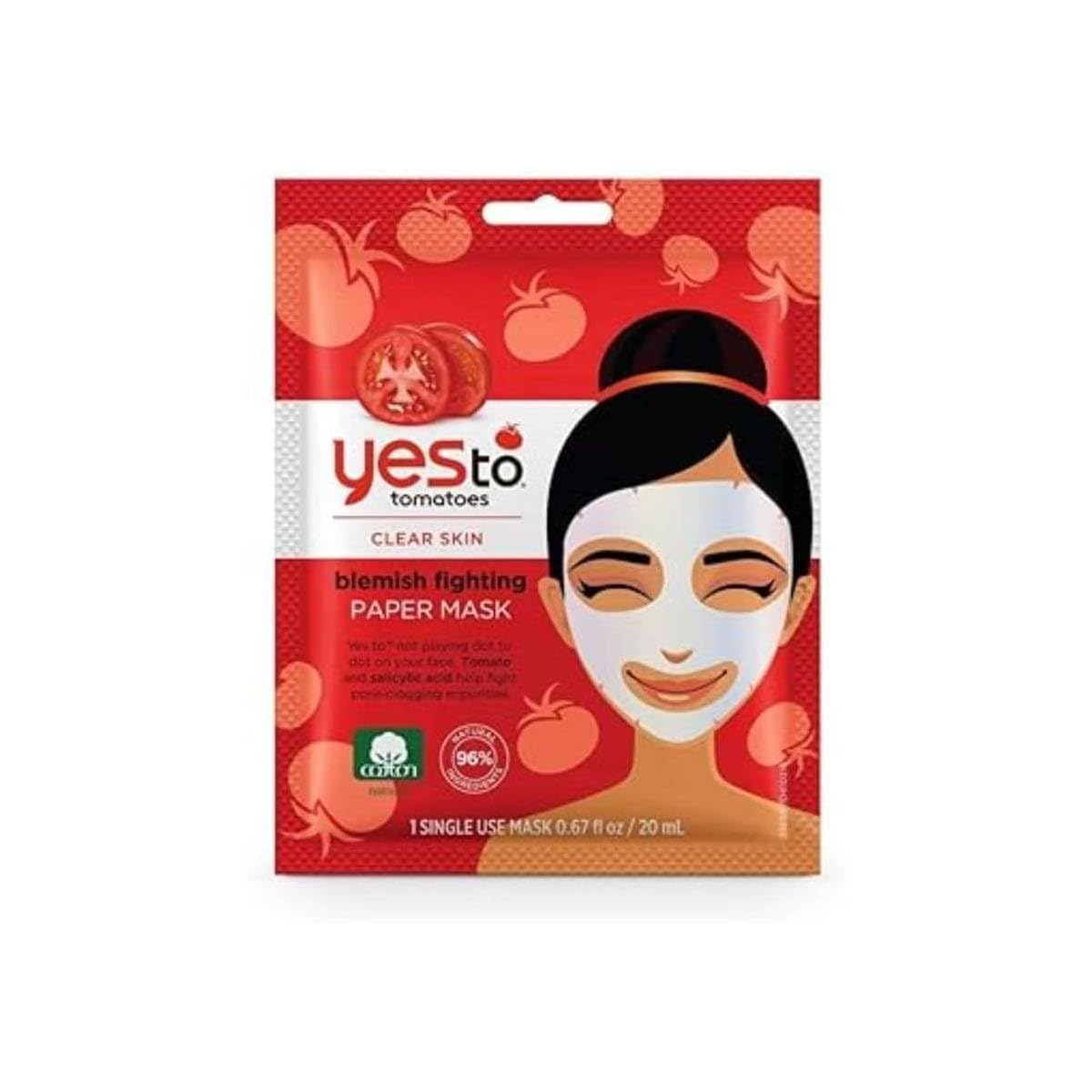
tomatoes clear skin blemish fighting paper mask - single use

tomatoes clear skin blemish fighting paper mask - single use
Yes To
tomatoes-clear-skin-blemish-fighting-paper-mask-single-use
Face Mask
9706834428197
Morning or Evening?
How often will you use this product?
Notes


Highlights
WHAT IS IT?
Single-use paper mask with detoxifying ingredients
FEATURES
Deep cleans, removes impurities, made of plant-based fibers
BEST FOR
Blemish-prone skin
CHECKS
Free of parabens, silicones, phthalates
Who Is It For?
For Adults (18+) Of Any GenderWhat Does It Help With?
Blemishes ImpuritiesBudget
AffordableHow To Use
Which routine should it be used in?
Instructions:
Key Information


What Yes To Says
Product Description:
This quick-fix detoxifier deep cleans and removes impurities with our signature blend of detoxifying Charcoal, antioxidant-rich Tomato Extract, Witch Hazel. Made of plant-based fibers, this single-use paper mask is most effective when used after daily cleansing and right before moisturizing.
About the Brand:
Ingredients Overview
Ingredients List
Water, Aloe Barbadensis Leaf Juice, SD Alcohol-40B, Propanediol, Hamamelis Virginiana (Witch Hazel) Water, Glycerin Sorbitol, Solanum Lycopersicum (Tomato) Fruit Extract, Melaleuca Alternifolia (Tea Tree) Flower/Leaf/Stem Extract, Aspalathus Linearis Extract, Chamomilla Recutita (Matricaria) Extract, Cucurbita Pepo (Pumpkin), Salix Alba (Willow) Bark Extract, Ginkgo Biloba Leaf Extract Allantoin, Algin, Beta Glucan, Caprylhydroxamic Acid, Dipotassium Glycyrrhizate Tetrasodium Glutamate Diacetate, Xanthan Gum, Benzoic Acid Sodium Hydroxide, Sorbic Acid, Citric Acid, Potassium Sorbate, Sodium Benzoate, Phenoxyethanol, Fragrance
Key Ingredients
Charcoal, Tomato Extract, Witch Hazel
Ingredients Details
Aloe Barbadensis Leaf Juice
Common Name(s): Aloe barbadensis leaf juice,cosmetic active,functional ingredient
CAS Number: N/a
DESCRIPTION
What It Does: Delivers characteristic cosmetic function — skin conditioning, protection, preservation, or active biological benefit — at recommended use concentration.
Why It's Used: Selected for its functional contribution and formulation compatibility — supported by cosmetic science literature and regulatory safety assessment.
How It Works: Works through the mechanism of its molecular class — physicochemical interaction with the formulation or biological interaction with skin proteins, lipids, or receptors as documented in peer-reviewed literature.
Typically Found In: Skin care formulations
TECHNICAL DETAILS
Primary Category: Active ingredient – cosmetic active
Secondary Functions: Skin conditioning
Application Areas:

Facial Skincare

Body Care
Hair Care
Beard Care
Color Cosmetics (Makeup)
Dietary/Oral Supplements
Typical Concentration Range: 0.1%–10%
SOURCING & ETHICS
Vegan Status: Conditional
Halal Status: Yes
Source Notes: Commercially produced for cosmetic use. verify vegan/halal status with supplier.
SKIN COMPATIBILITY
Irritancy Rating: 1/5 – very low
Comedogenicity Rating: 0/5 – non-comedogenic
Sensitivity Concerns: Well-tolerated by most skin types.
Safe for Sensitive Skin: Yes
SAFETY & COMPATIBILITY
Safety Profile: Good safety profile at recommended concentrations. ewg score: 1–2.
Works Well With: Standard skincare actives
Avoid Combining With: No known significant incompatibilities
SCIENTIFIC NOTE
Aloe barbadensis leaf juice delivers documented functional benefit with an established safety profile within the cosmetic regulatory framework (cosing eu, cir usa).
Last Verified: Cosing database,aloe barbadensis leaf juice technical literature
Primary Sources: 2026-03-12
Aspalathus Linearis Extract
Common Name(s): Aspalathus linearis extract,botanical extract,phytochemical active
CAS Number: N/a
DESCRIPTION
What It Does: Provides antioxidant protection, anti-inflammatory activity, and skin conditioning from polyphenols, terpenoids, and phytochemicals in the extract.
Why It's Used: Natural plant extracts provide multi-functional phytochemical profiles supporting concurrent skin care claims from one ingredient with authentic botanical heritage.
How It Works: Polyphenols scavenge ros via h• donation; terpenoids inhibit nf-kb or cox inflammatory pathways; vitamins and minerals provide cofactor skin nutrition.
Typically Found In: Botanical skin care,natural products
TECHNICAL DETAILS
Primary Category: Active ingredient – antioxidant
Secondary Functions: Free radical scavenging,anti-aging
Application Areas:
Facial Skincare
Body Care
Hair Care
Beard Care
Color Cosmetics (Makeup)
Dietary/Oral Supplements
Typical Concentration Range: 0.1%–30%
SOURCING & ETHICS
Vegan Status: Conditional
Halal Status: Conditional
Source Notes: Plant-derived extract or synthetic.
SKIN COMPATIBILITY
Irritancy Rating: 1/5 – very low
Comedogenicity Rating: 0/5 – non-comedogenic
Sensitivity Concerns: Non-irritating; well-tolerated.
Safe for Sensitive Skin: Yes
SAFETY & COMPATIBILITY
Safety Profile: Excellent safety profile. ewg score: 1.
Works Well With: Vitamin c,vitamin e,ferulic acid,spf,other antioxidants
Avoid Combining With: No significant incompatibilities
SCIENTIFIC NOTE
Plant secondary metabolites evolved for uv photoprotection and pathogen defence — mechanisms directly applicable to cosmetic antioxidant and anti-inflammatory activity in human skin.
Last Verified: Cosing database,aspalathus linearis extract botanical review
Primary Sources: 2026-03-12
Propanediol
Common Name(s): 1,3-propanediol,zemea,bio-propanediol
CAS Number: 504-63-2
DESCRIPTION
What It Does: Provides humectant and solvent functionality from sustainable corn-based fermentation.
Why It's Used: Bio-based propylene glycol alternative from renewable corn — propanediol provides equivalent functionality to propylene glycol with sustainable renewable feedstock and superior skin feel.
How It Works: Two oh groups provide humectant water binding. excellent solvent for fragrances, actives, and preservatives. mild antimicrobial from diol structure for preservative system boosting. renew corn fermentation origin (dupont zemea process). better skin feel than propylene glycol — less sticky.
Typically Found In: Virtually all cosmetic categories as pg alternative
TECHNICAL DETAILS
Primary Category: Functional ingredient – humectant
Secondary Functions: Tewl reduction,skin plumping
Application Areas:
Facial Skincare
Body Care
Hair Care
Beard Care
Color Cosmetics (Makeup)
Dietary/Oral Supplements
Typical Concentration Range: 1%–20%
SOURCING & ETHICS
Vegan Status: Yes – from corn sugar fermentation
Halal Status: Yes
Source Notes: Synthetic or naturally derived. excellent aqueous solubility.
SKIN COMPATIBILITY
Irritancy Rating: 1/5 – very low
Comedogenicity Rating: 0/5 – non-comedogenic
Sensitivity Concerns: Non-irritating; suitable for all skin types.
Safe for Sensitive Skin: Yes
SAFETY & COMPATIBILITY
Safety Profile: Excellent safety profile. ewg score: 1.
Works Well With: Ceramides,emollients,occlusives,glycerin,hyaluronic acid
Avoid Combining With: No significant incompatibilities
SCIENTIFIC NOTE
Propanediol's dupont tate & lyle bio products 'zemea' process ferments corn sugar to 1,3-propanediol using engineered e. coli — one of the first commercially viable bio-fermentation routes to a cosmetic diol previously made only from petroleum. the renewable route produces chemically identical 1,3-propanediol while reducing carbon footprint by approximately 40% vs petrochemical synthesis.
Last Verified: Cosing database,dupont tate & lyle zemea technical data,cir safety assessment
Primary Sources: 2026-03-12
