

Naturium
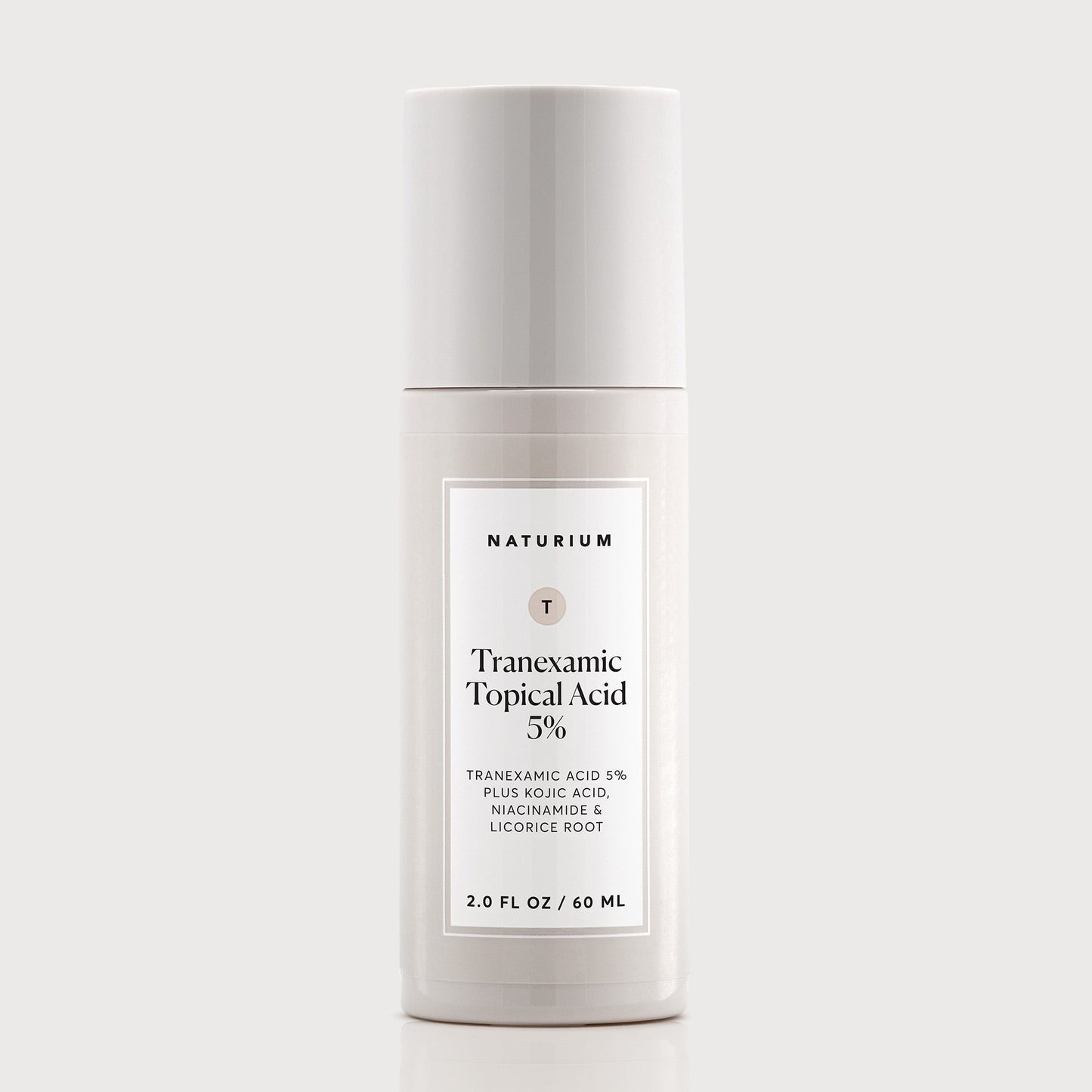
Tranexamic Topical Acid 5% - Jumbo

Tranexamic Topical Acid 5% - Jumbo
Naturium
tranexamic-topical-acid-5-jumbo
Serum
9818320077093
Morning or Evening?
How often will you use this product?
Notes


Highlights
WHAT IS IT?
Tranexamic acid serum with 5% concentration
FEATURES
Helps fade dark spots, brightens skin appearance, clinically proven results in 8 weeks
BEST FOR
combination
CHECKS
Free of alcohol, paraben, sulfate, silicon, fragrance, oil
Who Is It For?
All Skin Types Including Sensitive SkinWhat Does It Help With?
Dark Spots Fading Skin BrighteningBudget
Mid-range ($30-$75)How To Use
Which routine should it be used in?
Instructions:
Key Information


What Naturium Says
Product Description:
Double up and save with this jumbo size of our topical tranexamic acid serum formulated with a potent level of tranexamic acid, plus kojic acid, niacinamide and licorice root extract to help fade the appearance of dark spots, for brighter looking skin. Our tranexamic topical acid is clinically proven to improve the look of dark spots and brighten skin's appearance in just 8 weeks.
About the Brand:
Ingredients Overview
Ingredients List
Water, Isopentyldiol, Tranexamic Acid, Propanediol, Citric Acid, Kojic Acid, Niacinamide, Hydroxyacetophenone, Isododecane, Polyacrylate Crosspolymer-6, Glycyrrhiza Glabra (Licorice) Root Extract, Panthenol, Glycerin, Xanthan Gum, Tremella Fuciformis Sporocarp Extract, Phenoxyethanol, Ethylhexylglycerin, Betaine, Sodium Hyaluronate, Sodium Phytate, Potassium Sorbate, Tocopherol
Key Ingredients
tranexamic acid, kojic acid, niacinamide, licorice root extract
Ingredients Details
Kojic Acid
Common Name(s): 5-hydroxy-2-(hydroxymethyl)-4-pyranone,koji acid
CAS Number: 501-30-4
DESCRIPTION
What It Does: Provides potent copper-chelating tyrosinase inhibition for effective hyperpigmentation treatment.
Why It's Used: One of the most effective brightening agents — kojic acid's copper chelation directly blocks the tyrosinase active site providing stronger brightening than most naturally-derived alternatives.
How It Works: Chelates copper in the tyrosinase active site via the 3-hydroxy-4-pyranone chelating group (ic50 ~5μg/ml). without copper cofactor, tyrosinase cannot oxidise tyrosine to dopa or dopa to dopaquinone. inhibits both hydroxylation steps in eumelanin synthesis pathway.
Typically Found In: Brightening serums,hyperpigmentation treatments,anti-spot products
TECHNICAL DETAILS
Primary Category: Active ingredient – fungal brightening agent
Secondary Functions: Melanin inhibition,hyperpigmentation reduction
Application Areas:

Facial Skincare

Body Care
Hair Care
Beard Care
Color Cosmetics (Makeup)
Dietary/Oral Supplements
Typical Concentration Range: 0.5%–2%
SOURCING & ETHICS
Vegan Status: Yes – from aspergillus oryzae or acetobacter fermentation
Halal Status: Yes
Source Notes: Synthetic or plant-derived.
SKIN COMPATIBILITY
Irritancy Rating: 1/5 – very low
Comedogenicity Rating: 0/5 – non-comedogenic
Sensitivity Concerns: Non-irritating; well-tolerated.
Safe for Sensitive Skin: Yes
SAFETY & COMPATIBILITY
Safety Profile: Eu annex iii regulated: max 1% in face products. sensitiser potential — patch test for sensitive skin. photosensitive in formulation — requires stabilisation.
Works Well With: Niacinamide,vitamin c,alpha-arbutin,tranexamic acid,spf
Avoid Combining With: No significant incompatibilities
SCIENTIFIC NOTE
Kojic acid's copper chelation mechanism provides an unusually direct enzyme inhibition: rather than competing with tyrosine substrate (competitive inhibitor) or altering enzyme conformation (allosteric inhibitor), kojic acid simply removes the copper cofactor that is essential for tyrosinase catalytic activity — a metal-chelation mechanism that provides near-complete enzyme inhibition regardless of substrate concentration.
Last Verified: ##########
Primary Sources: Cosing database,eu annex iii,cir safety assessment
Licorice Root Extract
Common Name(s): Licorice root extract,licorice extract,glycyrrhiza extract
CAS Number: 84775-66-6
DESCRIPTION
What It Does: Brightens skin and reduces hyperpigmentation through glabridin tyrosinase inhibition while calming inflammation.
Why It's Used: Combined brightening + soothing in one botanical – ideal for hyperpigmentation with skin reactivity where brightening actives (ahas, retinoids) increase sensitivity.
How It Works: Glabridin inhibits uvb-induced melanin synthesis and tyrosinase activity. isoliquiritigenin inhibits melanocyte-stimulating hormone (msh). glycyrrhizinic acid inhibits prostaglandin synthesis for anti-inflammatory activity. licochalcone a inhibits nf-kb.
Typically Found In: Brightening serums,anti-inflammatory formulas,post-sun products,sensitive skin brightening
TECHNICAL DETAILS
Primary Category: Active ingredient – soothing / anti-inflammatory
Secondary Functions: Glabridin tyrosinase inhibition,anti-inflammatory,post-inflammatory hyperpigmentation
Application Areas:
Facial Skincare
Body Care
Hair Care
Beard Care
Color Cosmetics (Makeup)
Dietary/Oral Supplements
Typical Concentration Range: 0.1%–5%
SOURCING & ETHICS
Vegan Status: Yes – glycyrrhiza glabra root-derived
Halal Status: Yes
Source Notes: Plant-derived extract or synthetic.
SKIN COMPATIBILITY
Irritancy Rating: 1/5 – very low
Comedogenicity Rating: 0/5 – non-comedogenic
Sensitivity Concerns: Non-irritating; ideal for reactive and sensitive skin.
Safe for Sensitive Skin: Yes – particularly recommended for sensitive skin
SAFETY & COMPATIBILITY
Safety Profile: Excellent safety profile. ewg score: 1.
Works Well With: Ceramides,panthenol,allantoin,hyaluronic acid,centella asiatica
Avoid Combining With: No significant incompatibilities
SCIENTIFIC NOTE
Glabridin's tyrosinase inhibition mechanism differs from both kojic acid (copper chelation) and arbutin (substrate competition) – it inhibits the enzyme's catalytic conformation without substrate competition, providing a third distinct brightening mechanism suitable for formulation with the other inhibitor types for synergistic brightening.
Last Verified: 2026-03-12
Primary Sources: Cosing database,yokota et al. glabridin study,plenkov et al. licorice review
Niacinamide
Common Name(s): Vitamin b3,nicotinamide,pyridine-3-carboxamide
CAS Number: 98-92-0
DESCRIPTION
What It Does: Niacinamide strengthens the skin barrier, reduces visible pore size, regulates sebum production, fades dark spots, and improves skin texture and tone.
Why It's Used: It is used because it addresses multiple skin concerns at once without irritation, making it suitable for all skin types. it is stable in formulations and pairs well with most other actives.
How It Works: Niacinamide inhibits the transfer of melanosomes (pigment packets) to skin cells, reducing hyperpigmentation. it also stimulates ceramide synthesis to strengthen the skin barrier and reduces inflammation by modulating cytokine activity.
Typically Found In: Serums,moisturizers,toners,cleansers,eye creams,sunscreens,primers
TECHNICAL DETAILS
Primary Category: Active ingredient – vitamin
Secondary Functions: Barrier repair,brightening,anti-inflammatory
Application Areas:
Facial Skincare
Body Care
Hair Care
Beard Care
Color Cosmetics (Makeup)
Dietary/Oral Supplements
Typical Concentration Range: 2%–10% (typical: 5%; higher concentrations may cause flushing in some individuals)
SOURCING & ETHICS
Vegan Status: Yes – synthetically produced
Halal Status: Yes – synthetic origin
Source Notes: Commercially produced via synthesis from nicotinic acid or 3-cyanopyridine. no animal-derived sources used in cosmetic-grade niacinamide.
SKIN COMPATIBILITY
Irritancy Rating: 1/5 – very low; concentrations above 10% may cause temporary flushing in sensitive individuals
Comedogenicity Rating: 0/5 – non-comedogenic
Sensitivity Concerns: At concentrations >10%, some users experience niacin flush (transient redness/tingling). generally very well-tolerated.
Safe for Sensitive Skin: Yes – one of the best-tolerated actives for sensitive skin
SAFETY & COMPATIBILITY
Safety Profile: Extensively studied and considered very safe. ewg hazard score: 1. no significant systemic toxicity concerns at topical concentrations.
Works Well With: Retinol,peptides,ahas/bhas,hyaluronic acid,ceramides,zinc,vitamin c,spf
Avoid Combining With: High concentrations of vitamin c (ascorbic acid) may theoretically convert to niacin – use at different times if using pure l-ascorbic acid above 15%
SCIENTIFIC NOTE
Niacinamide is a precursor to nad+ and nadp+, coenzymes vital to cellular energy metabolism. its benefits for dna repair and mitochondrial function make it a key ingredient in anti-aging strategies.
Last Verified: 2026-03-12
Primary Sources: Cosing database,cir safety assessment,ewg skin deep,pubmed clinical studies
Tranexamic Acid
Common Name(s): Trans-4-aminomethylcyclohexanecarboxylic acid,txa,cyklokapron
CAS Number: 1197-18-8
DESCRIPTION
What It Does: Provides brightening by inhibiting uv-induced plasminogen activation that triggers melanocyte stimulation.
Why It's Used: Novel brightening mechanism — tranexamic acid targets uv-induced melanocyte stimulation upstream of tyrosinase activity, providing complementary brightening to tyrosinase inhibitors with exceptional tolerability.
How It Works: Lysine analogue binds lysine-binding sites on plasminogen preventing its conversion to plasmin. uv-activated plasmin normally increases keratinocyte arachidonic acid release stimulating melanocyte activity via prostaglandin e2 and alpha-msh. txa blocks this uv-melanocyte signalling cascade upstream of pigment synthesis.
Typically Found In: Brightening serums,anti-melasma products,uv-induced pigmentation
TECHNICAL DETAILS
Primary Category: Active ingredient – lysine analogue brightening
Secondary Functions: Melanin inhibition,hyperpigmentation reduction
Application Areas:
Facial Skincare
Body Care
Hair Care
Beard Care
Color Cosmetics (Makeup)
Dietary/Oral Supplements
Typical Concentration Range: 0.5%–5%
SOURCING & ETHICS
Vegan Status: Yes – synthetic
Halal Status: Yes
Source Notes: Synthetic or plant-derived.
SKIN COMPATIBILITY
Irritancy Rating: 1/5 – very low
Comedogenicity Rating: 0/5 – non-comedogenic
Sensitivity Concerns: Non-irritating; well-tolerated.
Safe for Sensitive Skin: Yes
SAFETY & COMPATIBILITY
Safety Profile: Excellent safety profile. use with spf for maximum efficacy. ewg score: 1.
Works Well With: Niacinamide,vitamin c,alpha-arbutin,tranexamic acid,spf
Avoid Combining With: No significant incompatibilities
SCIENTIFIC NOTE
Tranexamic acid's brightening mechanism was discovered serendipitously — it was originally a haemostasis drug for reducing surgical bleeding. dermatologists noted that patients receiving txa for bleeding showed improved melasma, leading to investigation that revealed the plasminogen–prostaglandin–melanocyte signalling cascade as a completely previously unknown brightening target.
Last Verified: 2026-03-12
Primary Sources: Cosing database,huang et al. tranexamic acid brightening review