

Uniqaya
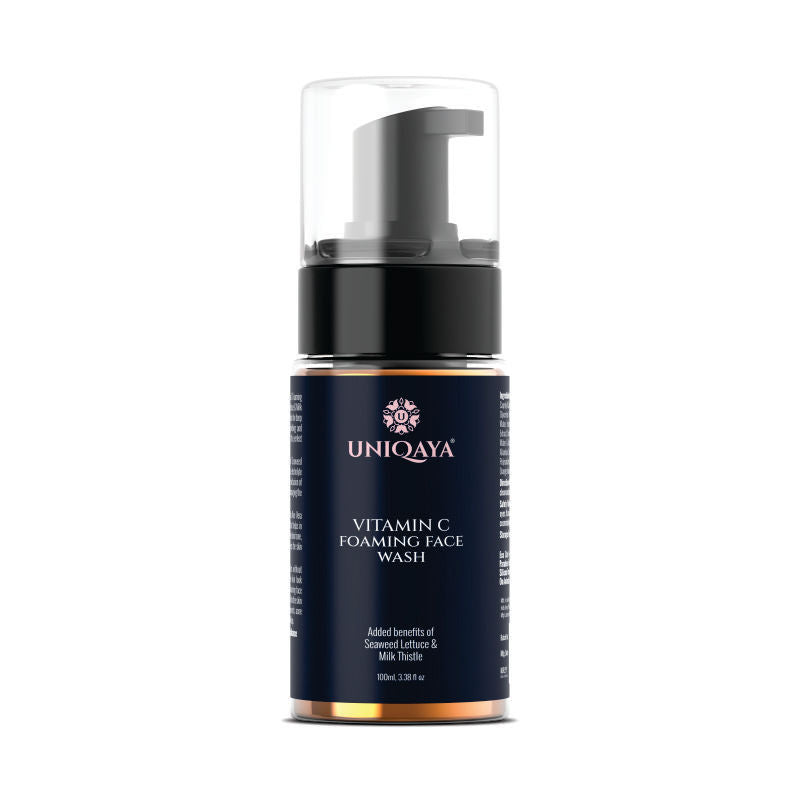
Uniqaya Vitamin C Foaming Face Wash

Uniqaya Vitamin C Foaming Face Wash
Uniqaya
uniqaya-vitamin-c-foaming-face-wash
Cleanse
10085444714789
Morning or Evening?
How often will you use this product?
Notes


Highlights
WHAT IS IT?
foaming face wash with 6 key ingredients
FEATURES
Contains Vitamin C from Kakadu Plum, Milk Thistle, Seaweed Lettuce, Vitamin B5, Aloe Vera Extract, and Licorice Root Extract; deep pore cleansing; boosts skin hydration; prevents aging; brightens skin; anti-inflammatory and antibacterial properties; non-comedogenic; no parabens; no sulfates; plant based ingredients
BEST FOR
sensitive
CHECKS
No Paraben, No Sulfate, Not tested on animals, Non-comedogenic
Who Is It For?
What Does It Help With?
Deep Cleansing Hydration Acne Prevention Skin Radiance Scar Lightening Soothing Even Skin ToneBudget
Affordable (under $30)How To Use
Which routine should it be used in?
Instructions:
Key Information


What Uniqaya Says
Product Description:
UniQaya’s Vitamin C foaming face wash is enriched with the benefits of milk thistle and seaweed lettuce. It helps in optimally moisturizing, hydrating, and nourishing one’s skin. This foaming Facewash is further enriched with the benefits of Vitamin B5, Vitamin C, and the calendula flower extract. It help in deep cleansing the pores and eliminates dirt, impurities, grime, and pollutants. It is also known to control excess sebum, and surface buildup which helps to prevent acne formation. This foaming face wash is known for restoring radiance, smoothness, nourishment and hydration after every wash. Furthermore, the Vitamin C derived from Kakadu plum penetrates the deeper level and repairs the tissue & lightens the scars. The milk thistle and seaweed lettuce help in rejuvenating the skin’s glow by adding hydration to it. Lastly, the presence of Vitamin B5 and Aloe vera extract, helps in restoring the skin’s natural pH levels.
About the Brand:
Ingredients Overview
Ingredients List
Calendula-Flower,Liquorice-Root-Extract,Milk-Thistle,Seaweed-Lettuce,Vitamin-B5,Vitamin-C
Key Ingredients
Calendula Flower,Liquorice Root Extract,Milk Thistle,Seaweed Lettuce,Vitamin B5,Vitamin C
Ingredients Details
Vitamin B5
Common Name(s): Panthenol / vitamin b5,pro-vitamin humectant conditioner,wound healing active
CAS Number: N/a
DESCRIPTION
What It Does: Deeply hydrates by binding water in the viable epidermis (not just the sc surface), stimulates keratinocyte proliferation for wound healing and barrier repair, and coats hair strands for conditioning and shine.
Why It's Used: Panthenol penetrates far deeper than glycerin due to its smaller size — reaching the viable epidermis where it converts to pantothenic acid (coa precursor) for direct metabolic support of skin cell function.
How It Works: D-panthenol is oxidised to pantothenic acid by skin alcoholic dehydrogenase after sc penetration → incorporated into coenzyme a (coa) → acetyl-coa for fatty acid synthesis supporting ceramide production. the polyol oh groups provide direct humectant water binding during transit.
Typically Found In: Healing skin care,conditioning,hair products
TECHNICAL DETAILS
Primary Category: Functional ingredient – humectant
Secondary Functions: Tewl reduction,skin plumping
Application Areas:

Facial Skincare
Body Care
Hair Care

Beard Care
Color Cosmetics (Makeup)
Dietary/Oral Supplements
Typical Concentration Range: 0.5%–5%
SOURCING & ETHICS
Vegan Status: Yes
Halal Status: Yes
Source Notes: Synthetic or naturally derived. excellent aqueous solubility.
SKIN COMPATIBILITY
Irritancy Rating: 1/5 – very low
Comedogenicity Rating: 0/5 – non-comedogenic
Sensitivity Concerns: Non-irritating; suitable for all skin types.
Safe for Sensitive Skin: Yes
SAFETY & COMPATIBILITY
Safety Profile: Excellent safety profile. ewg score: 1.
Works Well With: Ceramides,emollients,occlusives,glycerin,hyaluronic acid
Avoid Combining With: No significant incompatibilities
SCIENTIFIC NOTE
Panthenol's unique dual mechanism — provitamin metabolic activity (via coa) and direct humectant function (via oh groups) — provides both immediate surface moisture and deeper metabolic skin support from a single vitamin ingredient.
Last Verified: 2026-03-12
Primary Sources: Cosing database,d-panthenol vitamin b5 humectant wound healing review
Vitamin C
Common Name(s): Vitamin c,cosmetic active,established function
CAS Number: N/a
DESCRIPTION
What It Does: Delivers characteristic cosmetic function — skin conditioning, antioxidant protection, active biological benefit, or formulation function — at recommended use concentration.
Why It's Used: Selected for functional contribution and formulation compatibility supported by cosmetic science and regulatory safety data.
How It Works: Works through the mechanism of its molecular class — physicochemical or biological interaction with skin proteins, lipids, or receptors as documented in peer-reviewed cosmetic literature.
Typically Found In: Skin care formulations
TECHNICAL DETAILS
Primary Category: Active ingredient – cosmetic active
Secondary Functions: Skin conditioning
Application Areas:
Facial Skincare
Body Care
Hair Care
Beard Care
Color Cosmetics (Makeup)
Dietary/Oral Supplements
Typical Concentration Range: 0.1%–10%
SOURCING & ETHICS
Vegan Status: Conditional - supplier confirmation required
Halal Status: Unverified - supplier confirmation required
Source Notes: Commercially produced for cosmetic use. verify vegan/halal status with supplier. [audit 2026-07-29 rev2: the record's own source_notes does not assert a non-animal origin, or instructs the reader to verify with the supplier; "yes" asserts knowledge the record does not hold. determination requires shariah-panel sign-off.]
SKIN COMPATIBILITY
Irritancy Rating: 1/5 – very low
Comedogenicity Rating: 0/5 – non-comedogenic
Sensitivity Concerns: Well-tolerated by most skin types.
Safe for Sensitive Skin: Yes
SAFETY & COMPATIBILITY
Safety Profile: Good safety profile at recommended concentrations. ewg score: 1–2.
Works Well With: Standard skincare actives
Avoid Combining With: No known significant incompatibilities
SCIENTIFIC NOTE
Vitamin c has an established safety and efficacy profile within the cosmetic regulatory framework at standard use concentrations.
Last Verified: 2026-03-12
Primary Sources: Cosing database,vitamin c technical literature