

Urban Veda
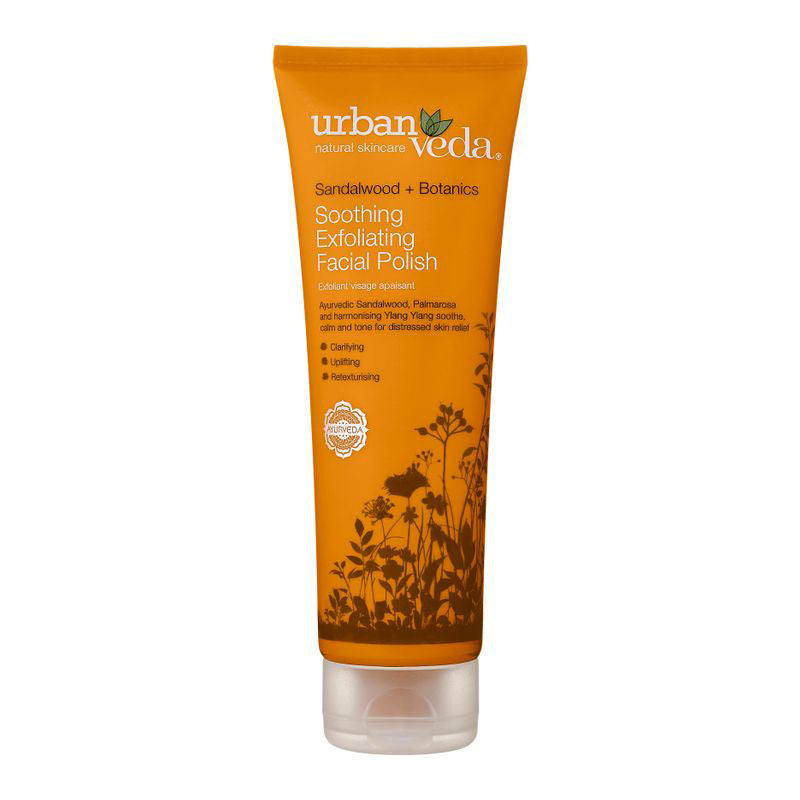
Urban Veda Soothing Sandalwood Exfoliating Facial Polish

Urban Veda Soothing Sandalwood Exfoliating Facial Polish
Urban Veda
urban-veda-soothing-sandalwood-exfoliating-facial-polish
Exfoliation
10085054841125
Morning or Evening?
How often will you use this product?
Notes


Highlights
WHAT IS IT?
Exfoliating facial polish, 31 ingredients
FEATURES
Gentle exfoliator, Removes impurities without irritation, Naturally exfoliating pumice stone, Healing sandalwood, Gentle lavender, Nourishes skin, Cream texture, Reveals fresher-looking skin, Non-drying, Keeps skin moisturized and soft, Can be used as a face mask, Vegan and cruelty-free
BEST FOR
sensitive
CHECKS
No plastic microbeads
Who Is It For?
No Specific Age Range Or Gender MentionedWhat Does It Help With?
Removes Dead Skin Cells Cleanses And Polishes Skin Nourishes Skin Soothes And Calms SkinBudget
Premium ($76-$150)How To Use
Which routine should it be used in?
Instructions:
Key Information


What Urban Veda Says
Product Description:
Exfoliate sensitive skin the extra gentle way with Urban Veda Soothing Sandalwood Exfoliating Facial Polish. This mild formula removes impurities without causing any irritation to skin with the help of the naturally exfoliating pumice stone blended with healing sandalwood and gentle lavender that also help nourish skin. The cream texture reveals fresher-looking skin. Recommended for: Normal to sensitive skin. Dosha: Pitta. Features: Gentle exfoliator that cleanses and polishes facial skin, Buffs away dead skin cells along with dirt and grime, Lavender and sandalwood extracts help nourish skin, Leaves your skin feeling calm and refreshed with each use, Ayurvedic scrub is non-drying and keeps the skin moisturized and soft, Doubles up as a face mask to leave skin soothed and refreshed, All Urban Veda products are 100% vegan and cruelty-free.
About the Brand:
Ingredients Overview
Ingredients List
Aqua-(Water),Caprylic/Capric-Triglyceride,Isopropyl-Palmitate,Glycerin,Cetearyl-Alcohol,Glyceryl-Stearate,Glyceryl-Stearate-SE,Pumice,Polyglyceryl-3-Dicitrate/Stearate,Benzyl-Alcohol,Hydroxyacetophenone,Sodium-Stearoyl-Glutamate,Sodium-Stearoyl-Glutamate,Citric-Acid,Xanthan-Gum,Salicylic-Acid,Parfum-(Fragrance),Lavandula-Hybrida-Oil,Pelargonium-Graveolens-(Geranium)-Oil,Pogostemon-Cablin-(Patchouli)-Leaf-Oil,Sodium-Phytate,Cananga-Odorata-(Ylang-Ylang)-Flower-Oil,Citrus-Aurantium-Dulcis-(Orange)-Peel-Oil,Citrus-Limon-(Lemon)-Peel-Oil,Cymbopogon-Martini-(Palmarosa)-Oil,Eugenia-Caryophyllus-(Clove)-Leaf-Oil,Rosmarinus-Officinalis-(Rosemary)-Leaf-Oil,Salvia-Sclarea-(Clary)-Oil,Sorbic-Acid,Terminalia-Arjuna-Bark-Extract,Santalum-Album-(Sandalwood)-Oil,Commiphora-Myrrha-Oil,Mentha-Piperita-(Peppermint)-Oil,Geraniol,Limonene,Linalool
Key Ingredients
Pumice,Sandalwood Oil,Lavender Oil,Salicylic Acid,Terminalia Arjuna Bark Extract
Ingredients Details
Geraniol
Common Name(s): (e)-3,7-dimethyl-2,6-octadien-1-ol,geranyl alcohol
CAS Number: 106-24-1
DESCRIPTION
What It Does: Provides fresh rose-geranium floral scent with antimicrobial activity.
Why It's Used: The rose fragrance terpene – geraniol defines the fresh, sweet rose-geranium note found in more than 60 essential oils and is essential for recreating natural floral fragrance profiles.
How It Works: Monoterpene alcohol inhibits bacterial membrane integrity for antimicrobial activity. activates trpv1 for anti-nociception. inhibits nf-kb for anti-inflammatory activity. antioxidant via allylic radical scavenging.
Typically Found In: Rose-scented products,floral fragrances,natural cosmetics
TECHNICAL DETAILS
Primary Category: Fragrance component – acyclic monoterpene alcohol
Secondary Functions: Skin conditioning
Application Areas:

Facial Skincare

Body Care
Hair Care
Beard Care
Color Cosmetics (Makeup)
Dietary/Oral Supplements
Typical Concentration Range: 0.001%–1%
SOURCING & ETHICS
Vegan Status: Yes – from rose, geranium, palmarosa oils
Halal Status: Yes
Source Notes: Commercially produced for cosmetic use. verify vegan/halal status with supplier.
SKIN COMPATIBILITY
Irritancy Rating: 1/5 – very low
Comedogenicity Rating: 0/5 – non-comedogenic
Sensitivity Concerns: Well-tolerated by most skin types.
Safe for Sensitive Skin: Yes
SAFETY & COMPATIBILITY
Safety Profile: Eu cosmetics regulation: declared fragrance allergen. ifra guidelines apply.
Works Well With: Standard skincare actives
Avoid Combining With: No known significant incompatibilities
SCIENTIFIC NOTE
Geraniol's isomers (geraniol, nerol, citronellol) provide subtly different scent characters despite identical molecular formulae (c10h18o): geraniol provides the sweet, fresh rose note while its z-isomer nerol has a more delicate, neroli-like character. these isomeric scent differences arise from different spatial presentation of the hydroxyl and double bond groups to the olfactory receptor – demonstrating the extraordinary structural sensitivity of olfactory perception.
Last Verified: Cosing database,ifra standards
Primary Sources: 2026-03-12
Glycerin
Common Name(s): Glycerol,glycerine,1,2,3-propanetriol
CAS Number: 56-81-5
DESCRIPTION
What It Does: Glycerin pulls water from the environment and deeper skin layers into the outer skin layer (epidermis), boosting moisture levels and keeping skin soft, smooth, and plump.
Why It's Used: It is used in virtually every moisturizer, serum, and cleanser because it is highly effective at hydrating skin, is well-tolerated by all skin types, and enhances the texture and spreadability of formulations.
How It Works: As a humectant, glycerin forms hydrogen bonds with water molecules, trapping them in the skin. it also reinforces the skin barrier by integrating into lipid structures between skin cells.
Typically Found In: Moisturizers,serums,cleansers,toners,sheet masks,sunscreens,body lotions,shampoos,conditioners
TECHNICAL DETAILS
Primary Category: Humectant
Secondary Functions: Skin barrier support,emollient,solvent
Application Areas:
Facial Skincare
Body Care
Hair Care
Beard Care
Color Cosmetics (Makeup)
Dietary/Oral Supplements
Typical Concentration Range: 1%–30% (typical: 3–10%)
SOURCING & ETHICS
Vegan Status: Yes – plant-derived (coconut, soy, palm) or synthetic
Halal Status: Yes – when plant-derived or synthetic; verify source with supplier
Source Notes: Derived from plant oils via hydrolysis or saponification; synthetic versions also available. palm-derived glycerin carries sustainability concerns.
SKIN COMPATIBILITY
Irritancy Rating: 1/5 – very low; non-irritating at all standard concentrations
Comedogenicity Rating: 0/5 – non-comedogenic
Sensitivity Concerns: Extremely rare allergic reactions; generally safe for all skin types including sensitive and baby skin
Safe for Sensitive Skin: Yes
SAFETY & COMPATIBILITY
Safety Profile: Widely recognized as safe. ewg hazard score: 1. no significant concerns for irritation, sensitization, or toxicity at typical concentrations (up to 50%).
Works Well With: Hyaluronic acid,ceramides,niacinamide,panthenol,urea,peptides,retinol,ahas/bhas
Avoid Combining With: No known incompatibilities at standard concentrations
SCIENTIFIC NOTE
Glycerin is an endogenous skin component found naturally in the stratum corneum. aquaporin-3 channels in keratinocytes facilitate glycerin transport, making it integral to natural skin hydration pathways.
Last Verified: Cosing database,cir safety assessment,ewg skin deep,inci decoder
Primary Sources: 2026-03-12
Hydroxyacetophenone
Common Name(s): Para-hydroxyacetophenone,piceol,4-acetylphenol
CAS Number: 99-93-4
DESCRIPTION
What It Does: Provides antioxidant and preservative-boosting activity in a naturally-occurring clean-label phenolic.
Why It's Used: Clean-label preservation support — hydroxyacetophenone provides antioxidant and antimicrobial-boosting properties from a naturally-occurring compound accepted in natural cosmetic certifications.
How It Works: Para-hydroxyl group provides antioxidant radical scavenging. disrupts bacterial cell membrane penetration for preservative system boosting. anti-inflammatory via nf-kb inhibition. occurs naturally in plants including pear and raspberry as a secondary metabolite.
Typically Found In: Natural preservation systems,antioxidant serums,clean beauty
TECHNICAL DETAILS
Primary Category: Functional ingredient – antioxidant preservative booster
Secondary Functions: Free radical scavenging,anti-aging
Application Areas:
Facial Skincare
Body Care
Hair Care
Beard Care
Color Cosmetics (Makeup)
Dietary/Oral Supplements
Typical Concentration Range: 0.1%–1%
SOURCING & ETHICS
Vegan Status: Yes – natural from plants or synthetic
Halal Status: Yes
Source Notes: Plant-derived extract or synthetic.
SKIN COMPATIBILITY
Irritancy Rating: 1/5 – very low
Comedogenicity Rating: 0/5 – non-comedogenic
Sensitivity Concerns: Non-irritating; well-tolerated.
Safe for Sensitive Skin: Yes
SAFETY & COMPATIBILITY
Safety Profile: Excellent safety profile. ewg score: 1.
Works Well With: Vitamin c,vitamin e,ferulic acid,spf,other antioxidants
Avoid Combining With: No significant incompatibilities
SCIENTIFIC NOTE
Hydroxyacetophenone's natural occurrence in fruits (pear, raspberry, passion fruit) at detectable concentrations provides clean-label justification for use in natural cosmetics. its cosmos certification acceptance reflects the growing demand for functional preservation ingredients that meet natural certification criteria — an ingredient with genuine plant-origin credentials that provides meaningful antimicrobial and antioxidant functions simultaneously.
Last Verified: Cosing database,cosmos-standard approved ingredients,cir safety assessment
Primary Sources: 2026-03-12
Limonene
Common Name(s): D-limonene,(r)-limonene,dipentene
CAS Number: 5989-27-5
DESCRIPTION
What It Does: Provides the defining fresh citrus fragrance note alongside solvent and antimicrobial properties.
Why It's Used: The citrus industry's primary fragrance compound and the most abundant terpene in essential oils – limonene provides the clean, universally appealing fresh citrus scent character.
How It Works: D-limonene activates trpv1 mildly at high concentrations. antimicrobial via membrane disruption. solvent for oils and lipophilic compounds. cleaning via emulsification of lipid soils.
Typically Found In: Citrus-scented products,cleaning products,fragrance compounds
TECHNICAL DETAILS
Primary Category: Fragrance component – cyclic monoterpene
Secondary Functions: Skin conditioning
Application Areas:
Facial Skincare
Body Care
Hair Care
Beard Care
Color Cosmetics (Makeup)
Dietary/Oral Supplements
Typical Concentration Range: 0.001%–3%
SOURCING & ETHICS
Vegan Status: Yes – from citrus peel essential oils
Halal Status: Yes
Source Notes: Commercially produced for cosmetic use. verify vegan/halal status with supplier.
SKIN COMPATIBILITY
Irritancy Rating: 1/5 – very low
Comedogenicity Rating: 0/5 – non-comedogenic
Sensitivity Concerns: Well-tolerated by most skin types.
Safe for Sensitive Skin: Yes
SAFETY & COMPATIBILITY
Safety Profile: Eu cosmetics regulation: declared fragrance allergen. oxidises to sensitising compounds (limonene hydroperoxides) on air exposure – use with antioxidant stabilisers. ifra guidelines apply.
Works Well With: Standard skincare actives
Avoid Combining With: No known significant incompatibilities
SCIENTIFIC NOTE
Limonene's sensitisation risk arises not from limonene itself but from its autooxidation products (limonene-1,2-epoxide and limonene hydroperoxides) formed on air exposure. fresh limonene has low sensitisation potential, but air-oxidised limonene's hydroperoxide products are potent skin sensitisers. this explains why oxidation-stabilised formulations (with bht or other antioxidants) are required to manage limonene safety.
Last Verified: Cosing database,ifra standards,bråred christensson et al. limonene oxidation study
Primary Sources: 2026-03-12
