

URIAGE
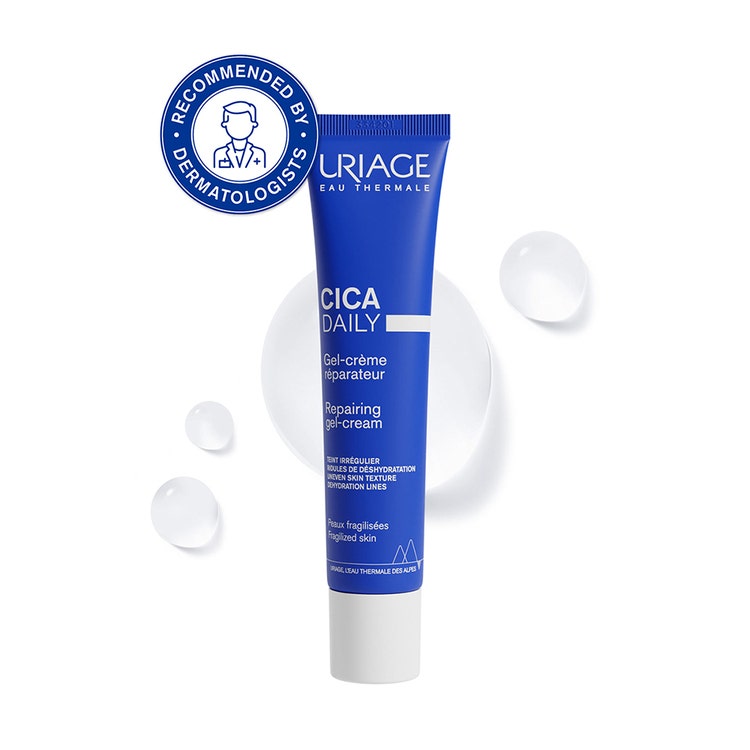
Uriage Bariederm Cica-Daily Gel Cream 40ml

Uriage Bariederm Cica-Daily Gel Cream 40ml
URIAGE
uriage-bariederm-cica-daily-gel-cream-40ml
Moisturize
10084953686309
Morning or Evening?
How often will you use this product?
Notes


Highlights
WHAT IS IT?
Daily repairing gel cream with 96% natural origin ingredients
FEATURES
Rebalances skin barrier and microbiome; Hydrates and soothes; Promotes epidermal repair; Contains Centella Asiatica, Hyaluronic Acid, Vitamin B5; Purifying Copper-Zinc; Fragrance and preservative free
BEST FOR
sensitive
CHECKS
Fragrance,Preservatives
Who Is It For?
All Skin Types No Specific Age Range StatedWhat Does It Help With?
Damaged And Weakened Skin Dull Complexion Discomfort Signs Of Fatigue Fine Lines Small Imperfections Redness Skin Repair And HydrationBudget
Mid-range ($30-$75)How To Use
Which routine should it be used in?
Instructions:
Key Information


What URIAGE Says
Product Description:
Uriage Bariederm Cica-Daily Gel-Cream is the ideal protective and repairing moisturizer for daily damaged and weakened skin. With 96% natural origin ingredients. Daily gel cream for damaged and fragilized skins - Dull complexion, discomfort, signs of fatigue, fine lines, small imperfections or redness. Tested under dermatological control. High Tolerance. Fragrance free and preservative free. REBALANCE: 10.5% THERMAL-BIOTIC COMPLEX (10% Uriage Thermal Water associated with 0.5% prebiotic, Inulin), offers a unique rebalancing action on the skin barrier and the microbiome. HYDRATE, SOOTHES AND PROMOTES EPIDERMAL REPAIR: With restorative Centella Asiatica, associated with High and Low molecular weight Hyaluronic Acid and Vitamin B5, this gel-cream instantly hydrates the skin, regenerates it and boosts its radiance. PROTECTED: Purifying Copper-Zinc helps the skin to regain optimal comfort.
About the Brand:
Ingredients Overview
Ingredients List
Water,Butylene-Glycol,Glycerine,Magnesium-Aluminum-Silicate,Peg-80-Glyceryl-Cocoate,Chlophenesin,Copper-Gluconate,Sodium-Dextran-Sulfate,Xanthan-Gum,Manganese-Gluconate,Pvp,Zinc-Gluconate,Phytosphingosine,Sodium-Hydroxide,Asiaticoside
Key Ingredients
Uriage Thermal Water,Prebiotic Inulin,Centella Asiatica,High Molecular Weight Hyaluronic Acid,Low Molecular Weight Hyaluronic Acid,Vitamin B5,Copper,Zinc
Ingredients Details
Asiaticoside
Common Name(s): Centella asiatica glycoside,asiaticoside b
CAS Number: 16830-15-2
DESCRIPTION
What It Does: Accelerates wound healing and reduces scar formation through fibroblast activation and collagen synthesis stimulation.
Why It's Used: Clinically proven scar reduction and wound healing active – the compound behind centella's legendary wound healing reputation.
How It Works: Promotes fibroblast proliferation and collagen synthesis via tgf-β independent mechanism (distinct from madecassoside). also inhibits hyaluronidase protecting extracellular matrix. antimicrobial activity supports wound healing environment.
Typically Found In: Post-surgical products,scar treatments,wound healing formulations
TECHNICAL DETAILS
Primary Category: Active ingredient – soothing / anti-inflammatory
Secondary Functions: Scar reduction,wound healing,collagen stimulation
Application Areas:

Facial Skincare
Body Care

Hair Care
Beard Care
Color Cosmetics (Makeup)
Dietary/Oral Supplements
Typical Concentration Range: 0.01%–2%
SOURCING & ETHICS
Vegan Status: Conditional - supplier confirmation required
Halal Status: Unverified - supplier confirmation required
Source Notes: Extracted from centella asiatica aerial parts alongside madecassoside, asiatic acid, and madecassic acid. [audit 2026-07-29 rev2: status downgraded on audit. determination requires shariah-panel sign-off.]
SKIN COMPATIBILITY
Irritancy Rating: 1/5 – very low
Comedogenicity Rating: 0/5 – non-comedogenic
Sensitivity Concerns: Non-irritating; ideal for reactive and sensitive skin.
Safe for Sensitive Skin: Yes – particularly recommended for sensitive skin
SAFETY & COMPATIBILITY
Safety Profile: Excellent safety profile. ewg score: 1.
Works Well With: Ceramides,panthenol,allantoin,hyaluronic acid,centella asiatica
Avoid Combining With: No significant incompatibilities
SCIENTIFIC NOTE
Asiaticoside's mechanism of wound healing involves release of aglycone asiatic acid after hydrolysis by skin beta-glucosidases. the glycoside form provides better stratum corneum penetration than the hydrophobic aglycone, acting as a prodrug for the active asiatic acid at the wound healing site.
Last Verified:
Glycerine
Common Name(s): Glycerin,universal humectant,water-binding skin conditioning
CAS Number: N/a
DESCRIPTION
What It Does: Attracts and retains moisture in the sc, improves skin barrier function at low concentrations, provides gentle keratolytic softening, and acts as a co-solvent for water-soluble actives.
Why It's Used: The reference humectant — lowest cost, best safety profile, universal formulation compatibility, and present naturally in the sc via lipase-mediated glycerolipid hydrolysis makes glycerin the industry standard against which all humectants are benchmarked.
How It Works: Three hydroxyl groups form 6 h-bonds with water molecules per glycerol unit — the highest oh-group density per carbon of any commercial humectant. glycerin also down-regulates epidermal serine proteases that overactivate in dry sc, improving desquamation and barrier integrity.
Typically Found In: All cosmetics,universal
TECHNICAL DETAILS
Primary Category: Functional ingredient – humectant
Secondary Functions: Tewl reduction,skin plumping
Application Areas:
Facial Skincare
Body Care
Hair Care
Beard Care
Color Cosmetics (Makeup)
Dietary/Oral Supplements
Typical Concentration Range: 1%–40%
SOURCING & ETHICS
Vegan Status: Yes
Halal Status: Yes
Source Notes: Synthetic or naturally derived. excellent aqueous solubility.
SKIN COMPATIBILITY
Irritancy Rating: 1/5 – very low
Comedogenicity Rating: 0/5 – non-comedogenic
Sensitivity Concerns: Non-irritating; suitable for all skin types.
Safe for Sensitive Skin: Yes
SAFETY & COMPATIBILITY
Safety Profile: Excellent safety profile. ewg score: 1.
Works Well With: Ceramides,emollients,occlusives,glycerin,hyaluronic acid
Avoid Combining With: No significant incompatibilities
SCIENTIFIC NOTE
Epidermal lipases hydrolyse sc glycerophospholipids during cornification, releasing glycerol that contributes to the natural nmf — topical glycerin directly supplements this endogenous sc humectant pool.
Last Verified: 2026-03-12
Primary Sources: Cosing database,glycerin universal humectant review
Phytosphingosine
Common Name(s): 4-hydroxysphinganine,tetrahydroxysphinganine
CAS Number: 554-62-1
DESCRIPTION
What It Does: Provides antimicrobial activity against p. acnes and s. aureus while supporting ceramide synthesis and reducing inflammation.
Why It's Used: Used in acne and sensitive skin formulations for combined antimicrobial, anti-inflammatory, and barrier repair activity from a single plant-derived sphingoid base.
How It Works: Trihydroxy structure provides stronger antimicrobial activity vs sphingosine. substrate for ceramide synthase to form phytoceramides. reduces pro-inflammatory cytokine production in keratinocytes.
Typically Found In: Anti-acne products,sensitive skin treatments,barrier repair formulations
TECHNICAL DETAILS
Primary Category: Active ingredient – plant sphingoid base
Secondary Functions: Anti-acne,ceramide synthesis,anti-inflammatory
Application Areas:
Facial Skincare
Body Care
Hair Care
Beard Care
Color Cosmetics (Makeup)
Dietary/Oral Supplements
Typical Concentration Range: 0.01%–0.5%
SOURCING & ETHICS
Vegan Status: Conditional - feedstock declaration required
Halal Status: Unverified - feedstock declaration required (plant, animal and petrochemical routes all exist)
Source Notes: Derived from yeast (pichia) fermentation or plant sphingolipid hydrolysis. fully plant-derived. [audit 2026-07-29 rev2: origin-dependent: the same inci exists in plant, animal and petrochemical versions and the name does not discriminate. determination requires shariah-panel sign-off.]
SKIN COMPATIBILITY
Irritancy Rating: 1/5 – very low
Comedogenicity Rating: 0/5 – non-comedogenic
Sensitivity Concerns: Endogenous molecule; excellent tolerability.
Safe for Sensitive Skin: Yes
SAFETY & COMPATIBILITY
Safety Profile: Exceptional safety profile. natural skin component. ewg score: 1.
Works Well With: Other ceramides,cholesterol,free fatty acids,hyaluronic acid,niacinamide
Avoid Combining With: No significant incompatibilities
SCIENTIFIC NOTE
Phytosphingosine's additional 4-hydroxy group (vs sphingosine) significantly enhances antimicrobial activity while maintaining ceramide precursor function. clinically demonstrated to reduce p. acnes counts and inflammatory lesions in acne studies.
Last Verified: 2026-03-12
Primary Sources: Cosing database,lintner phytosphingosine review,kawano et al. ceramide precursor study
Pvp
Common Name(s): Pvp,povidone,kollidon
CAS Number: 9003-39-8
DESCRIPTION
What It Does: Provides film formation and hair fixative activity from a water-soluble synthetic polymer.
Why It's Used: Standard hair fixative and film former in styling products – pvp films provide hold, manageability, and styling definition in hair care.
How It Works: Amide carbonyl groups provide water solubility and hydrogen bonding to hair surface. film formation from polymer chain entanglement on water evaporation. variable molecular weight grades provide different film rigidity and humidity resistance.
Typically Found In: Hair sprays,styling gels,hair fixatives,film-forming products
TECHNICAL DETAILS
Primary Category: Functional ingredient – synthetic film former/thickener
Secondary Functions: Skin conditioning
Application Areas:
Facial Skincare
Body Care
Hair Care
Beard Care
Color Cosmetics (Makeup)
Dietary/Oral Supplements
Typical Concentration Range: 0.5%–10%
SOURCING & ETHICS
Vegan Status: Conditional - supplier confirmation required
Halal Status: Unverified - supplier confirmation required
Source Notes: Commercially produced for cosmetic use. verify vegan/halal status with supplier. [audit 2026-07-29 rev2: the record's own source_notes does not assert a non-animal origin, or instructs the reader to verify with the supplier; "yes" asserts knowledge the record does not hold. determination requires shariah-panel sign-off.]
SKIN COMPATIBILITY
Irritancy Rating: 1/5 – very low
Comedogenicity Rating: 0/5 – non-comedogenic
Sensitivity Concerns: Well-tolerated by most skin types.
Safe for Sensitive Skin: Yes
SAFETY & COMPATIBILITY
Safety Profile: Pvp films are humidity-sensitive (hygroscopic) – absorb water in high humidity causing hair style collapse. pvp/va copolymers or other modifications improve humidity resistance.
Works Well With: Standard skincare actives
Avoid Combining With: No known significant incompatibilities
SCIENTIFIC NOTE
Pvp's hair fixative mechanism involves adsorption to and cross-linking between adjacent hair fibers on evaporation of the aqueous vehicle. pvp chains bridge between hair shafts via hydrogen bonding, creating an inter-fiber polymer network that holds hair in its applied configuration. higher mw pvp provides stronger hold from longer polymer chains bridging more fibers simultaneously.
Last Verified: