

URIAGE
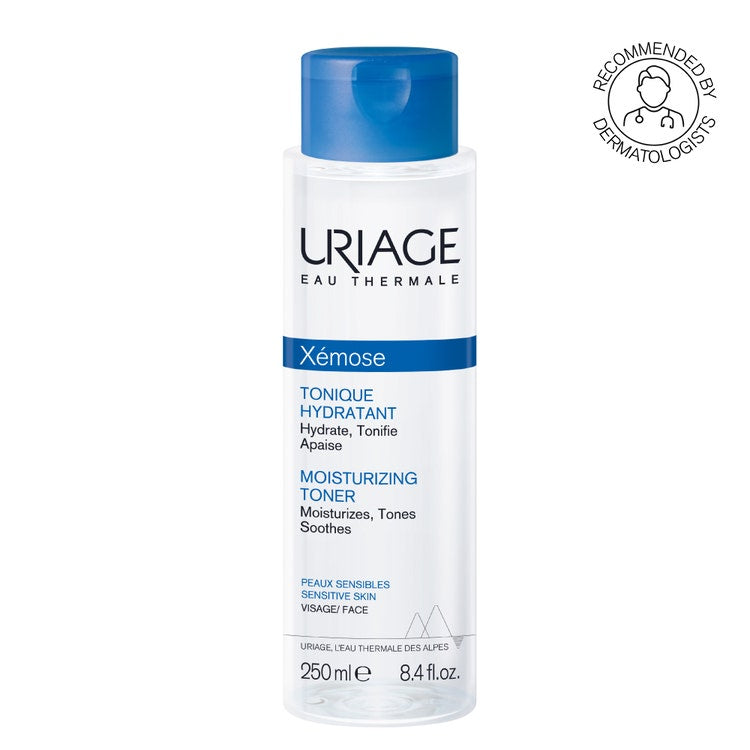
Uriage Xemose Moisturising Toner 250ml

Uriage Xemose Moisturising Toner 250ml
URIAGE
uriage-xemose-moisturising-toner-250ml
Tone
10085058216229
Morning or Evening?
How often will you use this product?
Notes


Highlights
WHAT IS IT?
Moisturising Toner with 7 ingredients
FEATURES
Contains 30% thermal water, hyaluronic acid, glycerin; removes excess dirt and toxins; restores pH level; soothes and moisturizes dry skin
BEST FOR
dry
CHECKS
No alcohol, No fragrance
Who Is It For?
What Does It Help With?
Soothes And Moisturizes Dry Skin; Removes Excess Dirt And Toxins; Restores Skin's Ph BalanceBudget
Premium ($76-$150)How To Use
Which routine should it be used in?
Instructions:
Key Information


What URIAGE Says
Product Description:
Perfectly radiant and clear skin with Xemose Moisturizing Toner. Enriched with 30% thermal water, hyaluronic acid and glycerin, it removes excess dirt and toxins from the skin and restores it's pH level. It soothes and moisturizes to provide ultimate comfort for dry skin.
About the Brand:
Ingredients Overview
Ingredients List
Aqua-(Water,-Eau),Glycerin,Butylene-Glycol,Phenoxyethanol,Sodium-Hyaluronate,PVP,Benzoic-Acid,Tromethamine
Key Ingredients
Thermal Water,Hyaluronic Acid,Glycerin
Ingredients Details
Glycerin
Common Name(s): Glycerol,glycerine,1,2,3-propanetriol
CAS Number: 56-81-5
DESCRIPTION
What It Does: Glycerin pulls water from the environment and deeper skin layers into the outer skin layer (epidermis), boosting moisture levels and keeping skin soft, smooth, and plump.
Why It's Used: It is used in virtually every moisturizer, serum, and cleanser because it is highly effective at hydrating skin, is well-tolerated by all skin types, and enhances the texture and spreadability of formulations.
How It Works: As a humectant, glycerin forms hydrogen bonds with water molecules, trapping them in the skin. it also reinforces the skin barrier by integrating into lipid structures between skin cells.
Typically Found In: Moisturizers,serums,cleansers,toners,sheet masks,sunscreens,body lotions,shampoos,conditioners
TECHNICAL DETAILS
Primary Category: Humectant
Secondary Functions: Skin barrier support,emollient,solvent
Application Areas:

Facial Skincare
Body Care
Hair Care
Beard Care

Color Cosmetics (Makeup)
Dietary/Oral Supplements
Typical Concentration Range: 1%–30% (typical: 3–10%)
SOURCING & ETHICS
Vegan Status: Yes – plant-derived (coconut, soy, palm) or synthetic
Halal Status: Yes – when plant-derived or synthetic; verify source with supplier
Source Notes: Derived from plant oils via hydrolysis or saponification; synthetic versions also available. palm-derived glycerin carries sustainability concerns.
SKIN COMPATIBILITY
Irritancy Rating: 1/5 – very low; non-irritating at all standard concentrations
Comedogenicity Rating: 0/5 – non-comedogenic
Sensitivity Concerns: Extremely rare allergic reactions; generally safe for all skin types including sensitive and baby skin
Safe for Sensitive Skin: Yes
SAFETY & COMPATIBILITY
Safety Profile: Widely recognized as safe. ewg hazard score: 1. no significant concerns for irritation, sensitization, or toxicity at typical concentrations (up to 50%).
Works Well With: Hyaluronic acid,ceramides,niacinamide,panthenol,urea,peptides,retinol,ahas/bhas
Avoid Combining With: No known incompatibilities at standard concentrations
SCIENTIFIC NOTE
Glycerin is an endogenous skin component found naturally in the stratum corneum. aquaporin-3 channels in keratinocytes facilitate glycerin transport, making it integral to natural skin hydration pathways.
Last Verified: Cosing database,cir safety assessment,ewg skin deep,inci decoder
Primary Sources: 2026-03-12
Phenoxyethanol
Common Name(s): 2-phenoxyethanol,rose ether,ethylene glycol monophenyl ether
CAS Number: 122-99-6
DESCRIPTION
What It Does: Prevents microbial contamination and spoilage in cosmetic formulations.
Why It's Used: The benchmark cosmetic preservative – eu-permitted up to 1%, effective against virtually all cosmetically relevant microorganisms, and excellent tolerability.
How It Works: Phenol ring provides broad antimicrobial activity via disruption of bacterial and fungal cell membranes and inhibition of enzymatic activity. effective against gram-positive and gram-negative bacteria, yeasts (candida), and molds (aspergillus). activity ph range: 3-9.
Typically Found In: All cosmetic formulations as primary preservative
TECHNICAL DETAILS
Primary Category: Functional ingredient – broad-spectrum preservative
Secondary Functions: Skin conditioning
Application Areas:
Facial Skincare
Body Care
Hair Care
Beard Care
Color Cosmetics (Makeup)
Dietary/Oral Supplements
Typical Concentration Range: 0.1%–1% (eu max 1%)
SOURCING & ETHICS
Vegan Status: Yes – synthetic
Halal Status: Yes
Source Notes: Commercially produced for cosmetic use. verify vegan/halal status with supplier.
SKIN COMPATIBILITY
Irritancy Rating: 1/5 – very low
Comedogenicity Rating: 0/5 – non-comedogenic
Sensitivity Concerns: Well-tolerated by most skin types.
Safe for Sensitive Skin: Yes
SAFETY & COMPATIBILITY
Safety Profile: Eu cosmetics regulation max 1%. sccs assessed as safe at ≤1%. avoid use around eyes in baby products per some country regulations. ewg score: 4.
Works Well With: Standard skincare actives
Avoid Combining With: No known significant incompatibilities
SCIENTIFIC NOTE
Phenoxyethanol's widespread adoption as the primary cosmetic preservative followed the phaseout of parabens from many formulations in the 2000s-2010s. despite having a comparable or better safety profile to parabens, it is often cited in 'free-from' formulations – a consumer perception issue rather than a scientific safety concern.
Last Verified: Cosing database,sccs opinion on phenoxyethanol,cir safety assessment
Primary Sources: 2026-03-12
Pvp
Common Name(s): Pvp,povidone,kollidon
CAS Number: 9003-39-8
DESCRIPTION
What It Does: Provides film formation and hair fixative activity from a water-soluble synthetic polymer.
Why It's Used: Standard hair fixative and film former in styling products – pvp films provide hold, manageability, and styling definition in hair care.
How It Works: Amide carbonyl groups provide water solubility and hydrogen bonding to hair surface. film formation from polymer chain entanglement on water evaporation. variable molecular weight grades provide different film rigidity and humidity resistance.
Typically Found In: Hair sprays,styling gels,hair fixatives,film-forming products
TECHNICAL DETAILS
Primary Category: Functional ingredient – synthetic film former/thickener
Secondary Functions: Skin conditioning
Application Areas:
Facial Skincare
Body Care
Hair Care
Beard Care
Color Cosmetics (Makeup)
Dietary/Oral Supplements
Typical Concentration Range: 0.5%–10%
SOURCING & ETHICS
Vegan Status: Yes – synthetic from petroleum (pvp chain) or n-vinylpyrrolidone
Halal Status: Yes
Source Notes: Commercially produced for cosmetic use. verify vegan/halal status with supplier.
SKIN COMPATIBILITY
Irritancy Rating: 1/5 – very low
Comedogenicity Rating: 0/5 – non-comedogenic
Sensitivity Concerns: Well-tolerated by most skin types.
Safe for Sensitive Skin: Yes
SAFETY & COMPATIBILITY
Safety Profile: Pvp films are humidity-sensitive (hygroscopic) – absorb water in high humidity causing hair style collapse. pvp/va copolymers or other modifications improve humidity resistance.
Works Well With: Standard skincare actives
Avoid Combining With: No known significant incompatibilities
SCIENTIFIC NOTE
Pvp's hair fixative mechanism involves adsorption to and cross-linking between adjacent hair fibers on evaporation of the aqueous vehicle. pvp chains bridge between hair shafts via hydrogen bonding, creating an inter-fiber polymer network that holds hair in its applied configuration. higher mw pvp provides stronger hold from longer polymer chains bridging more fibers simultaneously.
Last Verified: Cosing database,cir safety assessment
Primary Sources: 2026-03-12
Tromethamine
Common Name(s): Tromethamine (tris),ph buffer/neutraliser,gentle base alternative
CAS Number: N/a
DESCRIPTION
What It Does: Neutralises acidic cosmetic ingredients (carbomers, fatty acids, ahas) to target ph, provides ph stability through the tris/tris-h⁺ buffer system, and contributes to formulation gentleness versus stronger inorganic alkalis.
Why It's Used: Tris provides gentler ph adjustment than naoh — the organic amino alcohol buffer provides resistance to ph drift while the buffered system resists irritation spikes that can occur with strong base over-addition.
How It Works: Tris's primary amine (pka 8.1) provides buffering capacity at ph 7–9 through the nh₂/nh₃⁺ equilibrium. as an organic base, tris neutralises carbomer carboxylic acid groups forming the carboxylate salt required for gel formation. the buffering capacity prevents over-alkalinisation from base addition during manufacturing.
Typically Found In: Gel formulations,ph-sensitive actives
TECHNICAL DETAILS
Primary Category: Active ingredient – cosmetic active
Secondary Functions: Skin conditioning
Application Areas:
Facial Skincare
Body Care
Hair Care
Beard Care
Color Cosmetics (Makeup)
Dietary/Oral Supplements
Typical Concentration Range: 0.1%–2%
SOURCING & ETHICS
Vegan Status: Yes
Halal Status: Yes
Source Notes: Commercially produced for cosmetic use. verify vegan/halal status with supplier.
SKIN COMPATIBILITY
Irritancy Rating: 1/5 – very low
Comedogenicity Rating: 0/5 – non-comedogenic
Sensitivity Concerns: Well-tolerated by most skin types.
Safe for Sensitive Skin: Yes
SAFETY & COMPATIBILITY
Safety Profile: Good safety profile at recommended concentrations. ewg score: 1–2.
Works Well With: Standard skincare actives
Avoid Combining With: No known significant incompatibilities
SCIENTIFIC NOTE
Tris is particularly useful for neutralising carbomer-gelled formulations containing ph-sensitive actives (vitamin c, ahas) where naoh addition can cause localised high-ph zones — the tris buffer's pka 8.1 provides inherent ph ceiling limiting over-alkalinisation during mixing.
Last Verified: Cosing database,tromethamine tris ph buffer neutraliser review
Primary Sources: 2026-03-12
