

Pharmaceutical Specialties, Inc.
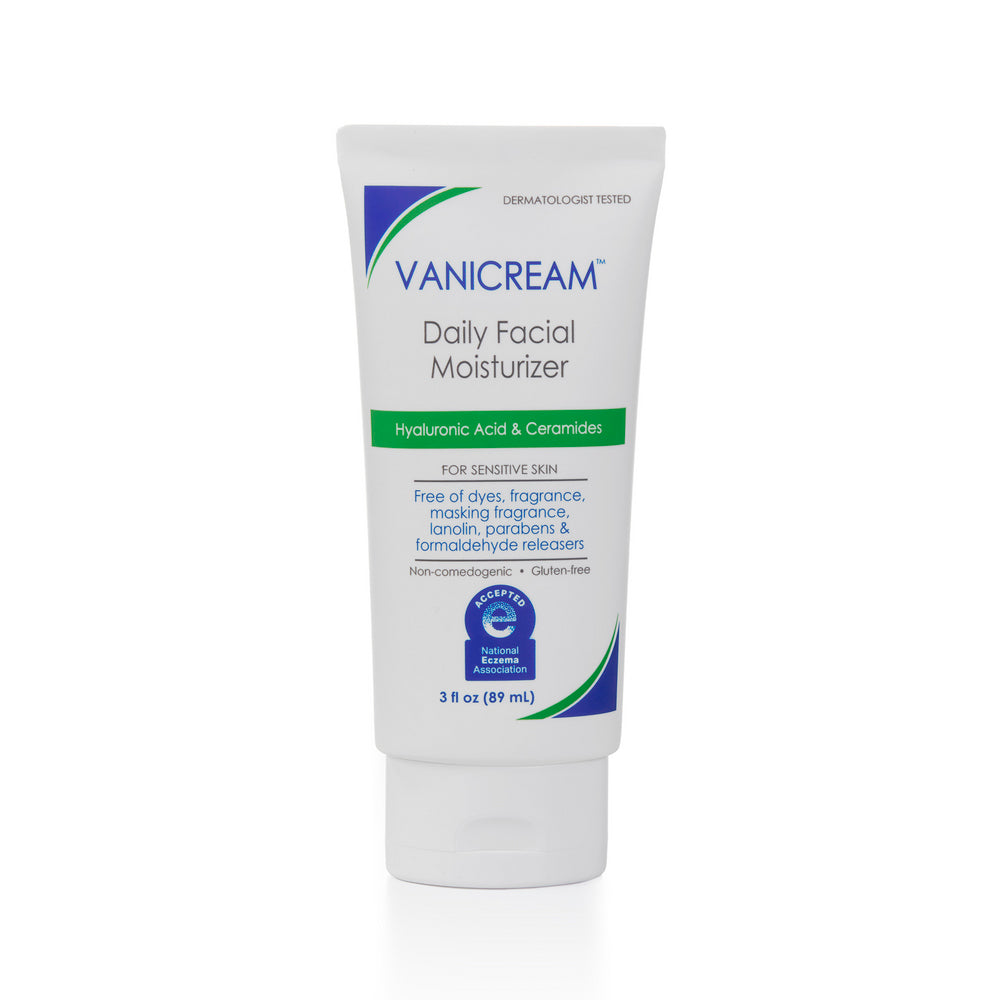
Vanicream Daily Facial Moisturizer

Vanicream Daily Facial Moisturizer
Pharmaceutical Specialties, Inc.
vanicream-daily-facial-moisturizer
Moisturize
9818305331493
Morning or Evening?
How often will you use this product?
Notes


Highlights
WHAT IS IT?
Daily facial moisturizer with hyaluronic acid and 5 ceramides
FEATURES
Non-greasy, absorbs quickly, pH balanced, lightweight, suitable under makeup
BEST FOR
sensitive
CHECKS
Free of alcohol, paraben, sulfate, silicon, oil
Who Is It For?
All Ages With Sensitive SkinWhat Does It Help With?
Hydration Moisture Retention Skin Barrier SupportBudget
Affordable (under $30)How To Use
Which routine should it be used in?
Instructions:
Key Information


What Pharmaceutical Specialties, Inc. Says
Product Description:
A rich, but lightweight lotion that provides effective moisturization for day or night. It is formulated with hyaluronic acid and 5 key ceramides which help to hydrate and retain the skin's moisture. It leaves the skin feeling soft and deeply moisturized while still being lightweight and suitable to wear under makeup.
About the Brand:
Ingredients Overview
Ingredients List
water,squalane,glycerin,pentylene-glycol,polyglyceryl-2-stearate,glyceryl-stearate,stearyl-alcohol,hyaluronic-acid,ceramide-EOP,ceramide-NG,ceramide-NP,ceramide-AS,ceramide-AP,carnosine,hydrogenated-lecithin,phytosterols,caprylyl-glycol,polyacrylate-crosspolymer-11,1,2-hexanediol
Key Ingredients
hyaluronic acid, ceramides, squalane, glycerin
Ingredients Details
Ceramide Eop
Common Name(s): Ceramide 1,omega-hydroxy ceramide linoleate,acylceramide
CAS Number: N/a
DESCRIPTION
What It Does: Provides the essential acylceramide scaffold for stratum corneum lamellar lipid organisation and barrier architecture.
Why It's Used: The architectural ceramide — ceramide eop's covalent corneocyte envelope binding is unique among ceramides and essential for organising the lamellar lipid matrix of the stratum corneum barrier.
How It Works: Omega-hydroxy ceramide esterified with linoleic acid at the omega-end. omega-hydroxyl group covalently bonds to involucrin/envoplakin proteins of corneocyte envelope via ester bond. this covalent anchor organises the lamellar lipid bilayers around each corneocyte. linoleate deficiency impairs this covalent anchoring — the biochemical basis of linoleic acid deficiency skin disease.
Typically Found In: Complete barrier repair systems,eczema treatment,omega-ceramide products
TECHNICAL DETAILS
Primary Category: Active ingredient – linoleate acylceramide
Secondary Functions: Skin conditioning
Application Areas:

Facial Skincare

Body Care
Hair Care
Beard Care
Color Cosmetics (Makeup)
Dietary/Oral Supplements
Typical Concentration Range: 0.001%–0.5%
SOURCING & ETHICS
Vegan Status: Conditional - feedstock declaration required
Halal Status: Unverified - feedstock declaration required (plant, animal and petrochemical routes all exist)
Source Notes: Commercially produced for cosmetic use. verify vegan/halal status with supplier. [audit 2026-07-29 rev2: origin-dependent: the same inci exists in plant, animal and petrochemical versions and the name does not discriminate. determination requires shariah-panel sign-off.]
SKIN COMPATIBILITY
Irritancy Rating: 1/5 – very low
Comedogenicity Rating: 0/5 – non-comedogenic
Sensitivity Concerns: Well-tolerated by most skin types.
Safe for Sensitive Skin: Yes
SAFETY & COMPATIBILITY
Safety Profile: Good safety profile at recommended concentrations. ewg score: 1–2.
Works Well With: Standard skincare actives
Avoid Combining With: No known significant incompatibilities
SCIENTIFIC NOTE
Ceramide eop's covalent corneocyte envelope binding is the only covalent interaction in the stratum corneum lipid structure — all other lamellar lipids interact via non-covalent van der waals and hydrogen bonds. this unique covalent anchoring of eop to the protein envelope provides the mechanical scaffold from which the entire lamellar lipid architecture is organised, making ceramide eop architecturally irreplaceable in barrier function.
Last Verified: 2026-03-12
Primary Sources: Cosing database,holleran et al. ceramide eop review
Ceramide Ng
Common Name(s): Ceramide 2,n-palmitoyldihydrosphingosine
CAS Number: 100403-19-8
DESCRIPTION
What It Does: Strengthens skin barrier and reduces inflammation in sensitive, atopic, and compromised skin.
Why It's Used: Part of comprehensive ceramide barrier repair complexes; important for formulations targeting sensitive and atopic dermatitis-prone skin.
How It Works: Dihydrosphingosine backbone provides slightly different lamellar packing geometry than sphingosine-based ceramides, filling structural positions within the lamellar body that other ceramides cannot occupy.
Typically Found In: Sensitive skin moisturizers,eczema care,barrier repair serums
TECHNICAL DETAILS
Primary Category: Active ingredient – ceramide / barrier lipid
Secondary Functions: Anti-inflammatory,barrier support
Application Areas:
Facial Skincare
Body Care
Hair Care
Beard Care
Color Cosmetics (Makeup)
Dietary/Oral Supplements
Typical Concentration Range: 0.01%–1%
SOURCING & ETHICS
Vegan Status: Conditional - feedstock declaration required
Halal Status: Unverified - feedstock declaration required (plant, animal and petrochemical routes all exist)
Source Notes: Synthetic production or phytoceramide analog from plant sources. [audit 2026-07-29 rev2: origin-dependent: the same inci exists in plant, animal and petrochemical versions and the name does not discriminate. determination requires shariah-panel sign-off.]
SKIN COMPATIBILITY
Irritancy Rating: 1/5 – very low
Comedogenicity Rating: 0/5 – non-comedogenic
Sensitivity Concerns: Endogenous molecule; excellent tolerability.
Safe for Sensitive Skin: Yes
SAFETY & COMPATIBILITY
Safety Profile: Exceptional safety profile. natural skin component. ewg score: 1.
Works Well With: Other ceramides,cholesterol,free fatty acids,hyaluronic acid,niacinamide
Avoid Combining With: No significant incompatibilities
SCIENTIFIC NOTE
Ceramide ng and np together represent the majority of stratum corneum ceramide content. their complementary lamellar body positioning means both are required for complete barrier restoration – formulations with both show clinically superior barrier repair vs single ceramide products.
Last Verified: 2026-03-12
Primary Sources: Cosing database,elias ceramide structure review
Ceramide Np
Common Name(s): Ceramide 3,n-stearoyl phytosphingosine,ceramide type iii
CAS Number: 100403-19-8
DESCRIPTION
What It Does: Provides the most abundant natural skin ceramide for precise stratum corneum barrier lipid replacement.
Why It's Used: The primary skin ceramide — ceramide np's identity as the dominant stratum corneum ceramide fraction makes it the most physiologically relevant barrier lipid replacement for dry skin and eczema.
How It Works: N-stearoyl-phytosphingosine provides the exact molecular structure of the most abundant natural skin ceramide. integrates into stratum corneum lamellar lipid bilayers restoring barrier architecture. reduces tewl, improves corneometer moisture, restores barrier integrity. synergistic with cholesterol and fatty acids in barrier restoration.
Typically Found In: Barrier repair moisturisers,eczema care,dry skin treatment
TECHNICAL DETAILS
Primary Category: Active ingredient – phytosphingosine ceramide
Secondary Functions: Skin conditioning
Application Areas:
Facial Skincare
Body Care
Hair Care
Beard Care
Color Cosmetics (Makeup)
Dietary/Oral Supplements
Typical Concentration Range: 0.01%–5%
SOURCING & ETHICS
Vegan Status: Conditional - feedstock declaration required
Halal Status: Unverified - feedstock declaration required (plant, animal and petrochemical routes all exist)
Source Notes: Commercially produced for cosmetic use. verify vegan/halal status with supplier. [audit 2026-07-29 rev2: origin-dependent: the same inci exists in plant, animal and petrochemical versions and the name does not discriminate. determination requires shariah-panel sign-off.]
SKIN COMPATIBILITY
Irritancy Rating: 1/5 – very low
Comedogenicity Rating: 0/5 – non-comedogenic
Sensitivity Concerns: Well-tolerated by most skin types.
Safe for Sensitive Skin: Yes
SAFETY & COMPATIBILITY
Safety Profile: Good safety profile at recommended concentrations. ewg score: 1–2.
Works Well With: Standard skincare actives
Avoid Combining With: No known significant incompatibilities
SCIENTIFIC NOTE
Ceramide np's structural identity to natural skin ceramide 3 (the dominant sc ceramide at approximately 18% of total sc ceramide fraction) means it integrates into the stratum corneum's lamellar bilayer structure with perfect molecular recognition. no other moisturising ingredient can achieve this level of structural identity to the natural barrier component it replaces — providing barrier repair rather than simply occlusive surface coating.
Last Verified: 2026-03-12
Primary Sources: Cosing database,elias skin barrier ceramide review,cir safety assessment
Glycerin
Common Name(s): Glycerol,glycerine,1,2,3-propanetriol
CAS Number: 56-81-5
DESCRIPTION
What It Does: Glycerin pulls water from the environment and deeper skin layers into the outer skin layer (epidermis), boosting moisture levels and keeping skin soft, smooth, and plump.
Why It's Used: It is used in virtually every moisturizer, serum, and cleanser because it is highly effective at hydrating skin, is well-tolerated by all skin types, and enhances the texture and spreadability of formulations.
How It Works: As a humectant, glycerin forms hydrogen bonds with water molecules, trapping them in the skin. it also reinforces the skin barrier by integrating into lipid structures between skin cells.
Typically Found In: Moisturizers,serums,cleansers,toners,sheet masks,sunscreens,body lotions,shampoos,conditioners
TECHNICAL DETAILS
Primary Category: Humectant
Secondary Functions: Skin barrier support,emollient,solvent
Application Areas:
Facial Skincare
Body Care
Hair Care
Beard Care
Color Cosmetics (Makeup)
Dietary/Oral Supplements
Typical Concentration Range: 1%–30% (typical: 3–10%)
SOURCING & ETHICS
Vegan Status: Conditional - feedstock declaration required
Halal Status: Unverified - feedstock declaration required (plant, animal and petrochemical routes all exist)
Source Notes: Derived from plant oils via hydrolysis or saponification; synthetic versions also available. palm-derived glycerin carries sustainability concerns. [audit 2026-07-29 rev2: origin-dependent: the same inci exists in plant, animal and petrochemical versions and the name does not discriminate. determination requires shariah-panel sign-off.]
SKIN COMPATIBILITY
Irritancy Rating: 1/5 – very low; non-irritating at all standard concentrations
Comedogenicity Rating: 0/5 – non-comedogenic
Sensitivity Concerns: Extremely rare allergic reactions; generally safe for all skin types including sensitive and baby skin
Safe for Sensitive Skin: Yes
SAFETY & COMPATIBILITY
Safety Profile: Widely recognized as safe. ewg hazard score: 1. no significant concerns for irritation, sensitization, or toxicity at typical concentrations (up to 50%).
Works Well With: Hyaluronic acid,ceramides,niacinamide,panthenol,urea,peptides,retinol,ahas/bhas
Avoid Combining With: No known incompatibilities at standard concentrations
SCIENTIFIC NOTE
Glycerin is an endogenous skin component found naturally in the stratum corneum. aquaporin-3 channels in keratinocytes facilitate glycerin transport, making it integral to natural skin hydration pathways.
Last Verified: 2026-03-12
Primary Sources: Cosing database,cir safety assessment,ewg skin deep,inci decoder