

VASELINE
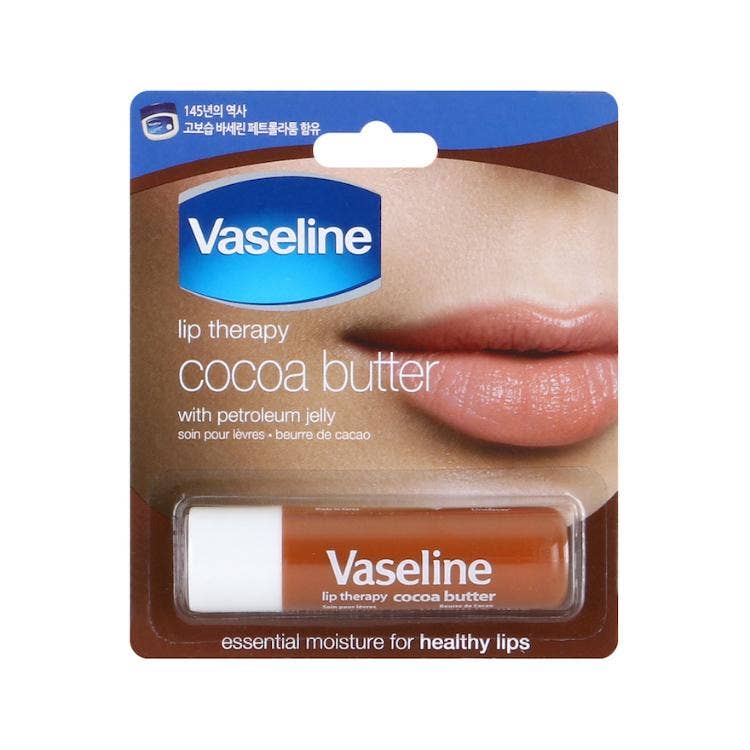
Vaseline Lip Therapy Balm Cocoa & Shea Butter Korea Stick 4.8G

Vaseline Lip Therapy Balm Cocoa & Shea Butter Korea Stick 4.8G
VASELINE
vaseline-lip-therapy-balm-cocoa-shea-butter-korea-stick-4-8g
Lip care
10084960862501
Morning or Evening?
How often will you use this product?
Notes


Highlights
WHAT IS IT?
Lip Therapy Balm with multiple moisturizing ingredients
FEATURES
Enriched with cocoa and Shea butter, contains Vitamin E for healthier lips, Vaseline petroleum jelly locks in moisture, naturally nourishes skin.
BEST FOR
sensitive
CHECKS
Fragrance-free,Silicone-free,PEG-free,Alcohol-free,Aluminum-free,Microplastic-free,Oil-free,Sulfate-free,Paraben-Free
Who Is It For?
All Ages And GendersWhat Does It Help With?
Nourishment Hydration Softening Lips Repair And ProtectionBudget
Affordable (under $30)How To Use
Which routine should it be used in?
Instructions:
Key Information


What VASELINE Says
Product Description:
Vaseline Lip Therapy Cocoa Butter, enriched with caring cocoa and Shea butter, will give your lips the nourishment they need leaving them feeling soft and pampered! Vitamin E - helps to care for healthier lips. Vaseline Petroleum Jelly - locks in moisture. Cocoa and Shea Butter - known to naturally nourish skin.
About the Brand:
Ingredients Overview
Ingredients List
Octyldodecanol,Microcrystalline-Wax,Caprylic/Capric-Triglyceride,Ricinus-Communis-(Castor)-Seed-Oil,Cetyl-Palmitate,Petrolatum,Myristyl-Myristate,Polyglyceryl-3-Distearate,Water,Butyrospermum-Parkii-(Shea)-Butter,Theobromo-Cacao-(Cocoa)-Seed-Butter,Copernicia-Cerifera-(Carnauba)-Wax,Cetearyl-Alcohol,C20-40-Alkyl-Stearate,Beeswax,Glycerin,Tocopheryl-Acetate,Simmondsia-Chinensis-(Jojoba)-Seed-Oil,Camellia-Sinensis-Leaf-Extract,Persea-Gratissima-(Avocado)-Fruit-Extract,Macadamia-Integrifolia-Seed-Oil,Butylene-Glycol,Gragrance,Iron-Oxides-(C|77492,-C|77491,-C|77499)
Key Ingredients
Petrolatum,Vitamin E (Tocopheryl Acetate),Cocoa Butter,Shea Butter
Ingredients Details
Beeswax
Common Name(s): Cera alba (white),cera flava (yellow),apis mellifera wax
CAS Number: 8012-89-3
DESCRIPTION
What It Does: Provides natural wax structure and emolliency for cosmetic texture and lip balm applications.
Why It's Used: The original cosmetic wax – provides natural, hard-texture structure for lip balms, sticks, and creams with emollient skin conditioning.
How It Works: Complex mixture of esters (wax esters), hydrocarbons (hentriacontane), and fatty acids provides semi-crystalline structure. melting point 62-65°c enables stable solid products. emulsifying capacity from free cerotic acid content.
Typically Found In: Lip balms,cosmetic sticks,creams,natural cosmetics
TECHNICAL DETAILS
Primary Category: Functional ingredient – natural wax
Secondary Functions: Natural wax structure,occlusive conditioning
Application Areas:

Facial Skincare

Body Care
Hair Care
Beard Care
Color Cosmetics (Makeup)
Dietary/Oral Supplements
Typical Concentration Range: 2%–30%
SOURCING & ETHICS
Vegan Status: No - animal-derived
Halal Status: Conditional - bee-derived; widely held permissible, confirm certifier stance
Source Notes: Plant-derived, synthetic or animal-derived. verify source. [audit 2026-07-29 rev2: bee-derived; permissibility widely accepted but fatwa varies by jurisdiction. determination requires shariah-panel sign-off.]
SKIN COMPATIBILITY
Irritancy Rating: 1/5 – very low
Comedogenicity Rating: 1/5 – low; formulation-dependent
Sensitivity Concerns: Non-irritating.
Safe for Sensitive Skin: Yes
SAFETY & COMPATIBILITY
Safety Profile: Excellent safety profile. ewg score: 1.
Works Well With: Humectants,ceramides,actives as carrier
Avoid Combining With: No significant incompatibilities
SCIENTIFIC NOTE
Beeswax's multi-component wax ester composition (myricyl palmitate as primary component) provides a unique crystalline structure that gives lip balms and cosmetic sticks their characteristic 'dragée' glide – different from synthetic wax esters that lack this crystalline lattice diversity.
Last Verified: 2026-03-12
Primary Sources: Cosing database,cir safety assessment
Glycerin
Common Name(s): Glycerol,glycerine,1,2,3-propanetriol
CAS Number: 56-81-5
DESCRIPTION
What It Does: Glycerin pulls water from the environment and deeper skin layers into the outer skin layer (epidermis), boosting moisture levels and keeping skin soft, smooth, and plump.
Why It's Used: It is used in virtually every moisturizer, serum, and cleanser because it is highly effective at hydrating skin, is well-tolerated by all skin types, and enhances the texture and spreadability of formulations.
How It Works: As a humectant, glycerin forms hydrogen bonds with water molecules, trapping them in the skin. it also reinforces the skin barrier by integrating into lipid structures between skin cells.
Typically Found In: Moisturizers,serums,cleansers,toners,sheet masks,sunscreens,body lotions,shampoos,conditioners
TECHNICAL DETAILS
Primary Category: Humectant
Secondary Functions: Skin barrier support,emollient,solvent
Application Areas:
Facial Skincare
Body Care
Hair Care
Beard Care
Color Cosmetics (Makeup)
Dietary/Oral Supplements
Typical Concentration Range: 1%–30% (typical: 3–10%)
SOURCING & ETHICS
Vegan Status: Conditional - feedstock declaration required
Halal Status: Unverified - feedstock declaration required (plant, animal and petrochemical routes all exist)
Source Notes: Derived from plant oils via hydrolysis or saponification; synthetic versions also available. palm-derived glycerin carries sustainability concerns. [audit 2026-07-29 rev2: origin-dependent: the same inci exists in plant, animal and petrochemical versions and the name does not discriminate. determination requires shariah-panel sign-off.]
SKIN COMPATIBILITY
Irritancy Rating: 1/5 – very low; non-irritating at all standard concentrations
Comedogenicity Rating: 0/5 – non-comedogenic
Sensitivity Concerns: Extremely rare allergic reactions; generally safe for all skin types including sensitive and baby skin
Safe for Sensitive Skin: Yes
SAFETY & COMPATIBILITY
Safety Profile: Widely recognized as safe. ewg hazard score: 1. no significant concerns for irritation, sensitization, or toxicity at typical concentrations (up to 50%).
Works Well With: Hyaluronic acid,ceramides,niacinamide,panthenol,urea,peptides,retinol,ahas/bhas
Avoid Combining With: No known incompatibilities at standard concentrations
SCIENTIFIC NOTE
Glycerin is an endogenous skin component found naturally in the stratum corneum. aquaporin-3 channels in keratinocytes facilitate glycerin transport, making it integral to natural skin hydration pathways.
Last Verified: 2026-03-12
Primary Sources: Cosing database,cir safety assessment,ewg skin deep,inci decoder
Octyldodecanol
Common Name(s): 2-octyldodecanol,eutanol g,c20 branched alcohol
CAS Number: 5333-42-6
DESCRIPTION
What It Does: Provides elegant dry-touch emolliency with excellent solubilisation for active ingredients.
Why It's Used: Premium emollient solvent — octyldodecanol's branched c20 structure provides a uniquely dry, elegant emollient character with exceptional compatibility for challenging actives.
How It Works: Branched c20 fatty alcohol provides dry, non-greasy emolliency. excellent solvent for fat-soluble vitamins, retinoids, uv filters, and flavour compounds. lower viscosity than longer-chain fatty alcohols for elegant application. very good spreading coefficient for uniform application.
Typically Found In: Premium skincare,sunscreens,vitamin delivery systems
TECHNICAL DETAILS
Primary Category: Functional ingredient – emollient
Secondary Functions: Barrier sealing,softening
Application Areas:
Facial Skincare
Body Care
Hair Care
Beard Care
Color Cosmetics (Makeup)
Dietary/Oral Supplements
Typical Concentration Range: 1%–20%
SOURCING & ETHICS
Vegan Status: Conditional - supplier confirmation required
Halal Status: Unverified - supplier confirmation required
Source Notes: Plant-derived, synthetic or animal-derived. verify source. [audit 2026-07-29 rev2: the record's own source_notes does not assert a non-animal origin, or instructs the reader to verify with the supplier; "yes" asserts knowledge the record does not hold. determination requires shariah-panel sign-off.]
SKIN COMPATIBILITY
Irritancy Rating: 1/5 – very low
Comedogenicity Rating: 1/5 – low; formulation-dependent
Sensitivity Concerns: Non-irritating.
Safe for Sensitive Skin: Yes
SAFETY & COMPATIBILITY
Safety Profile: Excellent safety profile. ewg score: 1.
Works Well With: Humectants,ceramides,actives as carrier
Avoid Combining With: No significant incompatibilities
SCIENTIFIC NOTE
Octyldodecanol is produced via the guerbet reaction — a base-catalysed self-condensation of two c10 alcohol molecules (decanol) yielding the branched c20 2-octyldodecanol. this reaction produces a highly branched structure that prevents crystallisation (liquid at room temperature), providing liquid-state emolliency with a completely different tactile profile than the waxy feel of linear c20 fatty alcohols.
Last Verified: 2026-03-12
Primary Sources: Cosing database,cir safety assessment
Petrolatum
Common Name(s): Petroleum jelly,vaseline,white petrolatum
DESCRIPTION
What It Does: Provides the highest level of skin occlusion and wound healing protection of any cosmetic ingredient.
Why It's Used: The most effective skin barrier protection ingredient available – fda-approved otc skin protectant with unparalleled occlusive moisturization and wound healing evidence.
How It Works: Semi-solid blend of long-chain hydrocarbons creates an extremely cohesive, impermeable occlusive film. physically prevents bacterial and irritant ingress while completely preventing tewl. does not absorb into skin. promotes moist wound healing environment by maintaining wound surface hydration.
Typically Found In: Intensive moisturizers,wound healing ointments,lip balms,baby products,eczema treatments
TECHNICAL DETAILS
Primary Category: Functional ingredient – petroleum ointment base / gold-standard occlusive
Secondary Functions: Maximum occlusion,wound healing,otc skin protectant
Application Areas:
Facial Skincare
Body Care
Hair Care
Beard Care
Color Cosmetics (Makeup)
Dietary/Oral Supplements
Typical Concentration Range: 1%–100%
SOURCING & ETHICS
Vegan Status: Conditional - supplier confirmation required
Halal Status: Unverified - supplier confirmation required
Source Notes: Plant-derived, synthetic or animal-derived. verify source. [audit 2026-07-29 rev2: the record's own source_notes does not assert a non-animal origin, or instructs the reader to verify with the supplier; "yes" asserts knowledge the record does not hold. determination requires shariah-panel sign-off.]
SKIN COMPATIBILITY
Irritancy Rating: 1/5 – very low
Comedogenicity Rating: 0/5 – non-comedogenic (clinical evidence)
Sensitivity Concerns: Non-irritating.
Safe for Sensitive Skin: Yes
SAFETY & COMPATIBILITY
Safety Profile: Fda category i grase otc skin protectant. ewg score: 1.
Works Well With: Humectants,ceramides,actives as carrier
Avoid Combining With: No significant incompatibilities
SCIENTIFIC NOTE
Petrolatum's wound healing mechanism (moist wound healing) was first systematically studied by george winter (1962) and demonstrated that wounds heal 2× faster under occlusion than air-exposed. all subsequent wound dressings and occlusive skin treatments are based on this fundamental finding, with petrolatum remaining the most effective occlusive agent 60 years later.
Last Verified: 2026-03-12
Primary Sources: Cosing database,fda otc skin protectant monograph,winter (1962) moist wound healing study