

VASELINE
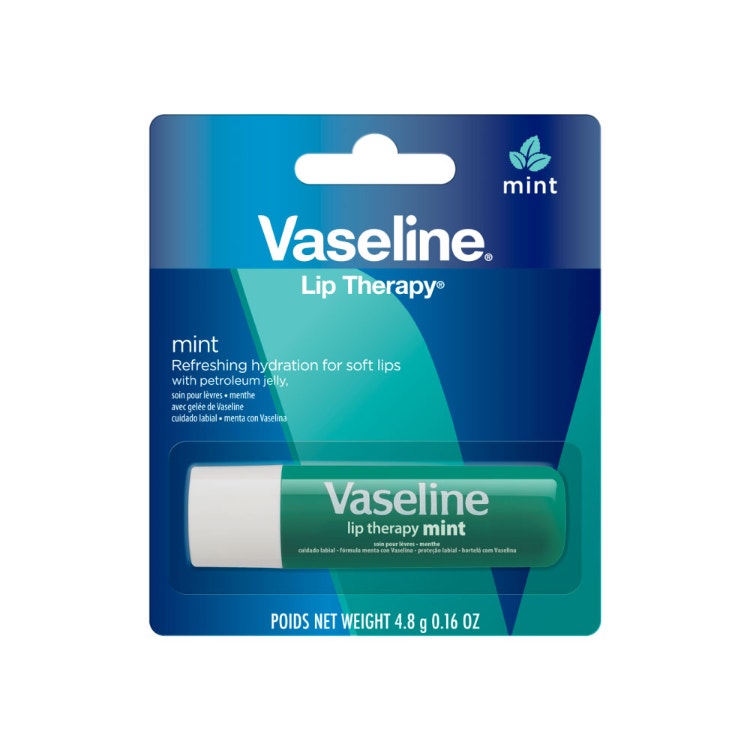
Vaseline Lip Therapy Balm Mint Us Stick 4.8G

Vaseline Lip Therapy Balm Mint Us Stick 4.8G
VASELINE
vaseline-lip-therapy-balm-mint-us-stick-4-8g
Lip care
10084960043301
Morning or Evening?
How often will you use this product?
Notes


Highlights
WHAT IS IT?
Lip balm with 20 ingredients
FEATURES
Made with mint extract for refreshing sensation, Vitamin E for healthier lips, Vaseline Petroleum Jelly to lock in moisture, soothing irritated skin
BEST FOR
sensitive
CHECKS
Sulfate-free,Paraben-Free,Alcohol-free,Microplastic-free,PEG-free,Aluminum-free
Who Is It For?
What Does It Help With?
Soothes Lips Keeps Them Soft And Hydrated Relieves DiscomfortBudget
Affordable (under $30)How To Use
Which routine should it be used in?
Instructions:
Key Information


What VASELINE Says
Product Description:
Vaseline Lip Therapy Mint, made with Vitamin E, petroleum jelly and mint extract, gives refreshing sensation and helps to soothe lips keeping them soft and hydrated. REFRESHING HYDRATION FOR SOFT LIPS
About the Brand:
Ingredients Overview
Ingredients List
Octyldodecanol,Microcrystalline-Wax,Caprylic/Capric-Triglyceride,Ricinus-Communis-(Castor)-Seed-Oil,Cetyl-Palmitate,Petrolatum,Myristyl-Myristate,Polyglyceryl-3-Distearate,Water,Butyrospermum-Parkii-(Shea)-Butter,Copernicia-Cerifera-(Carnauba)-Wax,Beeswax,Cetearyl-Alcohol,C20-40-Alkyl-Stearate,Menthol,Glycerin,Tocopheryl-Acetate,Camellia-Sinensis-Leaf-Extract,Butylene-Glycol,Fragrance,Limonene
Key Ingredients
Menthol,Tocopheryl-Acetate,Petrolatum,Mint extract,Vitamin E
Ingredients Details
Beeswax
Common Name(s): Cera alba (white),cera flava (yellow),apis mellifera wax
CAS Number: 8012-89-3
DESCRIPTION
What It Does: Provides natural wax structure and emolliency for cosmetic texture and lip balm applications.
Why It's Used: The original cosmetic wax – provides natural, hard-texture structure for lip balms, sticks, and creams with emollient skin conditioning.
How It Works: Complex mixture of esters (wax esters), hydrocarbons (hentriacontane), and fatty acids provides semi-crystalline structure. melting point 62-65°c enables stable solid products. emulsifying capacity from free cerotic acid content.
Typically Found In: Lip balms,cosmetic sticks,creams,natural cosmetics
TECHNICAL DETAILS
Primary Category: Functional ingredient – natural wax
Secondary Functions: Natural wax structure,occlusive conditioning
Application Areas:

Facial Skincare

Body Care
Hair Care
Beard Care
Color Cosmetics (Makeup)
Dietary/Oral Supplements
Typical Concentration Range: 2%–30%
SOURCING & ETHICS
Vegan Status: No - animal-derived
Halal Status: Conditional - bee-derived; widely held permissible, confirm certifier stance
Source Notes: Plant-derived, synthetic or animal-derived. verify source. [audit 2026-07-29 rev2: bee-derived; permissibility widely accepted but fatwa varies by jurisdiction. determination requires shariah-panel sign-off.]
SKIN COMPATIBILITY
Irritancy Rating: 1/5 – very low
Comedogenicity Rating: 1/5 – low; formulation-dependent
Sensitivity Concerns: Non-irritating.
Safe for Sensitive Skin: Yes
SAFETY & COMPATIBILITY
Safety Profile: Excellent safety profile. ewg score: 1.
Works Well With: Humectants,ceramides,actives as carrier
Avoid Combining With: No significant incompatibilities
SCIENTIFIC NOTE
Beeswax's multi-component wax ester composition (myricyl palmitate as primary component) provides a unique crystalline structure that gives lip balms and cosmetic sticks their characteristic 'dragée' glide – different from synthetic wax esters that lack this crystalline lattice diversity.
Last Verified: 2026-03-12
Primary Sources: Cosing database,cir safety assessment
Fragrance
Common Name(s): Fragrance ingredient,eu allergen or aromatic component,olfactory/flavour
CAS Number: N/a
DESCRIPTION
What It Does: Provides the complete fragrance profile contributing to product sensory experience and consumer appeal.
Why It's Used: Fragrance is a major consumer purchase driver — up to 70% of consumers make purchasing decisions partially based on product scent.
How It Works: Fragrance blends interact with olfactory receptors providing the sensory profile — complex mixtures activate multiple receptor types for rich, multidimensional scent experiences.
Typically Found In: All fragrance products
TECHNICAL DETAILS
Primary Category: Active ingredient – cosmetic active
Secondary Functions: Skin conditioning
Application Areas:
Facial Skincare
Body Care
Hair Care
Beard Care
Color Cosmetics (Makeup)
Dietary/Oral Supplements
Typical Concentration Range: Standard use levels
SOURCING & ETHICS
Vegan Status: Conditional - supplier confirmation required
Halal Status: Unverified - supplier confirmation required
Source Notes: Commercially produced for cosmetic use. verify vegan/halal status with supplier. [audit 2026-07-29 rev2: the record's own source_notes does not assert a non-animal origin, or instructs the reader to verify with the supplier; "yes" asserts knowledge the record does not hold. determination requires shariah-panel sign-off.]
SKIN COMPATIBILITY
Irritancy Rating: 1/5 – very low
Comedogenicity Rating: 0/5 – non-comedogenic
Sensitivity Concerns: Well-tolerated by most skin types.
Safe for Sensitive Skin: Yes
SAFETY & COMPATIBILITY
Safety Profile: Good safety profile at recommended concentrations. ewg score: 1–2.
Works Well With: Standard skincare actives
Avoid Combining With: No known significant incompatibilities
SCIENTIFIC NOTE
Ifra guidelines set usage limits for fragrance ingredients based on skin sensitisation and phototoxicity assessment for each application category.
Last Verified: 2026-03-12
Primary Sources: Eu regulation 1223/2009 annex iii,ifra standards,fragrance allergen declaration requirements
Glycerin
Common Name(s): Glycerol,glycerine,1,2,3-propanetriol
CAS Number: 56-81-5
DESCRIPTION
What It Does: Glycerin pulls water from the environment and deeper skin layers into the outer skin layer (epidermis), boosting moisture levels and keeping skin soft, smooth, and plump.
Why It's Used: It is used in virtually every moisturizer, serum, and cleanser because it is highly effective at hydrating skin, is well-tolerated by all skin types, and enhances the texture and spreadability of formulations.
How It Works: As a humectant, glycerin forms hydrogen bonds with water molecules, trapping them in the skin. it also reinforces the skin barrier by integrating into lipid structures between skin cells.
Typically Found In: Moisturizers,serums,cleansers,toners,sheet masks,sunscreens,body lotions,shampoos,conditioners
TECHNICAL DETAILS
Primary Category: Humectant
Secondary Functions: Skin barrier support,emollient,solvent
Application Areas:
Facial Skincare
Body Care
Hair Care
Beard Care
Color Cosmetics (Makeup)
Dietary/Oral Supplements
Typical Concentration Range: 1%–30% (typical: 3–10%)
SOURCING & ETHICS
Vegan Status: Conditional - feedstock declaration required
Halal Status: Unverified - feedstock declaration required (plant, animal and petrochemical routes all exist)
Source Notes: Derived from plant oils via hydrolysis or saponification; synthetic versions also available. palm-derived glycerin carries sustainability concerns. [audit 2026-07-29 rev2: origin-dependent: the same inci exists in plant, animal and petrochemical versions and the name does not discriminate. determination requires shariah-panel sign-off.]
SKIN COMPATIBILITY
Irritancy Rating: 1/5 – very low; non-irritating at all standard concentrations
Comedogenicity Rating: 0/5 – non-comedogenic
Sensitivity Concerns: Extremely rare allergic reactions; generally safe for all skin types including sensitive and baby skin
Safe for Sensitive Skin: Yes
SAFETY & COMPATIBILITY
Safety Profile: Widely recognized as safe. ewg hazard score: 1. no significant concerns for irritation, sensitization, or toxicity at typical concentrations (up to 50%).
Works Well With: Hyaluronic acid,ceramides,niacinamide,panthenol,urea,peptides,retinol,ahas/bhas
Avoid Combining With: No known incompatibilities at standard concentrations
SCIENTIFIC NOTE
Glycerin is an endogenous skin component found naturally in the stratum corneum. aquaporin-3 channels in keratinocytes facilitate glycerin transport, making it integral to natural skin hydration pathways.
Last Verified: 2026-03-12
Primary Sources: Cosing database,cir safety assessment,ewg skin deep,inci decoder
Limonene
Common Name(s): D-limonene,(r)-limonene,dipentene
CAS Number: 5989-27-5
DESCRIPTION
What It Does: Provides the defining fresh citrus fragrance note alongside solvent and antimicrobial properties.
Why It's Used: The citrus industry's primary fragrance compound and the most abundant terpene in essential oils – limonene provides the clean, universally appealing fresh citrus scent character.
How It Works: D-limonene activates trpv1 mildly at high concentrations. antimicrobial via membrane disruption. solvent for oils and lipophilic compounds. cleaning via emulsification of lipid soils.
Typically Found In: Citrus-scented products,cleaning products,fragrance compounds
TECHNICAL DETAILS
Primary Category: Fragrance component – cyclic monoterpene
Secondary Functions: Skin conditioning
Application Areas:
Facial Skincare
Body Care
Hair Care
Beard Care
Color Cosmetics (Makeup)
Dietary/Oral Supplements
Typical Concentration Range: 0.001%–3%
SOURCING & ETHICS
Vegan Status: Conditional - supplier confirmation required
Halal Status: Unverified - supplier confirmation required
Source Notes: Commercially produced for cosmetic use. verify vegan/halal status with supplier. [audit 2026-07-29 rev2: the record's own source_notes does not assert a non-animal origin, or instructs the reader to verify with the supplier; "yes" asserts knowledge the record does not hold. determination requires shariah-panel sign-off.]
SKIN COMPATIBILITY
Irritancy Rating: 1/5 – very low
Comedogenicity Rating: 0/5 – non-comedogenic
Sensitivity Concerns: Well-tolerated by most skin types.
Safe for Sensitive Skin: Yes
SAFETY & COMPATIBILITY
Safety Profile: Eu cosmetics regulation: declared fragrance allergen. oxidises to sensitising compounds (limonene hydroperoxides) on air exposure – use with antioxidant stabilisers. ifra guidelines apply.
Works Well With: Standard skincare actives
Avoid Combining With: No known significant incompatibilities
SCIENTIFIC NOTE
Limonene's sensitisation risk arises not from limonene itself but from its autooxidation products (limonene-1,2-epoxide and limonene hydroperoxides) formed on air exposure. fresh limonene has low sensitisation potential, but air-oxidised limonene's hydroperoxide products are potent skin sensitisers. this explains why oxidation-stabilised formulations (with bht or other antioxidants) are required to manage limonene safety.
Last Verified: 2026-03-12
Primary Sources: Cosing database,ifra standards,bråred christensson et al. limonene oxidation study