

Verb
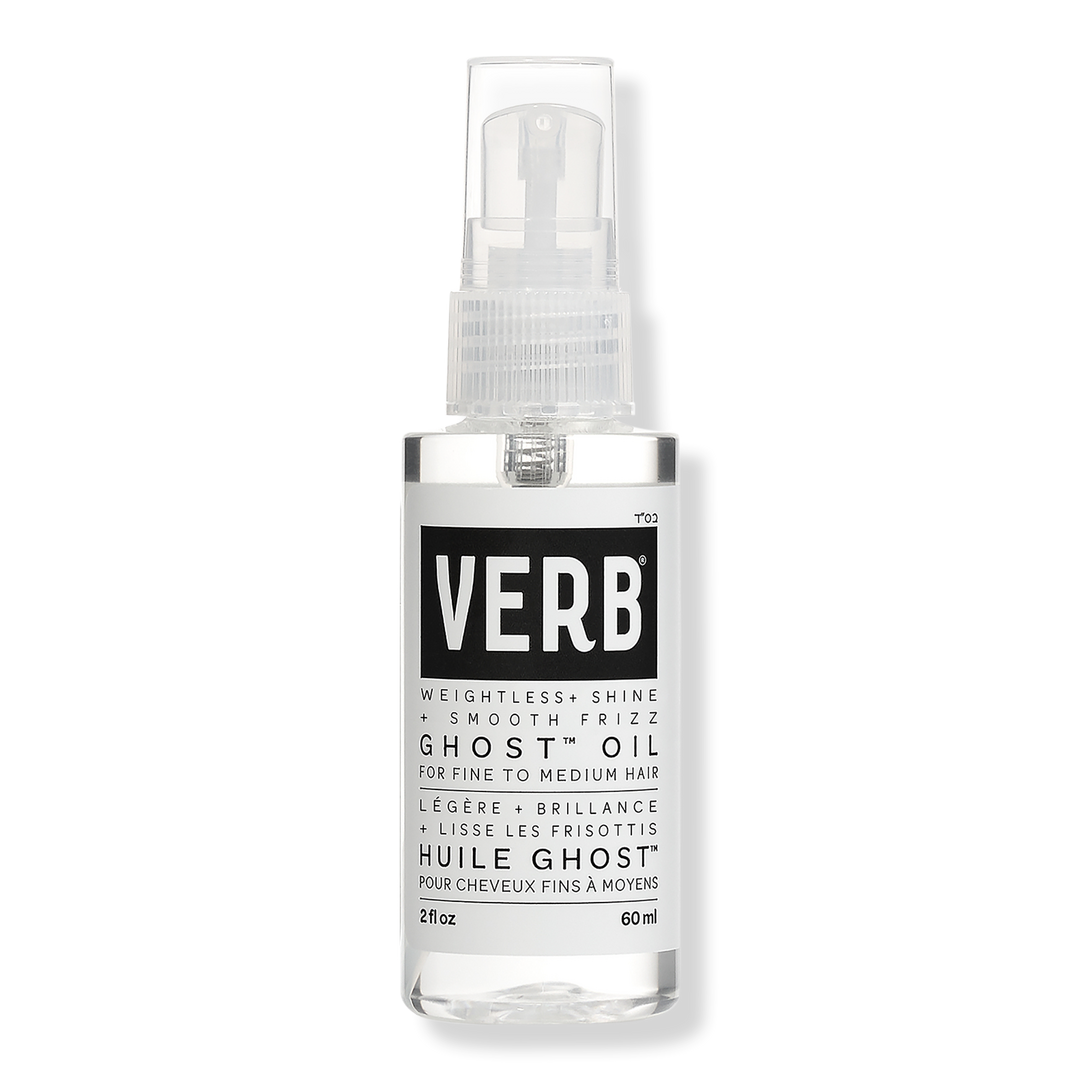
Verb Ghost Weightless Hair Oil
Verb's Ghost Weightless Hair Oil is a vanishing, restorative daily treatment oil that smoothes, fights frizz, and adds unmatched shine. Proven to enhance shine by 75%. Made for all hair types and textures including fine, thick, wavy, curly, kinky, and straight.
Sulfate-free
Paraben-free
Color-safe
Silicone-free
Natural
Protein-free
Optimized for Your Environment & Lifestyle
Nykaa
In stock
Recommended

Verb Ghost Weightless Hair Oil
Verb
verb-ghost-weightless-hair-oil
Hair Oil
10355432849701
Morning or Evening?
How often will you use this product?
Notes


Secure payment protection
Your Biodata Compatibility Analysis
Based on your 6 hair health indices and environmental factors
Poor Match
Significant incompatibilities
Growth Cycle Health Index
Hair Match
Hair Health Index Alignment
Optimal for OSI, SSI, DI, HSI
Ingredient Efficacy
Matching Ingredient Score
Environment Compatibility
Current UV, Air Quality & Humidity
Why This Works for Your Specific Profile
Damage Index:
Damage levels outside specified range may not benefit optimally from product formulation
Water Quality:
Fine hair becomes weighed down and greasy from heavy formulation
Hair:
Closed cuticles resist product penetration causing surface buildup without internal benefits
Active Lifestyle:
High activity and frequent washing rapidly strip product benefits requiring excessive reapplication
Your Hair Profile Integration
Your Hair Archetype

Density Level

Washing Frequency

Shedding Level

Oil Level
Your Hair Health Indices
Oil Secretion (OSI)
Very low oil production
Scalp Sensitivity (SSI)
Very low sensitivity
Growth Rate (CMR)
Poor metabolism rate
Damage Index (DI)
Minimal damage
Hair Strength (HSI)
Very weak strength
Softness Index (SI)
Significant improvement needed
Water & Environmental Integration

Water:


Expected Results & Timeline
Key Highlights

What is it?
Hair Oil, 10 ingredients

Who Is It For
All Ages, Unisex

Budget
Rs. 2,119.74 - Rs. 4,239.48

Timeline
Immediate to 1 week
Why You’ll Love It

What Does It Help With?
Frizz, Dryness, Breakage, Split Ends, Dullness, Color Fading

Best for
Frizz control and smoothness

Features
Weightlessly smooths frizz, Enhances shine, Provides heat protection, Helps strengthen hair

Checks
Cruelty-Free
Ingredients Overview
Ingredients List
Cyclopentasiloxane, Dimethiconol, Dimethicone, Caprylyl Methicone, Phenyl Trimethicone, Argania Spinosa Kernel Oil, Moringa Oleifera Seed Oil, Oryza Sativa Bran Oil, Bambusa Vulgaris Extract, Camellia Sinensis Leaf Extract, Hydrolyzed Soy Protein, Ethylhexylglycerin, Glycerin, Hydrolyzed Vegetable Protein PG-Propyl Silanetriol, Dimethicone Crosspolymer, Polysilicone-15, Glyceryl Linoleate, Glyceryl Linolenate, Parfum/Fragrance, Phenoxyethanol, Disodium EDTA, Potassium Sorbate, Alpha Isomethyl Ionone, Benzyl Cinnamate, Benzyl Salicylate, Citronellol, Limonene, Geraniol, Hexyl Cinnamal, Hydroxycitronellal, Linalool
Key Ingredients
Moringa oil, Green tea extract, Vegan proteins
Ingredients Details
Alpha Isomethyl Ionone
Common Name(s): Alpha-isomethyl ionone,iraldeine,methylionone
CAS Number: 127-51-5
DESCRIPTION
What It Does: Provides sweet violet-iris fragrance note of synthetic origin.
Why It's Used: Essential synthetic violet note – alpha-isomethyl ionone provides the violet-iris character central to many classic and modern perfume compositions.
How It Works: Synthetic ionone derivative absorbs to skin and hair for substantive, long-lasting fragrance. woody-violet character provides complexity to fragrance blends. good fixative properties extend top note duration.
Typically Found In: Fragrances,perfumed cosmetics,hair care
TECHNICAL DETAILS
Primary Category: Fragrance component – violet/iris synthetic
Secondary Functions: Skin conditioning
Application Areas:

Facial Skincare

Body Care
Hair Care
Beard Care
Color Cosmetics (Makeup)
Dietary/Oral Supplements
Typical Concentration Range: 0.001%–1%
SOURCING & ETHICS
Vegan Status: Conditional - supplier confirmation required
Halal Status: Unverified - supplier confirmation required
Source Notes: Commercially produced for cosmetic use. verify vegan/halal status with supplier. [audit 2026-07-29 rev2: the record's own source_notes does not assert a non-animal origin, or instructs the reader to verify with the supplier; "yes" asserts knowledge the record does not hold. determination requires shariah-panel sign-off.]
SKIN COMPATIBILITY
Irritancy Rating: 1/5 – very low
Comedogenicity Rating: 0/5 – non-comedogenic
Sensitivity Concerns: Well-tolerated by most skin types.
Safe for Sensitive Skin: Yes
SAFETY & COMPATIBILITY
Safety Profile: Eu cosmetics regulation: declared fragrance allergen. ifra guidelines apply.
Works Well With: Standard skincare actives
Avoid Combining With: No known significant incompatibilities
SCIENTIFIC NOTE
The ionone family of fragrance compounds (including alpha/beta ionone and alpha-isomethyl ionone) are responsible for the characteristic violet scent. natural violets (viola odorata) produce ionone compounds that specifically desensitise olfactory receptors after brief exposure – causing the violet's famously 'disappearing' scent. synthetic ionones provide the violet note without this rapid olfactory adaptation.
Last Verified: 2026-03-12
Primary Sources: Cosing database,ifra standards
Argania Spinosa Kernel Oil
Common Name(s): Argania spinosa kernel oil,botanical carrier oil,emollient fatty acid delivery
CAS Number: N/a
DESCRIPTION
What It Does: Softens and conditions skin by integrating into sc lipid bilayers, delivers essential fatty acids (oleic, linoleic, linolenic) for barrier lipid synthesis, and provides rich, non-stripping moisturisation.
Why It's Used: Natural carrier oils provide the closest compositional match to endogenous sc lipids, delivering emolliency through genuine barrier integration rather than simple surface occlusion.
How It Works: Fatty acid triglycerides partition into sc lipid bilayers — oleic acid (c18:1) provides fluid, emollient integration; linoleic acid (c18:2) acts as essential ceramide precursor; saturated fatty acids provide more occlusive barrier reinforcement.
Typically Found In: Moisturisers,facial oils,natural skin care
TECHNICAL DETAILS
Primary Category: Functional ingredient – emollient
Secondary Functions: Barrier sealing,softening
Application Areas:
Facial Skincare
Body Care
Hair Care
Beard Care
Color Cosmetics (Makeup)
Dietary/Oral Supplements
Typical Concentration Range: 1%–100%
SOURCING & ETHICS
Vegan Status: Conditional - supplier confirmation required
Halal Status: Unverified - supplier confirmation required
Source Notes: Plant-derived, synthetic or animal-derived. verify source. [audit 2026-07-29 rev2: the record's own source_notes does not assert a non-animal origin, or instructs the reader to verify with the supplier; "yes" asserts knowledge the record does not hold. determination requires shariah-panel sign-off.]
SKIN COMPATIBILITY
Irritancy Rating: 1/5 – very low
Comedogenicity Rating: 1/5 – low; formulation-dependent
Sensitivity Concerns: Non-irritating.
Safe for Sensitive Skin: Yes
SAFETY & COMPATIBILITY
Safety Profile: Excellent safety profile. ewg score: 1.
Works Well With: Humectants,ceramides,actives as carrier
Avoid Combining With: No significant incompatibilities
SCIENTIFIC NOTE
Essential fatty acids — linoleic (c18:2, n-6) and α-linolenic (c18:3, n-3) acids — cannot be synthesised by the body; topical delivery through carrier oils provides direct substrate for ceramide and eicosanoid biosynthesis in the epidermis.
Last Verified: 2026-03-12
Primary Sources: Cosing database,argania spinosa kernel oil carrier oil botanical review
Bambusa Vulgaris Extract
Common Name(s): Bambusa vulgaris extract
DESCRIPTION
What It Does: Provides antioxidant protection, soothing anti-inflammatory effects, and skin-conditioning benefits through plant-derived polyphenols and phytochemicals.
Why It's Used: Plant extracts concentrate bioactive phytochemicals evolved for environmental protection — uv, microbial, and oxidative stressors — that translate to skin benefits.
How It Works: Polyphenols (flavonoids, phenolic acids) inhibit nf-κb-mediated inflammatory signaling, scavenge reactive oxygen species through electron donation, and chelate pro-oxidant metal ions to reduce oxidative skin damage.
Typically Found In: Serums,toners,moisturizers,masks,essences
TECHNICAL DETAILS
Primary Category: Botanical extracts
Secondary Functions: Antioxidant,anti-inflammatory
Application Areas:
Facial Skincare
Body Care
Hair Care
Beard Care
Color Cosmetics (Makeup)
Dietary/Oral Supplements
Typical Concentration Range: 0.1–10%
SOURCING & ETHICS
Vegan Status: Yes
Halal Status: Yes
Source Notes: Plant-derived extract; no animal components.
SKIN COMPATIBILITY
Irritancy Rating: 1
Comedogenicity Rating: 0
Sensitivity Concerns: Low sensitization potential at recommended use concentrations.
Safe for Sensitive Skin: Yes
SAFETY & COMPATIBILITY
Safety Profile: Well-characterized cosmetic ingredient with established safety profile. generally non-irritating at typical use concentrations. suitable for leave-on and rinse-off cosmetics.
Works Well With: Niacinamide,hyaluronic acid,vitamin c,ceramides
Avoid Combining With: Strong oxidizing agents
SCIENTIFIC NOTE
Plant secondary metabolites (flavonoids, terpenes, phenolic acids) are biosynthesized as defense compounds against uv, herbivores, and pathogens. their anti-inflammatory activity typically derives from competitive inhibition of cox-2 and 5-lox enzymes (ic50 1–50 µm), while antioxidant activity involves single electron transfer (set) and hydrogen atom transfer (hat) mechanisms with structure-dependent rate constants.
Last Verified: 2025-01-15
Primary Sources: Cosing eu database; pcpc cosmetic ingredient safety reviews; phytochemical and ethnobotanical literature
Benzyl Cinnamate
Common Name(s): Benzyl cinnamate
DESCRIPTION
What It Does: Absorbs or reflects uv radiation, preventing uv-induced dna damage, photo-oxidative stress, and premature skin aging.
Why It's Used: Uv filters are the active ingredients in sun protection — without them, formulations cannot make spf claims or prevent solar-induced skin damage.
How It Works: The uv-absorbing chromophore undergoes photoexcitation by uv photons, then dissipates the absorbed energy through thermal relaxation (chemical filters) or photon scattering/reflection (physical filters), preventing photon penetration to skin cells.
Typically Found In: Sunscreens,moisturizers with spf,foundations with spf
TECHNICAL DETAILS
Primary Category: Uv filters
Secondary Functions: Skin-protecting
Application Areas:
Facial Skincare
Body Care
Hair Care
Beard Care
Color Cosmetics (Makeup)
Dietary/Oral Supplements
Typical Concentration Range: 0.5–25% (within regulatory limits)
SOURCING & ETHICS
Vegan Status: Yes
Halal Status: Yes
Source Notes: Synthetic uv filter; no animal components.
SKIN COMPATIBILITY
Irritancy Rating: 1899-12-31 00:00:00 -0800
Sensitivity Concerns: Contact allergy to uv filters occurs in approximately 1–3% of the general population; patch testing recommended for those with known photosensitivity.
Safe for Sensitive Skin: Yes
SAFETY & COMPATIBILITY
Safety Profile: Regulatory approval required per market (eu annex vi, fda otc monograph, etc.). generally non-irritating at approved concentrations.
Works Well With: Other uv filters,antioxidants,emollients
Avoid Combining With: Incompatible filter combinations (photodegradation); check regulatory approvals per region
SCIENTIFIC NOTE
Uv filters operate through two mechanisms: organic/chemical filters absorb uv photons through electronic excitation (π→π* transitions in conjugated systems), then dissipate energy via thermal relaxation; inorganic/physical filters (tio2, zno) scatter and reflect photons through mie scattering (particle size 50–300 nm) and band gap absorption. spf is measured in vivo (iso 24444) as the ratio of minimal erythema doses with and without sunscreen.
Last Verified: 2025-01-15
Primary Sources: Cosing eu database; pcpc cosmetic ingredient safety reviews; eu cosmetics regulation annex vi; iso 24444 (in vivo spf testing)
Personalized Usage Instructions
How to Use
Step 1
Apply 2-3 pumps to mid-lengths and ends of damp or dry hair and comb to distribute evenly
Step 2
Apply more as needed
Step 3
Style as usual
Medical Chemicals

Protein/Moisture
- Moisture
pH Level
- Acidic

Porosity Taget
- Normal Porosity
Customized for Your Profile
Scalp Condtions
Anti-Dandruff, Sensitive Scalp, pH Balanced
Climate Suitability
Humid, Dry, UV Protection
Clinical Claims
Increase shine by up to 118%, Reduce frizz by 70%, Protects against heat up to 450 F/232 °C, 9.5x stronger hair with 89% less breakage
Frequency
Apply 2-3 pumps to mid-lengths and ends of damp or dry hair and comb to distribute evenly. Apply more as needed. Style as usual.
Product Information

Cruelty-Free