

Virtue
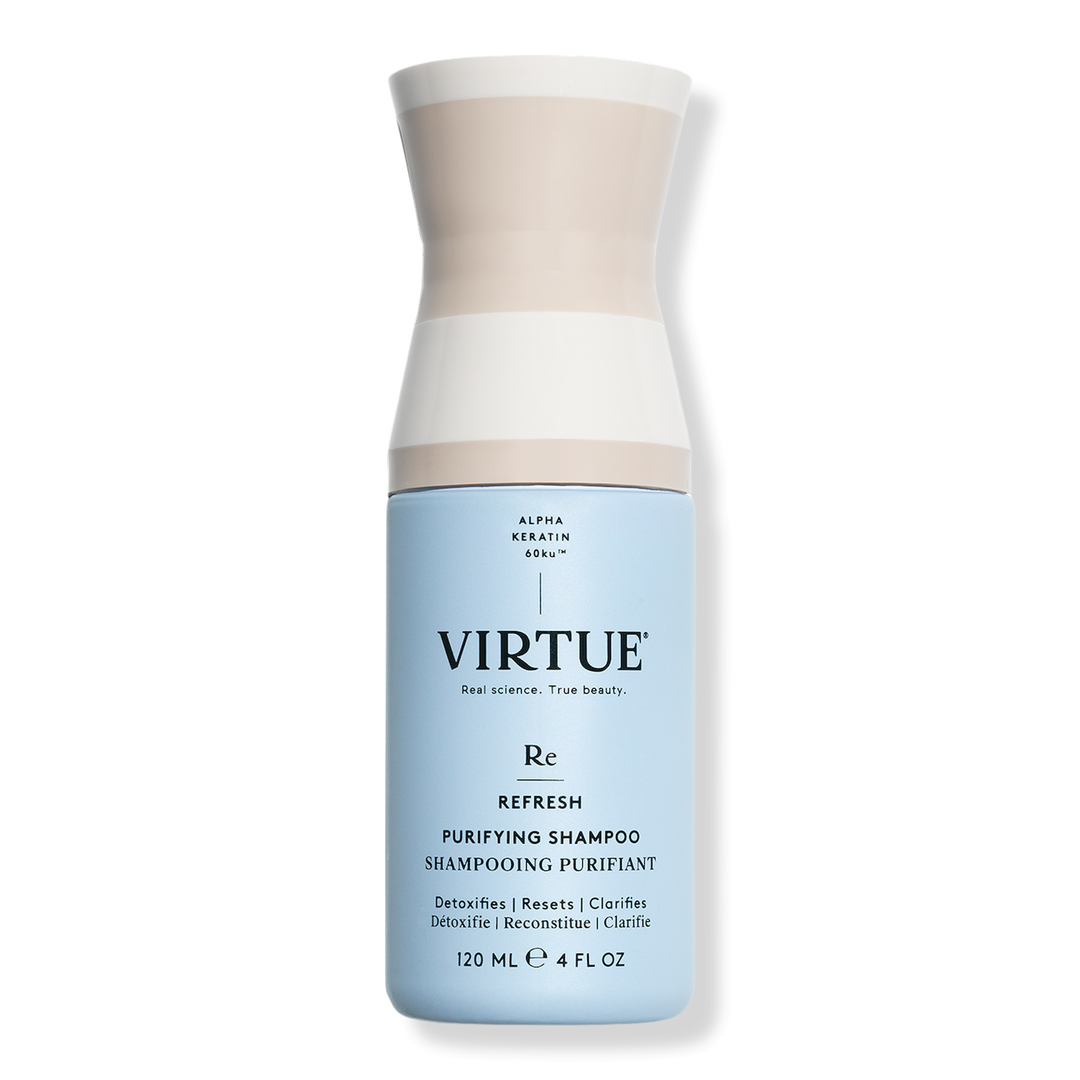
Virtue Clarifying Charcoal & Coconut Purifying Shampoo
Whisk away the impurities that can weigh down hair and make it lifeless with Virtue's deeply cleansing Purifying Shampoo.
Sulfate-free
Paraben-free
Color-safe
Silicone-free
Natural
Oily Scalp
Optimized for Your Environment & Lifestyle
Nykaa
In stock
Recommended

Virtue Clarifying Charcoal & Coconut Purifying Shampoo
Virtue
virtue-clarifying-charcoal-coconut-purifying-shampoo
Shampoo
10355414106405
Morning or Evening?
How often will you use this product?
Notes


Secure payment protection
Your Biodata Compatibility Analysis
Based on your 6 hair health indices and environmental factors
Poor Match
Significant incompatibilities
Growth Cycle Health Index
Hair Match
Hair Health Index Alignment
Optimal for OSI, SSI, DI, HSI
Ingredient Efficacy
Matching Ingredient Score
Environment Compatibility
Current UV, Air Quality & Humidity
Why This Works for Your Specific Profile
Damage Index:
Very healthy or severely damaged hair falls outside optimal treatment parameters
Water Quality:
Soft or moderately hard water does not require intensive treatment causing over-cleansing and dryness
Hair:
Closed cuticles resist product penetration causing surface buildup without internal benefits
Active Lifestyle:
Low activity produces insufficient stress or buildup making product intensity unnecessarily harsh
Your Hair Profile Integration
Your Hair Archetype

Density Level

Washing Frequency

Shedding Level

Oil Level
Your Hair Health Indices
Oil Secretion (OSI)
Very low oil production
Scalp Sensitivity (SSI)
Very low sensitivity
Growth Rate (CMR)
Poor metabolism rate
Damage Index (DI)
Minimal damage
Hair Strength (HSI)
Very weak strength
Softness Index (SI)
Significant improvement needed
Water & Environmental Integration

Water:


Expected Results & Timeline
Key Highlights

What is it?
Clarifying shampoo with key ingredients including Alpha Keratin 60ku, charcoal powder, and hops extract.

Who Is It For
All ages and genders

Budget
Rs. 3,128.91 - Rs. 6,257.82

Timeline
Immediate
Why You’ll Love It

What Does It Help With?
Removing impurities, toxins, and product build-up

Best for
Oily Scalp, Product Build-up

Features
Detoxifies hair, refreshes and adds shine, suitable for all hair types.

Checks
Cruelty Free, Vegan
Ingredients Overview
Ingredients List
aqua-water-eau, sodium-lauroyl-methyl-isethionate, sodium-cocoyl-isethionate, cocamidopropyl-betaine, peg-40-hydrogenated-castor-oil, cocamide-mipa, keratin, glycerin, charcoal-powder, panthenol, humulus-lupulus-hops-extract, cocamidopropylamine-oxide, undeceth-11, butyloctanol, undeceth-5, sodium-methyl-isethionate, coconut-acid, parfum-fragrance, lauric-acid, sodium-isethionate, peg-150-distearate, hydroxyacetophenone, ppg-26-buteth-26, zinc-laurate, sodium-laurate, ethylhexylglycerin, peg-150-stearate, hydroxypropyl-guar-hydroxypropyltrimonium-chloride, polyquaternium-7, stearic-acid, peg-150, sodium-dilauramidoglutamide-lysine, phenoxyethanol, disodium-edta, citric-acid, hydrogen-peroxide, sodium-benzoate, silicone-quaternium-16, sodium-chloride, potassium-sorbate, cinnamal, citral, geraniol, hexyl-cinnamal, limonene, linalool
Key Ingredients
Alpha Keratin 60ku, charcoal powder, hops extract
Ingredients Details
Butyloctanol
Common Name(s): Butyloctanol,cosmetic active,functional ingredient
CAS Number: N/a
DESCRIPTION
What It Does: Delivers characteristic cosmetic function at recommended use concentration.
Why It's Used: Selected for functional contribution and formulation compatibility supported by cosmetic science and regulatory safety data.
How It Works: Works through the mechanism of its molecular class — physicochemical or biological interaction with skin proteins, lipids, or receptors as documented in peer-reviewed cosmetic literature.
Typically Found In: Skin care formulations
TECHNICAL DETAILS
Primary Category: Active ingredient – cosmetic active
Secondary Functions: Skin conditioning
Application Areas:

Facial Skincare

Body Care
Hair Care
Beard Care
Color Cosmetics (Makeup)
Dietary/Oral Supplements
Typical Concentration Range: 0.1%–10%
SOURCING & ETHICS
Vegan Status: Conditional - supplier confirmation required
Halal Status: Unverified - supplier confirmation required
Source Notes: Commercially produced for cosmetic use. verify vegan/halal status with supplier. [audit 2026-07-29 rev2: the record's own source_notes does not assert a non-animal origin, or instructs the reader to verify with the supplier; "yes" asserts knowledge the record does not hold. determination requires shariah-panel sign-off.]
SKIN COMPATIBILITY
Irritancy Rating: 1/5 – very low
Comedogenicity Rating: 0/5 – non-comedogenic
Sensitivity Concerns: Well-tolerated by most skin types.
Safe for Sensitive Skin: Yes
SAFETY & COMPATIBILITY
Safety Profile: Good safety profile at recommended concentrations. ewg score: 1–2.
Works Well With: Standard skincare actives
Avoid Combining With: No known significant incompatibilities
SCIENTIFIC NOTE
Butyloctanol has an established safety and efficacy profile within the cosmetic regulatory framework at standard use concentrations.
Last Verified: 2026-03-12
Primary Sources: Cosing database,butyloctanol technical literature
Charcoal Powder
Common Name(s): Activated charcoal/fuller's earth,pore cleansing adsorbent,detoxifying clay
CAS Number: N/a
DESCRIPTION
What It Does: Physically adsorbs excess sebum, environmental pollution particulates, and skin surface impurities into the porous structure, purifies pores during mask application, and provides the 'detox' pore-drawing action validated by the visible sebum and debris transfer to the mask on removal.
Why It's Used: Provides genuine documented high-capacity physical adsorption — not a marketing claim but a measurable adsorbent capacity. activated charcoal's ~2000 m²/g surface area adsorbs sebum lipids and particulate pollutants through van der waals forces at concentrations no clay or silica alternative can match.
How It Works: Activated charcoal's turbostratic graphite structure (disordered graphene layers) provides pore sizes of 0.5–50 nm covering micro, meso, and macro pore ranges. sebum lipids adsorb into mesopores (2–50 nm) via van der waals forces; pollutant pahs adsorb via π-π stacking with graphene rings; the high-capacity adsorption drives equilibrium-driven partitioning from pore to charcoal surface.
Typically Found In: Charcoal masks,pore purifying,detox
TECHNICAL DETAILS
Primary Category: Active ingredient – mineral / metal active
Secondary Functions: Antimicrobial,sebum regulation,antioxidant enzyme cofactor
Application Areas:
Facial Skincare
Body Care
Hair Care
Beard Care
Color Cosmetics (Makeup)
Dietary/Oral Supplements
Typical Concentration Range: 5%–30%
SOURCING & ETHICS
Vegan Status: Yes
Halal Status: Yes
Source Notes: Mineral/inorganic compound. cosmetic or pharmaceutical grade.
SKIN COMPATIBILITY
Irritancy Rating: 1/5 – very low
Comedogenicity Rating: 0/5 – non-comedogenic
Sensitivity Concerns: Non-irritating at recommended concentrations.
Safe for Sensitive Skin: Yes at recommended concentrations
SAFETY & COMPATIBILITY
Safety Profile: Excellent safety profile at cosmetic concentrations. ewg score: 1–2.
Works Well With: Niacinamide,salicylic acid,other actives
Avoid Combining With: No significant incompatibilities at standard concentrations
SCIENTIFIC NOTE
Activated charcoal's adsorption capacity (1–3 g sebum/g charcoal) significantly exceeds kaolin clay (~0.5 g/g) and bentonite (~0.8 g/g) — the higher porosity-to-mass ratio from carbonisation providing the most efficient sebum adsorption per gram of any cosmetic adsorbent.
Last Verified: 2026-03-12
Primary Sources: Cosing database,activated charcoal pore adsorption capacity review
Cinnamal
Common Name(s): Cinnamic aldehyde,(e)-3-phenylpropenal,phenylacrolein
CAS Number: 104-55-2
DESCRIPTION
What It Does: Provides the characteristic warm cinnamon fragrance note with antimicrobial activity.
Why It's Used: The cinnamon spice fragrance – cinnamal defines the warm, sweet spice note of cinnamon essential oil widely used in fragrance compositions.
How It Works: Alpha,beta-unsaturated aldehyde provides antimicrobial via michael addition to bacterial thiol enzymes. inhibits quorum sensing. anti-inflammatory via nf-kb inhibition. antifungal vs candida.
Typically Found In: Spice fragrances,flavoured lip products,antimicrobial formulas
TECHNICAL DETAILS
Primary Category: Fragrance component – cinnamon aldehyde
Secondary Functions: Skin conditioning
Application Areas:
Facial Skincare
Body Care
Hair Care
Beard Care
Color Cosmetics (Makeup)
Dietary/Oral Supplements
Typical Concentration Range: 0.001%–0.1%
SOURCING & ETHICS
Vegan Status: Conditional - supplier confirmation required
Halal Status: Unverified - supplier confirmation required
Source Notes: Commercially produced for cosmetic use. verify vegan/halal status with supplier. [audit 2026-07-29 rev2: the record's own source_notes does not assert a non-animal origin, or instructs the reader to verify with the supplier; "yes" asserts knowledge the record does not hold. determination requires shariah-panel sign-off.]
SKIN COMPATIBILITY
Irritancy Rating: 1/5 – very low
Comedogenicity Rating: 0/5 – non-comedogenic
Sensitivity Concerns: Well-tolerated by most skin types.
Safe for Sensitive Skin: Yes
SAFETY & COMPATIBILITY
Safety Profile: Eu cosmetics regulation: declared fragrance allergen with restrictive ifra limits due to high sensitisation potential. max 0.01% leave-on skin per ifra category 4.
Works Well With: Standard skincare actives
Avoid Combining With: No known significant incompatibilities
SCIENTIFIC NOTE
Cinnamal is one of the most potent cosmetic contact sensitisers known – local lymph node assay (llna) ec3 values of 0.016% (requiring only 0.016% to induce sensitisation in 3% of test animals), making it approximately 100× more potent as a sensitiser than cinnamyl alcohol. despite this, it remains in use under strict ifra concentration limits that keep exposure below sensitisation thresholds.
Last Verified: 2026-03-12
Primary Sources: Cosing database,ifra standards,rifm cinnamal safety assessment
Citral
Common Name(s): 3,7-dimethyl-2,6-octadienal,geranial+neral mix
CAS Number: 5392-40-5
DESCRIPTION
What It Does: Provides the defining intense lemon-citrus fragrance note.
Why It's Used: The lemon scent compound – citral defines the fresh lemon scent in lemon essential oil and lemongrass with potent antimicrobial activity.
How It Works: Mixture of e-isomer (geranial) and z-isomer (neral). antimicrobial via michael addition to thiol enzymes. inhibits nf-kb for anti-inflammatory activity. antioxidant via allylic aldehyde.
Typically Found In: Citrus fragrances,antibacterial products,lemon-scented cosmetics
TECHNICAL DETAILS
Primary Category: Fragrance component – lemon aldehyde
Secondary Functions: Skin conditioning
Application Areas:
Facial Skincare
Body Care
Hair Care
Beard Care
Color Cosmetics (Makeup)
Dietary/Oral Supplements
Typical Concentration Range: 0.001%–0.5%
SOURCING & ETHICS
Vegan Status: Conditional - supplier confirmation required
Halal Status: Unverified - supplier confirmation required
Source Notes: Commercially produced for cosmetic use. verify vegan/halal status with supplier. [audit 2026-07-29 rev2: the record's own source_notes does not assert a non-animal origin, or instructs the reader to verify with the supplier; "yes" asserts knowledge the record does not hold. determination requires shariah-panel sign-off.]
SKIN COMPATIBILITY
Irritancy Rating: 1/5 – very low
Comedogenicity Rating: 0/5 – non-comedogenic
Sensitivity Concerns: Well-tolerated by most skin types.
Safe for Sensitive Skin: Yes
SAFETY & COMPATIBILITY
Safety Profile: Eu cosmetics regulation: declared fragrance allergen. high sensitisation potential from alpha,beta-unsaturated aldehyde structure. ifra strict limits.
Works Well With: Standard skincare actives
Avoid Combining With: No known significant incompatibilities
SCIENTIFIC NOTE
Citral's high sensitisation potential (llna ec3 ~0.11%) is a consequence of its alpha,beta-unsaturated aldehyde structure providing a highly reactive michael acceptor for skin protein covalent binding. the e/z mixture (geranial/neral) in natural citral means both isomers contribute to the sensitisation burden – explaining why lemongrass oil (very high citral content, ~60-80%) is one of the more common essential oil allergens.
Last Verified: 2026-03-12
Primary Sources: Cosing database,ifra standards
Personalized Usage Instructions
How to Use
Step 1
Using a quarter-size amount of shampoo, add a splash of water and work into a lather between palms
Step 2
Apply to wet hair, massage into scalp and throughout the length of hair, and rinse well
Step 3
Follow with conditioner
Step 4
Use once weekly, or more if needed, to remove residue, product build-up, and impurities
Medical Chemicals

Protein/Moisture
- Protein/Moisture balance
pH Level
- Acidic

Porosity Taget
- Normal Porosity
Customized for Your Profile
Scalp Condtions
Oil Control, pH Balanced
Climate Suitability
Humid, Dry, Hard Water, Soft Water, Pollution Shield, Summer
Clinical Claims
Frequency
Using a quarter-size amount of shampoo, add a splash of water and work into a lather between palms. Apply to wet hair, massage into scalp and throughout the length of hair, and rinse well. Follow with conditioner. Use once weekly, or more if needed, to remove residue, product build-up, and impurities.
Product Information

Cruelty Free
Vegan