
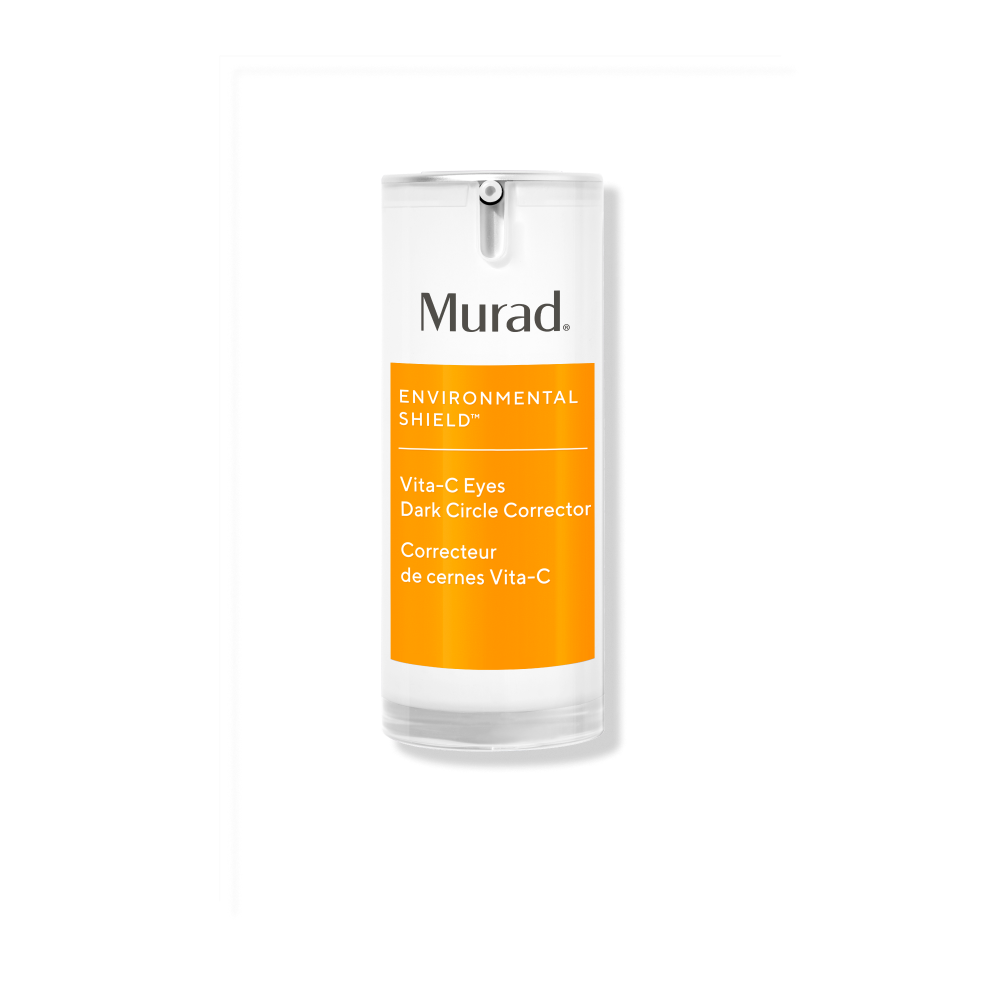

Murad
Vita-C Eyes Dark Circle Corrector

Vita-C Eyes Dark Circle Corrector
Murad
vita-c-eyes-dark-circle-corrector
Eyecare
9784844550437
Morning or Evening?
How often will you use this product?
Notes


Highlights
WHAT IS IT?
Vitamin C Eye Serum
FEATURES
Gold-stabilized vitamin C, Light-reflecting micro-minerals, Enhanced L-ascorbic acid stability and potency
BEST FOR
all skin types
CHECKS
Non-toxic
Who Is It For?
Adults Concerned With Dark CirclesWhat Does It Help With?
Dark Circles Brightening Under-eye AreaBudget
Mid-range ($30-$75)How To Use
Which routine should it be used in?
Instructions:
Key Information


What Murad Says
Product Description:
Gold-stabilized vitamin C eye serum fights the look of dark circles in as little as 2 weeks. One-of-a-kind Vita-C Complex enhances L-ascorbic acid stability and potency. Light-reflecting micro-minerals instantly brighten.
About the Brand:
Ingredients Overview
Ingredients List
Water/Aqua/Eau, Glycerin, Dimethicone, Hydroxyethyl Acrylate/Sodium Acryloyldimethyl Taurate Copolymer, Titanium Dioxide (CI 77891), Niacinamide, Ascorbic Acid, Urea, Yeast Amino Acids, Trehalose, Inositol, Taurine, Betaine, Glutathione, Tetrahexyldecyl Ascorbate, Glucosyl Hesperidin, Fucus Vesiculusus Extract, Xymenynic Acid, HDI/Trimethylol Hexyllactone Crosspolymer, Mica, Triheptanoin, Propylene Glycol Dicaprate, Sorbitol, Helianthus Annuus (Sunflower) Seed Extract, C13-16 Isopara-n, Caprylic/Capric Triglyceride, Polyisobutene, Silica, Tin Oxide, Hexylene Glycol, PEG-7 Trimethylolpropane Coconut Ether, Acetyl Zingerone, Asparagospsis Armata Extract, Chlorella Vulgaris Extract, Terminalia Ferdinandiana Fruit Extract, Hordeum Vulgare (Barley) Extract, Ascophyllum Nodosum Extract, Sodium Hyaluronate, Xanthan Gum, Cucumis Sativus (Cucumber) Extract, Trimethylsiloxysilicate, PEG-8 Methyl Ether Triethoxysilane, Gold, Caprylyl Glycol, Phenoxyethanol, Ethylhexylglycerin, Iron Oxides (CI 77492), Iron Oxides (CI 77491)
Key Ingredients
Vitamin C, Niacinamide
Ingredients Details
Ascorbic Acid
Common Name(s): Vitamin c,l-ascorbic acid,l-ascorbate
CAS Number: 50-81-7
DESCRIPTION
What It Does: Ascorbic acid neutralizes free radicals, stimulates collagen production, inhibits melanin synthesis for a brighter complexion, and supports skin repair.
Why It's Used: It is used because it offers comprehensive antioxidant and brightening benefits supported by extensive clinical evidence. it is the most bioavailable form of vitamin c for topical application.
How It Works: As an antioxidant, it donates electrons to neutralize reactive oxygen species. it is an essential cofactor for the hydroxylation of proline and lysine in collagen synthesis. it inhibits tyrosinase, the enzyme responsible for melanin production, reducing hyperpigmentation.
Typically Found In: Vitamin c serums,brightening moisturizers,antioxidant formulations,spf products,eye creams
TECHNICAL DETAILS
Primary Category: Active ingredient – vitamin c
Secondary Functions: Collagen booster,tyrosinase inhibitor,ph adjuster
Application Areas:

Facial Skincare
Body Care

Hair Care
Beard Care
Color Cosmetics (Makeup)
Dietary/Oral Supplements
Typical Concentration Range: 5%–20% (effective range: 10–20%; ph must be below 3.5 for activity)
SOURCING & ETHICS
Vegan Status: Yes – synthetically produced or corn/plant-derived
Halal Status: Yes
Source Notes: Commercially produced by reichstein synthesis or guangxi fermentation process from glucose. some plant-derived versions exist.
SKIN COMPATIBILITY
Irritancy Rating: 2/5 – low to moderate; low ph formulations can cause initial tingling or stinging, especially at concentrations above 15%
Comedogenicity Rating: 0/5 – non-comedogenic
Sensitivity Concerns: Acidic ph can irritate sensitive or compromised skin barriers. highly unstable – oxidizes rapidly when exposed to air, light, and heat (turns orange/brown). use in the morning under spf.
Safe for Sensitive Skin: Use with caution – start at lower concentrations (5–10%). stabilized derivative forms (vitamin c derivatives) may be better tolerated.
SAFETY & COMPATIBILITY
Safety Profile: Very safe; well-studied. key concern is formulation stability, not safety. ewg hazard score: 1.
Works Well With: Vitamin e (tocopherol) – synergistic antioxidant effect,ferulic acid – stabilizing and boosting,spf,hyaluronic acid,niacinamide (use at different times if concentrations are high)
Avoid Combining With: Retinol (use at separate times – ph incompatibility),benzoyl peroxide (oxidizes vitamin c),ahas/bhas (cumulative irritation risk)
SCIENTIFIC NOTE
L-ascorbic acid is the only form of vitamin c that is proven bioactive in skin at the molecular level. its instability (rapid oxidation) has driven development of numerous stable derivatives including ascorbyl glucoside, magnesium ascorbyl phosphate, and ascorbyl tetraisopalmitate.
Last Verified: ##########
Primary Sources: Cosing database,cir safety assessment,pinnell et al. studies,journal of the american academy of dermatology
Dimethicone
Common Name(s): Pdms,polydimethylsiloxane,silicone fluid
CAS Number: 9006-65-9
DESCRIPTION
What It Does: Provides silicone-characteristic silky feel and skin protection with adjustable viscosity.
Why It's Used: The benchmark cosmetic silicone – sets the gold standard for silky application feel, spreadability, and skin protection in virtually all skin care categories.
How It Works: Polydimethylsiloxane chain flexibility provides extremely low surface tension and high spreadability. inert si-o backbone provides chemical stability and excellent skin tolerance. occlusive film formation reduces tewl. higher viscosity grades provide more intense conditioning.
Typically Found In: Moisturizers,foundations,primers,sunscreens – nearly universal
TECHNICAL DETAILS
Primary Category: Functional ingredient – polydimethylsiloxane
Secondary Functions: Barrier sealing,softening
Application Areas:
Facial Skincare
Body Care
Hair Care
Beard Care
Color Cosmetics (Makeup)
Dietary/Oral Supplements
Typical Concentration Range: 0.1%–30%
SOURCING & ETHICS
Vegan Status: Conditional - supplier confirmation required
Halal Status: Unverified - supplier confirmation required
Source Notes: Plant-derived, synthetic or animal-derived. verify source. [audit 2026-07-29 rev2: the record's own source_notes does not assert a non-animal origin, or instructs the reader to verify with the supplier; "yes" asserts knowledge the record does not hold. determination requires shariah-panel sign-off.]
SKIN COMPATIBILITY
Irritancy Rating: 1/5 – very low
Comedogenicity Rating: 1/5 – low; formulation-dependent
Sensitivity Concerns: Non-irritating.
Safe for Sensitive Skin: Yes
SAFETY & COMPATIBILITY
Safety Profile: Excellent safety profile. ewg score: 1.
Works Well With: Humectants,ceramides,actives as carrier
Avoid Combining With: No significant incompatibilities
SCIENTIFIC NOTE
Dimethicone's exceptional silky feel arises from its very low intermolecular attractive forces (weak van der waals forces due to non-polar methyl groups) that allow silicone chains to slide freely over skin. the coefficient of kinetic friction for pdms against skin (~0.04) is among the lowest of any cosmetic material – explaining why even small amounts transform product feel.
Last Verified: 2026-03-12
Primary Sources: Cosing database,cir safety assessment
Glycerin
Common Name(s): Glycerol,glycerine,1,2,3-propanetriol
CAS Number: 56-81-5
DESCRIPTION
What It Does: Glycerin pulls water from the environment and deeper skin layers into the outer skin layer (epidermis), boosting moisture levels and keeping skin soft, smooth, and plump.
Why It's Used: It is used in virtually every moisturizer, serum, and cleanser because it is highly effective at hydrating skin, is well-tolerated by all skin types, and enhances the texture and spreadability of formulations.
How It Works: As a humectant, glycerin forms hydrogen bonds with water molecules, trapping them in the skin. it also reinforces the skin barrier by integrating into lipid structures between skin cells.
Typically Found In: Moisturizers,serums,cleansers,toners,sheet masks,sunscreens,body lotions,shampoos,conditioners
TECHNICAL DETAILS
Primary Category: Humectant
Secondary Functions: Skin barrier support,emollient,solvent
Application Areas:
Facial Skincare
Body Care
Hair Care
Beard Care
Color Cosmetics (Makeup)
Dietary/Oral Supplements
Typical Concentration Range: 1%–30% (typical: 3–10%)
SOURCING & ETHICS
Vegan Status: Conditional - feedstock declaration required
Halal Status: Unverified - feedstock declaration required (plant, animal and petrochemical routes all exist)
Source Notes: Derived from plant oils via hydrolysis or saponification; synthetic versions also available. palm-derived glycerin carries sustainability concerns. [audit 2026-07-29 rev2: origin-dependent: the same inci exists in plant, animal and petrochemical versions and the name does not discriminate. determination requires shariah-panel sign-off.]
SKIN COMPATIBILITY
Irritancy Rating: 1/5 – very low; non-irritating at all standard concentrations
Comedogenicity Rating: 0/5 – non-comedogenic
Sensitivity Concerns: Extremely rare allergic reactions; generally safe for all skin types including sensitive and baby skin
Safe for Sensitive Skin: Yes
SAFETY & COMPATIBILITY
Safety Profile: Widely recognized as safe. ewg hazard score: 1. no significant concerns for irritation, sensitization, or toxicity at typical concentrations (up to 50%).
Works Well With: Hyaluronic acid,ceramides,niacinamide,panthenol,urea,peptides,retinol,ahas/bhas
Avoid Combining With: No known incompatibilities at standard concentrations
SCIENTIFIC NOTE
Glycerin is an endogenous skin component found naturally in the stratum corneum. aquaporin-3 channels in keratinocytes facilitate glycerin transport, making it integral to natural skin hydration pathways.
Last Verified: 2026-03-12
Primary Sources: Cosing database,cir safety assessment,ewg skin deep,inci decoder
Hydroxyethyl Acrylate/sodium Acryloyldimethyl Taurate Copolymer
Common Name(s): Hydroxyethyl acrylate/sodium acryloyldimethyl taurate copolymer
DESCRIPTION
What It Does: Provides antioxidant protection, soothing anti-inflammatory effects, and skin-conditioning benefits through plant-derived polyphenols and phytochemicals.
Why It's Used: Plant extracts concentrate bioactive phytochemicals evolved for environmental protection — uv, microbial, and oxidative stressors — that translate to skin benefits.
How It Works: Polyphenols (flavonoids, phenolic acids) inhibit nf-κb-mediated inflammatory signaling, scavenge reactive oxygen species through electron donation, and chelate pro-oxidant metal ions to reduce oxidative skin damage.
Typically Found In: Lotions,creams,serums,masks
TECHNICAL DETAILS
Primary Category: Minerals
Secondary Functions: Skin-conditioning
Application Areas:
Facial Skincare
Body Care
Hair Care
Beard Care
Color Cosmetics (Makeup)
Dietary/Oral Supplements
Typical Concentration Range: 0.1–10%
SOURCING & ETHICS
Vegan Status: Conditional - feedstock declaration required
Halal Status: Unverified - feedstock declaration required (plant, animal and petrochemical routes all exist)
Source Notes: Mineral-derived ingredient; no biological origin. [audit 2026-07-29 rev2: origin-dependent: the same inci exists in plant, animal and petrochemical versions and the name does not discriminate. determination requires shariah-panel sign-off.]
SKIN COMPATIBILITY
Irritancy Rating: 1
Comedogenicity Rating: 0
Sensitivity Concerns: Low sensitization potential at recommended use concentrations.
Safe for Sensitive Skin: Yes
SAFETY & COMPATIBILITY
Safety Profile: Well-characterized cosmetic ingredient with established safety profile. generally non-irritating at typical use concentrations. suitable for leave-on and rinse-off cosmetics.
Works Well With: Plant extracts,peptides,vitamins
Avoid Combining With: Strong chelating agents (reduce mineral availability)
SCIENTIFIC NOTE
Plant secondary metabolites (flavonoids, terpenes, phenolic acids) are biosynthesized as defense compounds against uv, herbivores, and pathogens. their anti-inflammatory activity typically derives from competitive inhibition of cox-2 and 5-lox enzymes (ic50 1–50 µm), while antioxidant activity involves single electron transfer (set) and hydrogen atom transfer (hat) mechanisms with structure-dependent rate constants.
Last Verified: 2025-01-15
Primary Sources: Cosing eu database; pcpc cosmetic ingredient safety reviews; ingredient-specific safety and efficacy literature