

Pure Fiji
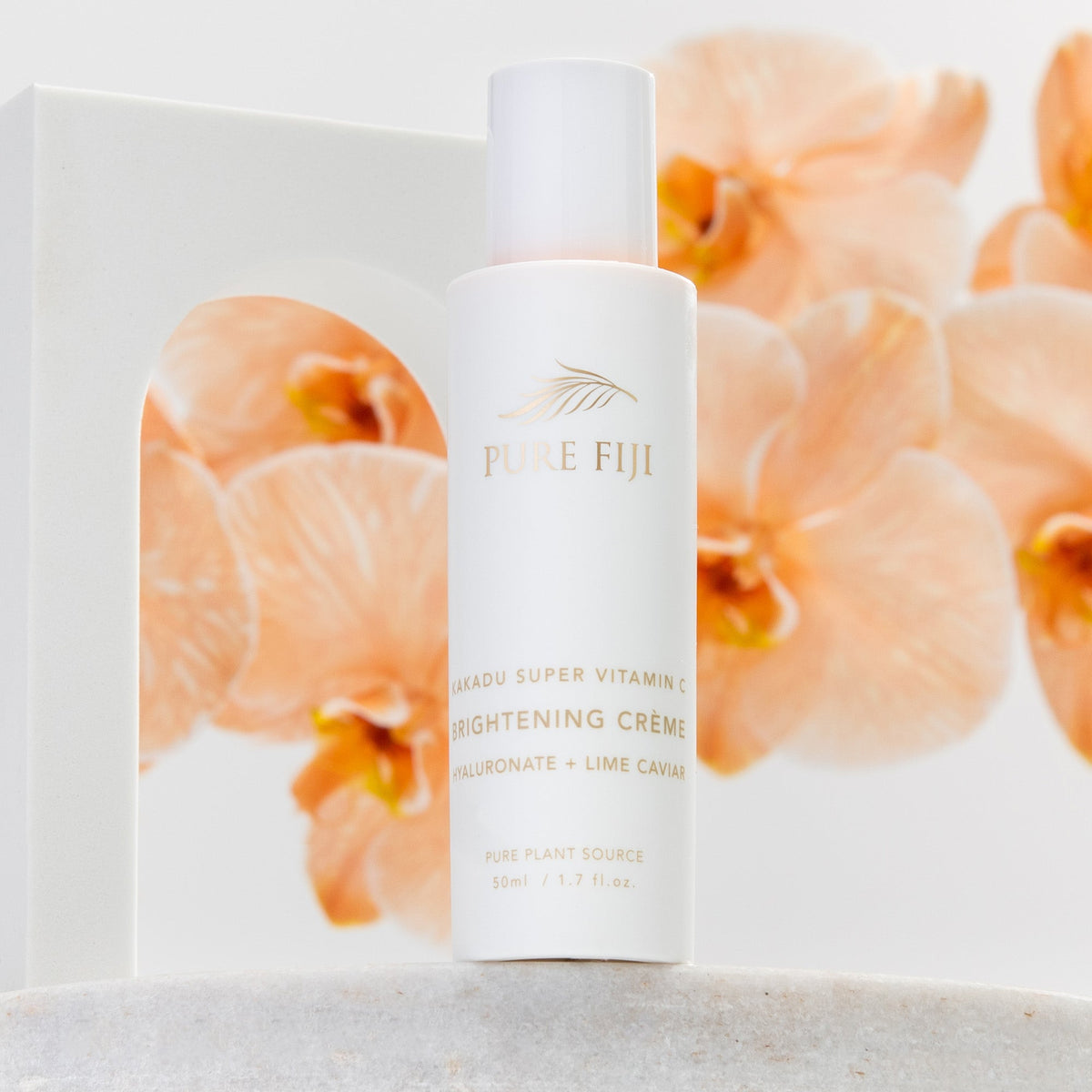
Vitamin C Brightening Creme with Hyaluronic & Lime Caviar (1.7oz/50ml)

Vitamin C Brightening Creme with Hyaluronic & Lime Caviar (1.7oz/50ml)
Pure Fiji
vitamin-c-brightening-creme-with-hyaluronic-lime-caviar-1-7oz-50ml
Moisturize
9706861101349
Morning or Evening?
How often will you use this product?
Notes


Highlights
WHAT IS IT?
A brightening moisturizing cream with multiple active ingredients
FEATURES
Contains Vitamin C, hyaluronic acid, lime caviar, peptides, and botanical extracts
BEST FOR
suitable for multiple skin types
CHECKS
Free of parabens, phthalates, phenoxyethanol, sulfates, artifical colors, synthetics, PEGs, GMOs
Who Is It For?
Defaulting To Above 18 And Both Women And MenWhat Does It Help With?
Brightening Skin Reducing Age Spots And Pigmentation Hydrating Reducing Signs Of AgingBudget
PremiumHow To Use
Which routine should it be used in?
Instructions:
Key Information


What Pure Fiji Says
Product Description:
Brighten and smooth skin with this powerful blend of pure Vitamin C and lime caviar combined with skin-smoothing peptides, Dry, dull skin will be smoothed away while extracts of fresh garden sprouts diminish age spots and pigmentation. Kakadu plum and pure Vitamin C visibly brightens skin and reduces the signs of aging while moisture-boosting hyaluronic acid along with our cold-pressed oil blend gives intense hydration and skin barrier protection for glowing skin.
About the Brand:
Ingredients Overview
Ingredients List
TERMINALIA FERDINANDIANA (KAKADU PLUM) OIL AND EXTRACT, MICROCITRUS AUSTRALASICA (LIME CAVIAR) FRUIT EXTRACT, ASCORBYL TETRAISOPALMITATE (VITAMIN C), AHA PEPTIDES, FRESH GARDEN SPROUT EXTRACT, HYALURONIC ACID
Key Ingredients
Vitamin C, Hyaluronic Acid, Lime Caviar, Kakadu Plum, Peptides, Fresh Garden Sprout Extract
Ingredients Details
Ascorbyl Tetraisopalmitate Vitamin C
Common Name(s): Ascorbyl tetraisopalmitate vitamin c
DESCRIPTION
What It Does: Neutralizes free radicals, supports collagen biosynthesis, and inhibits melanin overproduction for brightened, protected, and younger-looking skin.
Why It's Used: Vitamins support fundamental enzymatic and antioxidant processes in skin cells; topical delivery addresses localized deficiencies and enhances concentrations beyond systemic levels.
How It Works: The vitamin pharmacophore donates electrons to free radicals, chelates metal ion pro-oxidants, and serves as a cofactor for skin enzymes (e.g., prolyl hydroxylase for collagen synthesis), providing multi-mechanism skin protection.
Typically Found In: Serums,moisturizers,eye creams,sunscreens
TECHNICAL DETAILS
Primary Category: Vitamin derivatives
Secondary Functions: Antioxidant,brightening
Application Areas:

Facial Skincare

Body Care
Hair Care
Beard Care
Color Cosmetics (Makeup)
Dietary/Oral Supplements
Typical Concentration Range: 0.1–20%
SOURCING & ETHICS
Vegan Status: Yes
Halal Status: Yes
Source Notes: Synthetic vitamin derivative; no animal components.
SKIN COMPATIBILITY
Irritancy Rating: 1899-12-31 00:00:00 -0800
Sensitivity Concerns: Low sensitization potential at recommended use concentrations.
Safe for Sensitive Skin: Yes
SAFETY & COMPATIBILITY
Safety Profile: Well-characterized cosmetic ingredient with established safety profile. generally non-irritating at typical use concentrations. suitable for leave-on and rinse-off cosmetics.
Works Well With: Other antioxidants,ferulic acid,hyaluronic acid
Avoid Combining With: Incompatible oxidizing agents; check ph stability
SCIENTIFIC NOTE
Vitamin derivatives in cosmetics function as prodrugs: esterase enzymes in skin cleave the ester bond to release the free vitamin acid or alcohol. the rate of release depends on the ester chain length and branching (log p), with shorter chain esters hydrolyzing faster. free vitamin concentration in skin determines efficacy, making ester hydrolysis rate a critical formulation parameter.
Last Verified: 2025-01-15
Primary Sources: Cosing eu database; pcpc cosmetic ingredient safety reviews; ingredient-specific safety and efficacy literature
Hyaluronic Acid
Common Name(s): Ha,sodium hyaluronate (salt form),hyaluronan,d-glucuronic acid-n-acetyl-d-glucosamine polymer
CAS Number: 9004-61-9
DESCRIPTION
What It Does: Hyaluronic acid draws and locks moisture into the skin at multiple depths (surface and deeper layers depending on molecular weight), creating a plumping, smoothing, and hydrating effect.
Why It's Used: It is used because it is endogenous to human skin, making it exceptionally biocompatible and non-irritating. its unparalleled moisture-binding capacity makes it the most effective hydrating ingredient available.
How It Works: Ha binds water molecules through its many hydroxyl and carboxyl groups, creating a gel-like matrix. high molecular weight ha (>500 kda) hydrates the skin surface; low molecular weight ha (<50 kda) penetrates deeper to provide interior hydration.
Typically Found In: Serums,moisturizers,sheet masks,toners,eye creams,lip treatments,dermal fillers (injectable)
TECHNICAL DETAILS
Primary Category: Active ingredient – humectant/hydrator
Secondary Functions: Barrier repair,plumping,anti-aging
Application Areas:
Facial Skincare
Body Care
Hair Care
Beard Care
Color Cosmetics (Makeup)
Dietary/Oral Supplements
Typical Concentration Range: 0.1%–2% (effective at very low concentrations; multi-weight ha provides superior results)
SOURCING & ETHICS
Vegan Status: Conditional - feedstock declaration required
Halal Status: Unverified - feedstock declaration required (plant, animal and petrochemical routes all exist)
Source Notes: Originally extracted from rooster combs; now predominantly produced via biotechnology (bacterial fermentation), which is vegan and more sustainable. [audit 2026-07-29 rev2: origin-dependent: the same inci exists in plant, animal and petrochemical versions and the name does not discriminate. determination requires shariah-panel sign-off.]
SKIN COMPATIBILITY
Irritancy Rating: 1/5 – very low; one of the gentlest skincare ingredients known
Comedogenicity Rating: 0/5 – non-comedogenic
Sensitivity Concerns: In very dry environments, high-molecular-weight ha on the surface can potentially draw moisture out of the skin if not sealed with an occlusive. apply to damp skin and seal with moisturizer.
Safe for Sensitive Skin: Yes – ideal for all skin types including rosacea, eczema, and post-procedure skin
SAFETY & COMPATIBILITY
Safety Profile: Exceptional safety profile. endogenous molecule – no toxicity concerns. ewg hazard score: 1. safe during pregnancy.
Works Well With: Virtually all ingredients; especially ceramides,glycerin,peptides,retinol (reduces irritation),niacinamide,vitamin c
Avoid Combining With: No significant incompatibilities; high concentrations of alcohol in a formula may reduce its efficacy
SCIENTIFIC NOTE
Hyaluronic acid naturally degrades in skin (half-life ~1–2 days). the skin produces it endogenously, but production decreases with age. multi-molecular-weight ha formulas provide hydration at both surface and deeper skin levels.
Last Verified: 2026-03-12
Primary Sources: Cosing database,cir safety assessment,papakonstantinou et al. (2012) dermato-endocrinology