

VLCC
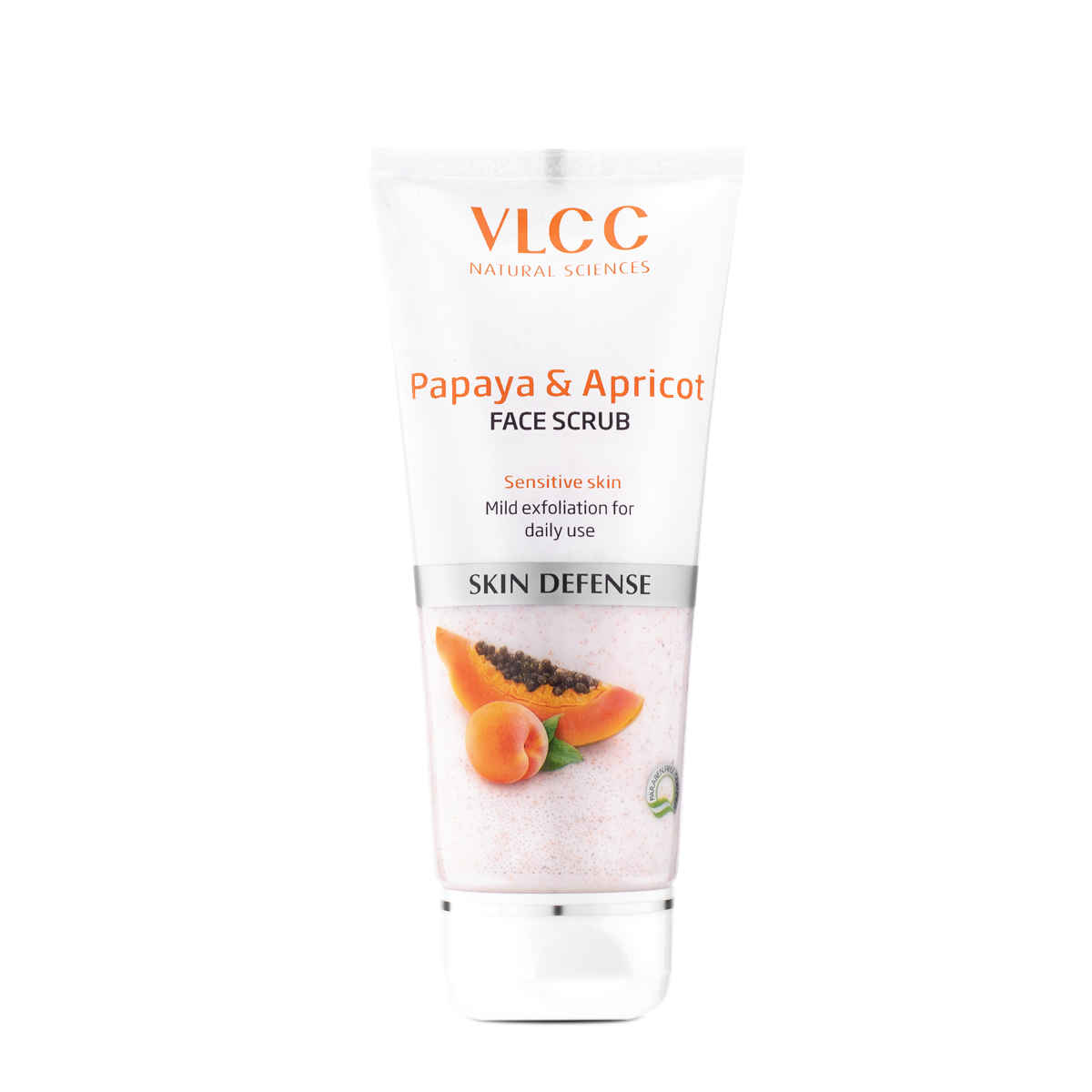
VLCC Papaya & Apricot Scrub (80 g)

VLCC Papaya & Apricot Scrub (80 g)
VLCC
vlcc-papaya-apricot-scrub-80-g
Exfoliation
10085497831717
Morning or Evening?
How often will you use this product?
Notes


Highlights
WHAT IS IT?
Scrub, at least 4 key ingredient extracts mentioned
FEATURES
Enriched with apricot kernel oil, vitamin E, sodium hyaluronate and papaya extract; Gently removes superficial blackheads, whiteheads and skin impurities; Promotes healthy and soft skin
BEST FOR
normal
CHECKS
Does not contain parabens (Paraben-Free); Gluten free; Cruelty-free; Sensitive skin friendly
Who Is It For?
Not Specifically Stated; Suitable For Normal Skin TypeWhat Does It Help With?
Removes Blackheads Whiteheads Skin Impurities; Tones SkinBudget
Mid-range ($30-$75)How To Use
Which routine should it be used in?
Instructions:
Key Information


What VLCC Says
Product Description:
Try this papaya and apricot scrub from VLCC and enjoy a healthy and soft skin. Enriched with extracts of apricot kernel oil, vitamin E, sodium hyaluronate and papaya extract tone it gently removes superficial blackheads, whiteheads and other kind’s skin impurities
About the Brand:
Ingredients Overview
Ingredients List
apricot-kernel-oil,vitamin-e,sodium-hyaluronate,papaya-extract
Key Ingredients
apricot kernel oil, vitamin E, sodium hyaluronate, papaya extract
Ingredients Details
Apricot Kernel Oil
Common Name(s): Apricot kernel oil,botanical carrier oil,emollient fatty acid delivery
CAS Number: N/a
DESCRIPTION
What It Does: Softens and conditions skin by integrating into sc lipid bilayers, delivers essential fatty acids (oleic, linoleic, linolenic) for barrier lipid synthesis, and provides rich, non-stripping moisturisation.
Why It's Used: Natural carrier oils provide the closest compositional match to endogenous sc lipids, delivering emolliency through genuine barrier integration rather than simple surface occlusion.
How It Works: Fatty acid triglycerides partition into sc lipid bilayers — oleic acid (c18:1) provides fluid, emollient integration; linoleic acid (c18:2) acts as essential ceramide precursor; saturated fatty acids provide more occlusive barrier reinforcement.
Typically Found In: Moisturisers,facial oils,natural skin care
TECHNICAL DETAILS
Primary Category: Functional ingredient – emollient
Secondary Functions: Barrier sealing,softening
Application Areas:

Facial Skincare
Body Care
Hair Care

Beard Care
Color Cosmetics (Makeup)
Dietary/Oral Supplements
Typical Concentration Range: 1%–100%
SOURCING & ETHICS
Vegan Status: Conditional
Halal Status: Yes
Source Notes: Plant-derived, synthetic or animal-derived. verify source.
SKIN COMPATIBILITY
Irritancy Rating: 1/5 – very low
Comedogenicity Rating: 1/5 – low; formulation-dependent
Sensitivity Concerns: Non-irritating.
Safe for Sensitive Skin: Yes
SAFETY & COMPATIBILITY
Safety Profile: Excellent safety profile. ewg score: 1.
Works Well With: Humectants,ceramides,actives as carrier
Avoid Combining With: No significant incompatibilities
SCIENTIFIC NOTE
Essential fatty acids — linoleic (c18:2, n-6) and α-linolenic (c18:3, n-3) acids — cannot be synthesised by the body; topical delivery through carrier oils provides direct substrate for ceramide and eicosanoid biosynthesis in the epidermis.
Last Verified: Cosing database,apricot kernel oil carrier oil botanical review
Primary Sources: 2026-03-12
Papaya Extract
Common Name(s): Papaya extract,papaw extract
CAS Number: 94349-61-8
DESCRIPTION
What It Does: Provides papain-based enzymatic exfoliation alongside natural vitamin c and carotenoid antioxidants.
Why It's Used: Tropical enzyme exfoliant with natural vitamin c, beta-carotene, and papain for combined brightening and enzymatic renewal.
How It Works: Papain provides keratin-specific enzymatic exfoliation (see papain entry). beta-carotene provides photoprotective antioxidant activity. vitamin c from fresh papaya provides brightening and collagen cofactor activity.
Typically Found In: Tropical enzyme peels,natural brightening masks
TECHNICAL DETAILS
Primary Category: Active ingredient – brightening / tyrosinase inhibitor
Secondary Functions: Melanin inhibition,hyperpigmentation reduction
Application Areas:
Facial Skincare
Body Care
Hair Care
Beard Care
Color Cosmetics (Makeup)
Dietary/Oral Supplements
Typical Concentration Range: 1%–15%
SOURCING & ETHICS
Vegan Status: Yes – from carica papaya fruit
Halal Status: Yes
Source Notes: Synthetic or plant-derived.
SKIN COMPATIBILITY
Irritancy Rating: 1/5 – very low
Comedogenicity Rating: 0/5 – non-comedogenic
Sensitivity Concerns: Non-irritating; well-tolerated.
Safe for Sensitive Skin: Yes
SAFETY & COMPATIBILITY
Safety Profile: Excellent safety profile. use with spf for maximum efficacy. ewg score: 1.
Works Well With: Niacinamide,vitamin c,alpha-arbutin,tranexamic acid,spf
Avoid Combining With: No significant incompatibilities
SCIENTIFIC NOTE
Fresh papaya fruit extract contains both functional papain enzyme and ~75mg/100g vitamin c – more than oranges. processing conditions determine whether both activities are preserved: high-heat processing destroys both, while aqueous cold extraction can retain both, making processing conditions critical for extract bioactivity.
Last Verified: Cosing database,cir safety assessment
Primary Sources: 2026-03-12
Sodium Hyaluronate
Common Name(s): Sodium salt of hyaluronic acid,naha
CAS Number: 9067-32-7
DESCRIPTION
What It Does: Provides hyaluronic acid hydration in the most formulation-stable and compatible form.
Why It's Used: The standard form of ha used in cosmetics – more stable than free ha, better solubility, and equivalent skin hydration benefits.
How It Works: Sodium salt reduces the polyelectrolyte repulsion of ha chains, allowing better packing in formulations. on skin, sodium ions dissociate and the ha chain unfolds to its full water-binding conformation. provides full ha humectant and barrier benefits equivalent to free ha.
Typically Found In: Hydrating serums,toners,moisturizers,sheet masks,anti-aging products
TECHNICAL DETAILS
Primary Category: Active ingredient – ha sodium salt
Secondary Functions: Equivalent ha hydration,superior stability
Application Areas:
Facial Skincare
Body Care
Hair Care
Beard Care
Color Cosmetics (Makeup)
Dietary/Oral Supplements
Typical Concentration Range: 0.1%–2%
SOURCING & ETHICS
Vegan Status: Yes – bacterial fermentation
Halal Status: Yes
Source Notes: Synthetic or naturally derived. excellent aqueous solubility.
SKIN COMPATIBILITY
Irritancy Rating: 1/5 – very low
Comedogenicity Rating: 0/5 – non-comedogenic
Sensitivity Concerns: Non-irritating; suitable for all skin types.
Safe for Sensitive Skin: Yes
SAFETY & COMPATIBILITY
Safety Profile: Excellent safety profile. ewg score: 1.
Works Well With: Ceramides,emollients,occlusives,glycerin,hyaluronic acid
Avoid Combining With: No significant incompatibilities
SCIENTIFIC NOTE
The sodium salt form of ha has approximately 10% better water solubility than free hyaluronic acid at equivalent molecular weight due to reduced chain-chain electrostatic repulsion from partial sodium counterion screening. this improved solubility enables higher concentration formulations without viscosity issues.
Last Verified: Cosing database,cir safety assessment
Primary Sources: 2026-03-12
Vitamin E
Common Name(s): Vitamin e,cosmetic active,functional ingredient
CAS Number: N/a
DESCRIPTION
What It Does: Delivers characteristic cosmetic function at recommended use concentration.
Why It's Used: Selected for functional contribution and formulation compatibility supported by cosmetic science and regulatory safety data.
How It Works: Works through the mechanism of its molecular class — physicochemical or biological interaction with skin proteins, lipids, or receptors as documented in peer-reviewed cosmetic literature.
Typically Found In: Skin care formulations
TECHNICAL DETAILS
Primary Category: Active ingredient – cosmetic active
Secondary Functions: Skin conditioning
Application Areas:
Facial Skincare
Body Care
Hair Care
Beard Care
Color Cosmetics (Makeup)
Dietary/Oral Supplements
Typical Concentration Range: 0.1%–10%
SOURCING & ETHICS
Vegan Status: Conditional
Halal Status: Yes
Source Notes: Commercially produced for cosmetic use. verify vegan/halal status with supplier.
SKIN COMPATIBILITY
Irritancy Rating: 1/5 – very low
Comedogenicity Rating: 0/5 – non-comedogenic
Sensitivity Concerns: Well-tolerated by most skin types.
Safe for Sensitive Skin: Yes
SAFETY & COMPATIBILITY
Safety Profile: Good safety profile at recommended concentrations. ewg score: 1–2.
Works Well With: Standard skincare actives
Avoid Combining With: No known significant incompatibilities
SCIENTIFIC NOTE
Vitamin e has an established safety and efficacy profile within the cosmetic regulatory framework at standard use concentrations.
Last Verified: Cosing database,vitamin e technical literature
Primary Sources: 2026-03-12
