

WARDAH
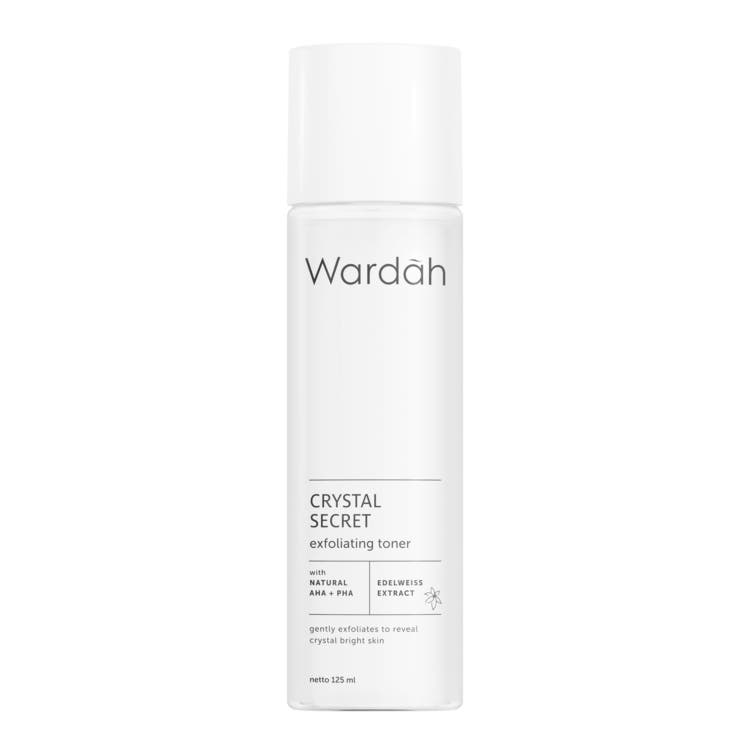
Wardah Crystal Secret Exfoliating Toner With Natural Aha+Pha 125Ml

Wardah Crystal Secret Exfoliating Toner With Natural Aha+Pha 125Ml
WARDAH
wardah-crystal-secret-exfoliating-toner-with-natural-aha-pha-125ml
Tone
10084804591909
Morning or Evening?
How often will you use this product?
Notes


Highlights
WHAT IS IT?
Exfoliating toner with Natural AHA and PHA, multiple ingredients count
FEATURES
Gently exfoliates dead skin cells, brightens and evens out skin tone, soothes and smoothes skin texture, protects skin barrier from dullness factors
BEST FOR
sensitive
CHECKS
Does not contain parabens, sulfates explicit, fragrance present
Who Is It For?
Not Specified Age General UseWhat Does It Help With?
Dull Skin Uneven Skin Tone Skin Barrier ProtectionBudget
Affordable (under $30)How To Use
Which routine should it be used in?
Instructions:
Key Information


What WARDAH Says
Product Description:
Dead skin cells that accumulate can make the skin look dull and lose its glow. Wardah Crystal Secret Exfoliating Toner, a toner with Natural AHA+PHA which gently exfoliates dead skin cells to brighten and even out skin tone, and Allantoin that soothe and smoothe skin texture. Enriched Edelweiss Extract, the formula helps maintain and protect the skin barrier from factors that cause dull skin (weather, dust pollution, and oxidative stress), for a crystal clear radiant complexion.
About the Brand:
Ingredients Overview
Ingredients List
Aqua,Propylene-Glycol,Biosaccharide-Gum-1,Vaccinium-Myrtillus-Fruit-Extract,Propanediol,Gluconolactone,Saccharum-O_x001f_cinarum-(Sugar-Cane)-Extract,Phenoxyethanol,Chlorphenesin,Allantoin,Citrus-Aurantium-Dulcis-(Orange)-Fruit-Extract,Citrus-Limon-(Lemon)-Fruit-Extract,Acer-Saccharum-(Sugar-Maple)-Extract,Xanthan-Gum,Disodium-EDTA,Fragrance,Glycerin,Trideceth-9,PEG-40-Hydrogenated-Castor-Oil,Leontopodium-Alpinum-Extract,Polysorbate-20,Citric-Acid,Potassium-Sorbate,Sodium-Benzoate
Key Ingredients
Natural AHA,Natural PHA,Allantoin,Edelweiss Extract
Ingredients Details
Allantoin
Common Name(s): 5-ureidohydantoin,glyoxyldiureide,aluminum dihydroxy allantoinate
CAS Number: 97-59-6
DESCRIPTION
What It Does: Soothes irritation, accelerates wound healing, promotes skin cell renewal, and provides mild keratolytic exfoliation.
Why It's Used: Gold standard multi-function soothing active – one of the most widely used cosmetic ingredients across all product types for its exceptional tolerability and clinically proven multi-action skin conditioning.
How It Works: Promotes keratinocyte proliferation and fibroblast migration for wound healing. mild keratolytic activity by disrupting corneocyte binding. anti-irritant via direct protein binding and anti-inflammatory cytokine reduction. humectant activity via hydroxyl groups.
Typically Found In: Post-procedure products,sensitive skin formulas,wound care,anti-acne treatments,baby products
TECHNICAL DETAILS
Primary Category: Active ingredient – soothing / anti-inflammatory
Secondary Functions: Wound healing,keratolytic,anti-irritant
Application Areas:

Facial Skincare
Body Care

Hair Care
Beard Care
Color Cosmetics (Makeup)
Dietary/Oral Supplements
Typical Concentration Range: 0.1%–2%
SOURCING & ETHICS
Vegan Status: Conditional - feedstock declaration required
Halal Status: Unverified - feedstock declaration required (plant, animal and petrochemical routes all exist)
Source Notes: Plant-derived extract or synthetic. [audit 2026-07-29 rev2: origin-dependent: the same inci exists in plant, animal and petrochemical versions and the name does not discriminate. determination requires shariah-panel sign-off.]
SKIN COMPATIBILITY
Irritancy Rating: 1/5 – very low
Comedogenicity Rating: 0/5 – non-comedogenic
Sensitivity Concerns: Exceptionally well-tolerated; suitable for all skin types including baby and compromised skin.
Safe for Sensitive Skin: Yes – particularly recommended for sensitive skin
SAFETY & COMPATIBILITY
Safety Profile: Excellent safety profile. ewg score: 1.
Works Well With: Ceramides,panthenol,allantoin,hyaluronic acid,centella asiatica
Avoid Combining With: No significant incompatibilities
SCIENTIFIC NOTE
Allantoin's keratinocyte proliferation stimulation occurs via receptor-mediated signaling (possibly machr activation) rather than non-specific irritation-driven proliferation, making it a true wound-healing stimulant rather than a pro-inflammatory proliferative signal.
Last Verified: 2026-03-12
Primary Sources: Cosing database,cir safety assessment,araújo et al. allantoin review
Chlorphenesin
Common Name(s): 3-(4-chlorophenoxy)-1,2-propanediol,globacid
CAS Number: 104-29-0
DESCRIPTION
What It Does: Provides gram-negative focused preservation complementary to phenoxyethanol for comprehensive spectrum coverage.
Why It's Used: Phenoxyethanol complement — chlorphenesin's gram-negative and antifungal coverage complements phenoxyethanol's gram-positive activity for full-spectrum preservation at lower individual concentrations.
How It Works: 4-chlorophenol ether glycol disrupts bacterial and fungal membranes. strong gram-negative activity (pseudomonas, e. coli). good candida antifungal activity. used with phenoxyethanol for synergistic broad-spectrum coverage. ph stable 3-9.
Typically Found In: Comprehensive preservation systems,baby products (low concentration)
TECHNICAL DETAILS
Primary Category: Functional ingredient – glycerol ether preservative
Secondary Functions: Skin conditioning
Application Areas:
Facial Skincare
Body Care
Hair Care
Beard Care
Color Cosmetics (Makeup)
Dietary/Oral Supplements
Typical Concentration Range: 0.1%–0.3%
SOURCING & ETHICS
Vegan Status: Conditional - supplier confirmation required
Halal Status: Unverified - supplier confirmation required
Source Notes: Commercially produced for cosmetic use. verify vegan/halal status with supplier. [audit 2026-07-29 rev2: the record's own source_notes does not assert a non-animal origin, or instructs the reader to verify with the supplier; "yes" asserts knowledge the record does not hold. determination requires shariah-panel sign-off.]
SKIN COMPATIBILITY
Irritancy Rating: 1/5 – very low
Comedogenicity Rating: 0/5 – non-comedogenic
Sensitivity Concerns: Well-tolerated by most skin types.
Safe for Sensitive Skin: Yes
SAFETY & COMPATIBILITY
Safety Profile: Eu max 0.3% cosmetics. good safety profile. synergistic combination with phenoxyethanol (0.3% pe + 0.1% chlorphenesin often equivalent to 1% pe alone).
Works Well With: Standard skincare actives
Avoid Combining With: No known significant incompatibilities
SCIENTIFIC NOTE
Chlorphenesin + phenoxyethanol synergy operates through a classic spectrum-filling combination: phenoxyethanol provides strong gram-positive antimicrobial activity while chlorphenesin provides gram-negative and antifungal coverage. the combination's minimum inhibitory concentration sum is subadditive (provides equivalent preservation at combined concentrations below what either alone would require) — textbook pharmacological synergy enabling lower total preservative load.
Last Verified: 2026-03-12
Primary Sources: Cosing database,eu preservative annex v,cir safety assessment
Fragrance
Common Name(s): Fragrance ingredient,eu allergen or aromatic component,olfactory/flavour
CAS Number: N/a
DESCRIPTION
What It Does: Provides the complete fragrance profile contributing to product sensory experience and consumer appeal.
Why It's Used: Fragrance is a major consumer purchase driver — up to 70% of consumers make purchasing decisions partially based on product scent.
How It Works: Fragrance blends interact with olfactory receptors providing the sensory profile — complex mixtures activate multiple receptor types for rich, multidimensional scent experiences.
Typically Found In: All fragrance products
TECHNICAL DETAILS
Primary Category: Active ingredient – cosmetic active
Secondary Functions: Skin conditioning
Application Areas:
Facial Skincare
Body Care
Hair Care
Beard Care
Color Cosmetics (Makeup)
Dietary/Oral Supplements
Typical Concentration Range: Standard use levels
SOURCING & ETHICS
Vegan Status: Conditional - supplier confirmation required
Halal Status: Unverified - supplier confirmation required
Source Notes: Commercially produced for cosmetic use. verify vegan/halal status with supplier. [audit 2026-07-29 rev2: the record's own source_notes does not assert a non-animal origin, or instructs the reader to verify with the supplier; "yes" asserts knowledge the record does not hold. determination requires shariah-panel sign-off.]
SKIN COMPATIBILITY
Irritancy Rating: 1/5 – very low
Comedogenicity Rating: 0/5 – non-comedogenic
Sensitivity Concerns: Well-tolerated by most skin types.
Safe for Sensitive Skin: Yes
SAFETY & COMPATIBILITY
Safety Profile: Good safety profile at recommended concentrations. ewg score: 1–2.
Works Well With: Standard skincare actives
Avoid Combining With: No known significant incompatibilities
SCIENTIFIC NOTE
Ifra guidelines set usage limits for fragrance ingredients based on skin sensitisation and phototoxicity assessment for each application category.
Last Verified: 2026-03-12
Primary Sources: Eu regulation 1223/2009 annex iii,ifra standards,fragrance allergen declaration requirements
Gluconolactone
Common Name(s): D-gluconolactone,delta-gluconolactone
CAS Number: 90-80-2
DESCRIPTION
What It Does: Provides the gentlest chemical exfoliation with simultaneous antioxidant, moisture retention, and barrier support.
Why It's Used: Preferred exfoliant for rosacea, eczema, sensitive skin, and post-procedure recovery where standard ahas cause unacceptable irritation.
How It Works: Hydrolyzes slowly on skin surface to gluconic acid providing gentle exfoliation. multiple hydroxyl groups enable water binding (humectant) and metal chelation (antioxidant).
Typically Found In: Sensitive skin exfoliants,rosacea treatments,eczema care,post-procedure recovery
TECHNICAL DETAILS
Primary Category: Active ingredient – polyhydroxy acid (pha)
Secondary Functions: Gentle exfoliation,antioxidant,humectant
Application Areas:
Facial Skincare
Body Care
Hair Care
Beard Care
Color Cosmetics (Makeup)
Dietary/Oral Supplements
Typical Concentration Range: 5%–15%
SOURCING & ETHICS
Vegan Status: Conditional - supplier confirmation required
Halal Status: Unverified - supplier confirmation required
Source Notes: Fermentation-derived from glucose or synthetic. among the safest chemical exfoliants available. [audit 2026-07-29 rev2: status downgraded on audit. determination requires shariah-panel sign-off.]
SKIN COMPATIBILITY
Irritancy Rating: 1/5 – very low
Comedogenicity Rating: 0/5 – non-comedogenic
Sensitivity Concerns: No photosensitization; no stinging; suitable for very sensitive skin.
Safe for Sensitive Skin: Yes – ideal for sensitive, reactive, rosacea, and eczema-prone skin; no photosensitization
SAFETY & COMPATIBILITY
Safety Profile: Exceptional safety profile. no photosensitization. ewg score: 1.
Works Well With: Ceramides,niacinamide,hyaluronic acid,soothing actives
Avoid Combining With: No significant incompatibilities
SCIENTIFIC NOTE
Phas have molecular weights 2–3× larger than ahas, limiting penetration to superficial layers. combined humectant and antioxidant properties make them uniquely well-tolerated while providing meaningful exfoliation.
Last Verified: 2026-03-12
Primary Sources: Cosing database,green & yu (2003) pha review,cir safety assessment