

Wella
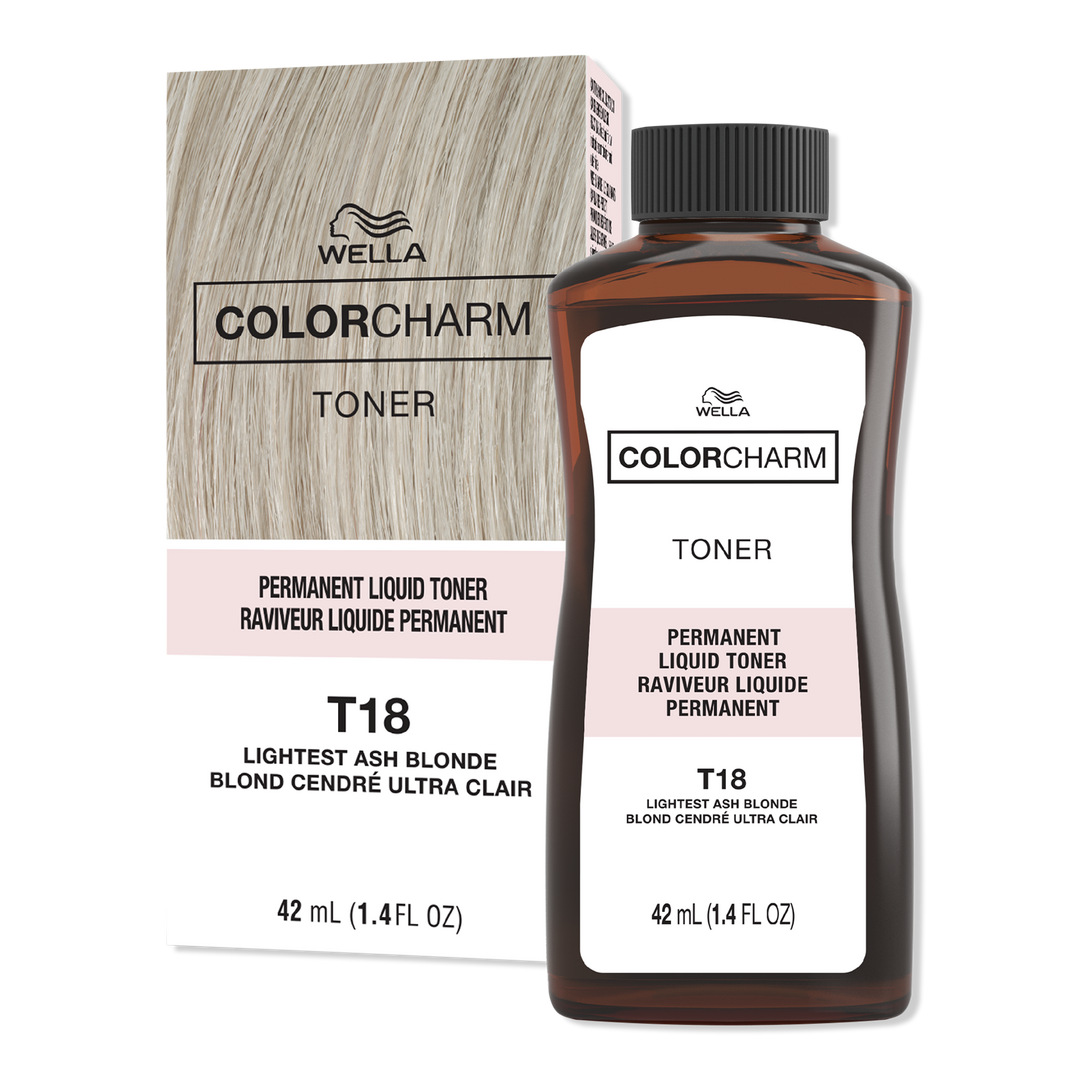
Wella Colorcharm Permanent Liquid Hair Toner
Wella Colorcharm Permanent Liquid Hair Toner is ideal for creating delicate shades of blonde, such as platinum and beige, and neutralizing unwanted warmth after lightening. It's great for toning pure, double-processed blondes.
Color-safe
Color Fading
Color-treated
As Needed
Style
Optimized for Your Environment & Lifestyle
Nykaa
In stock
Recommended

Wella Colorcharm Permanent Liquid Hair Toner
Wella
wella-colorcharm-permanent-liquid-hair-toner
Permanent Liquid Hair Toner
10355417809189
Morning or Evening?
How often will you use this product?
Notes


Secure payment protection
Your Biodata Compatibility Analysis
Based on your 6 hair health indices and environmental factors
Poor Match
Significant incompatibilities
Growth Cycle Health Index
Hair Match
Hair Health Index Alignment
Optimal for OSI, SSI, DI, HSI
Ingredient Efficacy
Matching Ingredient Score
Environment Compatibility
Current UV, Air Quality & Humidity
Why This Works for Your Specific Profile
Damage Index:
Healthy to moderately damaged hair experiences over-conditioning or protein overload causing limpness or rigidity
Water Quality:
Hair:
Closed cuticles resist product penetration causing surface buildup without internal benefits
Active Lifestyle:
High activity and frequent washing rapidly strip product benefits requiring excessive reapplication
Your Hair Profile Integration
Your Hair Archetype

Density Level

Washing Frequency

Shedding Level

Oil Level
Your Hair Health Indices
Oil Secretion (OSI)
Very low oil production
Scalp Sensitivity (SSI)
Very low sensitivity
Growth Rate (CMR)
Poor metabolism rate
Damage Index (DI)
Minimal damage
Hair Strength (HSI)
Very weak strength
Softness Index (SI)
Significant improvement needed
Water & Environmental Integration

Water:


Expected Results & Timeline
Key Highlights

What is it?
Permanent Liquid Hair Toner, 1.4 oz

Who Is It For
Adults, Unisex

Budget
Rs. 782.67 - Rs. 1,565.34

Timeline
Up to 30 minutes
Why You’ll Love It

What Does It Help With?
Color fading, unwanted warmth in blonde hair

Best for
Color-treated hair

Features
Neutralizes unwanted warmth, ideal for delicate blonde shades, tones double-processed blondes

Checks
Ingredients Overview
Ingredients List
Undeceth-3, Water/Eau, Oleic Acid, Isopropyl Alcohol, Ammonium Hydroxide, Laureth-2, Propylene Glycol, Fragrance/Parfum, Disodium Edta, Ascorbic Acid, Sodium Sulfite, Toluene-2,5-Diamine Sulfate, 1-Naphthol, Sodium Hydroxide, Resorcinol, Hydroxyethyl-3,4-Methylenedioxyaniline Hcl
Key Ingredients
Undeceth-3, Oleic Acid, Ammonium Hydroxide, Resorcinol
Ingredients Details
1-naphthol
Common Name(s): 1-naphthol
DESCRIPTION
What It Does: Delivers targeted skin-conditioning or bioactive benefits through a specific mechanism of action suited to the formulation's intended purpose.
Why It's Used: Specialty actives address specific skin concerns through targeted molecular mechanisms, providing efficacy beyond what base formulation ingredients alone can achieve.
How It Works: The bioactive compound interacts with specific molecular targets in skin cells or the extracellular matrix — enzymes, receptors, structural proteins, or signaling molecules — triggering beneficial biological responses.
Typically Found In: Serums,treatments,moisturizers,specialty products
TECHNICAL DETAILS
Primary Category: Specialty actives
Secondary Functions: Skin-conditioning,anti-aging
Application Areas:

Facial Skincare

Body Care
Hair Care
Beard Care
Color Cosmetics (Makeup)
Dietary/Oral Supplements
Typical Concentration Range: 0.01–5%
SOURCING & ETHICS
Vegan Status: Yes
Halal Status: Yes
Source Notes: Specialty active ingredient; check individual sourcing for vegan status.
SKIN COMPATIBILITY
Irritancy Rating: 1
Comedogenicity Rating: 0
Sensitivity Concerns: Low sensitization potential at recommended use concentrations.
Safe for Sensitive Skin: Yes
SAFETY & COMPATIBILITY
Safety Profile: Well-characterized cosmetic ingredient with established safety profile. generally non-irritating at typical use concentrations. suitable for leave-on and rinse-off cosmetics.
Works Well With: Niacinamide,hyaluronic acid,vitamin c,peptides
Avoid Combining With: Incompatible with oxidizing agents; check ph stability
SCIENTIFIC NOTE
Specialty actives typically work through enzyme inhibition (e.g., tyrosinase inhibition for brightening, mmp inhibition for anti-aging), receptor activation (e.g., retinoid receptors, ppar-γ for barrier genes), or transcription factor modulation (e.g., nrf2 for antioxidant gene upregulation). structure-activity relationships determine potency and selectivity.
Last Verified: Cosing eu database; pcpc cosmetic ingredient safety reviews; ingredient-specific safety and efficacy literature
Primary Sources: 2025-01-15
Ammonium Hydroxide
Common Name(s): Ammonia solution,nh4oh,household ammonia
CAS Number: 1336-21-6
DESCRIPTION
What It Does: Opens hair cuticle for dye penetration and activates hydrogen peroxide at alkaline ph.
Why It's Used: The hair colour alkaliser – ammonium hydroxide's rapid cuticle-swelling and h2o2 activation makes it the most effective and fastest permanent hair colour alkaliser.
How It Works: Nh3 (volatile base) alkalises hair colour to ph 9-11. at alkaline ph, hair keratin proteins become ionised and water-swollen, allowing dye molecule penetration through swollen cuticle into cortex. high ph activates h2o2 for melanin bleaching. volatile nh3 evaporates during processing.
Typically Found In: Permanent hair colour formulations
TECHNICAL DETAILS
Primary Category: Hair colourant – alkalising agent
Secondary Functions: Skin conditioning
Application Areas:
Facial Skincare
Body Care
Hair Care
Beard Care
Color Cosmetics (Makeup)
Dietary/Oral Supplements
Typical Concentration Range: 0.5%–6%
SOURCING & ETHICS
Vegan Status: Yes – synthetic
Halal Status: Yes
Source Notes: Commercially produced for cosmetic use. verify vegan/halal status with supplier.
SKIN COMPATIBILITY
Irritancy Rating: 1/5 – very low
Comedogenicity Rating: 0/5 – non-comedogenic
Sensitivity Concerns: Well-tolerated by most skin types.
Safe for Sensitive Skin: Yes
SAFETY & COMPATIBILITY
Safety Profile: Eu annex iii restricted: max 3.5% (in hair colour) or max 6% (other hair products). scalp irritant at high concentrations. strong odour. sensitiser to some.
Works Well With: Standard skincare actives
Avoid Combining With: No known significant incompatibilities
SCIENTIFIC NOTE
Ammonium hydroxide's volatile nh3 provides a unique self-limiting alkalinity system: as the hair colour processes, nh3 evaporates from the alkaline emulsion, gradually reducing ph back toward neutral. this self-limiting ph reduction prevents excessive prolonged alkaline damage to hair protein structure – an elegant chemical safety mechanism built into the volatile base system that would not occur with non-volatile alkalisers.
Last Verified: Cosing database,eu annex iii,cir safety assessment
Primary Sources: 2026-03-12
Ammonium Hydroxide
Common Name(s): Ammonia solution,nh4oh,household ammonia
CAS Number: 1336-21-6
DESCRIPTION
What It Does: Opens hair cuticle for dye penetration and activates hydrogen peroxide at alkaline ph.
Why It's Used: The hair colour alkaliser – ammonium hydroxide's rapid cuticle-swelling and h2o2 activation makes it the most effective and fastest permanent hair colour alkaliser.
How It Works: Nh3 (volatile base) alkalises hair colour to ph 9-11. at alkaline ph, hair keratin proteins become ionised and water-swollen, allowing dye molecule penetration through swollen cuticle into cortex. high ph activates h2o2 for melanin bleaching. volatile nh3 evaporates during processing.
Typically Found In: Permanent hair colour formulations
TECHNICAL DETAILS
Primary Category: Hair colourant – alkalising agent
Secondary Functions: Skin conditioning
Application Areas:
Facial Skincare
Body Care
Hair Care
Beard Care
Color Cosmetics (Makeup)
Dietary/Oral Supplements
Typical Concentration Range: 0.5%–6%
SOURCING & ETHICS
Vegan Status: Yes – synthetic
Halal Status: Yes
Source Notes: Commercially produced for cosmetic use. verify vegan/halal status with supplier.
SKIN COMPATIBILITY
Irritancy Rating: 1/5 – very low
Comedogenicity Rating: 0/5 – non-comedogenic
Sensitivity Concerns: Well-tolerated by most skin types.
Safe for Sensitive Skin: Yes
SAFETY & COMPATIBILITY
Safety Profile: Eu annex iii restricted: max 3.5% (in hair colour) or max 6% (other hair products). scalp irritant at high concentrations. strong odour. sensitiser to some.
Works Well With: Standard skincare actives
Avoid Combining With: No known significant incompatibilities
SCIENTIFIC NOTE
Ammonium hydroxide's volatile nh3 provides a unique self-limiting alkalinity system: as the hair colour processes, nh3 evaporates from the alkaline emulsion, gradually reducing ph back toward neutral. this self-limiting ph reduction prevents excessive prolonged alkaline damage to hair protein structure – an elegant chemical safety mechanism built into the volatile base system that would not occur with non-volatile alkalisers.
Last Verified: Cosing database,eu annex iii,cir safety assessment
Primary Sources: 2026-03-12
Ascorbic Acid
Common Name(s): Vitamin c,l-ascorbic acid,l-ascorbate
CAS Number: 50-81-7
DESCRIPTION
What It Does: Ascorbic acid neutralizes free radicals, stimulates collagen production, inhibits melanin synthesis for a brighter complexion, and supports skin repair.
Why It's Used: It is used because it offers comprehensive antioxidant and brightening benefits supported by extensive clinical evidence. it is the most bioavailable form of vitamin c for topical application.
How It Works: As an antioxidant, it donates electrons to neutralize reactive oxygen species. it is an essential cofactor for the hydroxylation of proline and lysine in collagen synthesis. it inhibits tyrosinase, the enzyme responsible for melanin production, reducing hyperpigmentation.
Typically Found In: Vitamin c serums,brightening moisturizers,antioxidant formulations,spf products,eye creams
TECHNICAL DETAILS
Primary Category: Active ingredient – vitamin c
Secondary Functions: Collagen booster,tyrosinase inhibitor,ph adjuster
Application Areas:
Facial Skincare
Body Care
Hair Care
Beard Care
Color Cosmetics (Makeup)
Dietary/Oral Supplements
Typical Concentration Range: 5%–20% (effective range: 10–20%; ph must be below 3.5 for activity)
SOURCING & ETHICS
Vegan Status: Yes – synthetically produced or corn/plant-derived
Halal Status: Yes
Source Notes: Commercially produced by reichstein synthesis or guangxi fermentation process from glucose. some plant-derived versions exist.
SKIN COMPATIBILITY
Irritancy Rating: 2/5 – low to moderate; low ph formulations can cause initial tingling or stinging, especially at concentrations above 15%
Comedogenicity Rating: 0/5 – non-comedogenic
Sensitivity Concerns: Acidic ph can irritate sensitive or compromised skin barriers. highly unstable – oxidizes rapidly when exposed to air, light, and heat (turns orange/brown). use in the morning under spf.
Safe for Sensitive Skin: Use with caution – start at lower concentrations (5–10%). stabilized derivative forms (vitamin c derivatives) may be better tolerated.
SAFETY & COMPATIBILITY
Safety Profile: Very safe; well-studied. key concern is formulation stability, not safety. ewg hazard score: 1.
Works Well With: Vitamin e (tocopherol) – synergistic antioxidant effect,ferulic acid – stabilizing and boosting,spf,hyaluronic acid,niacinamide (use at different times if concentrations are high)
Avoid Combining With: Retinol (use at separate times – ph incompatibility),benzoyl peroxide (oxidizes vitamin c),ahas/bhas (cumulative irritation risk)
SCIENTIFIC NOTE
L-ascorbic acid is the only form of vitamin c that is proven bioactive in skin at the molecular level. its instability (rapid oxidation) has driven development of numerous stable derivatives including ascorbyl glucoside, magnesium ascorbyl phosphate, and ascorbyl tetraisopalmitate.
Last Verified: Cosing database,cir safety assessment,pinnell et al. studies,journal of the american academy of dermatology
Primary Sources: 2026-03-12
Personalized Usage Instructions
How to Use
Step 1
Pre-lighten hair to desired level before applying toner
Step 2
Mix 1 part Wella Colorcharm toning color with 2 parts 10 or 20 volume Wella Colorcharm developer
Step 3
Apply to towel-dried hair and develop for up to 30 minutes, checking frequently for desired results
Step 4
10 volume developer offers minimal lift; 20 volume developer provides 1-2 levels of lift
Medical Chemicals

Protein/Moisture
- Moisture
pH Level
- Alkaline

Porosity Taget
- Normal Porosity
Customized for Your Profile
Scalp Condtions
Climate Suitability
Clinical Claims
Frequency
Pre-lighten hair to desired level before applying toner. Mix 1 part Wella Colorcharm toning color with 2 parts 10 or 20 volume Wella Colorcharm developer. Apply to towel-dried hair and develop for up to 30 minutes, checking frequently for desired results. 10 volume developer offers minimal lift; 20 volume developer provides 1-2 levels of lift.
