

Naturopathica
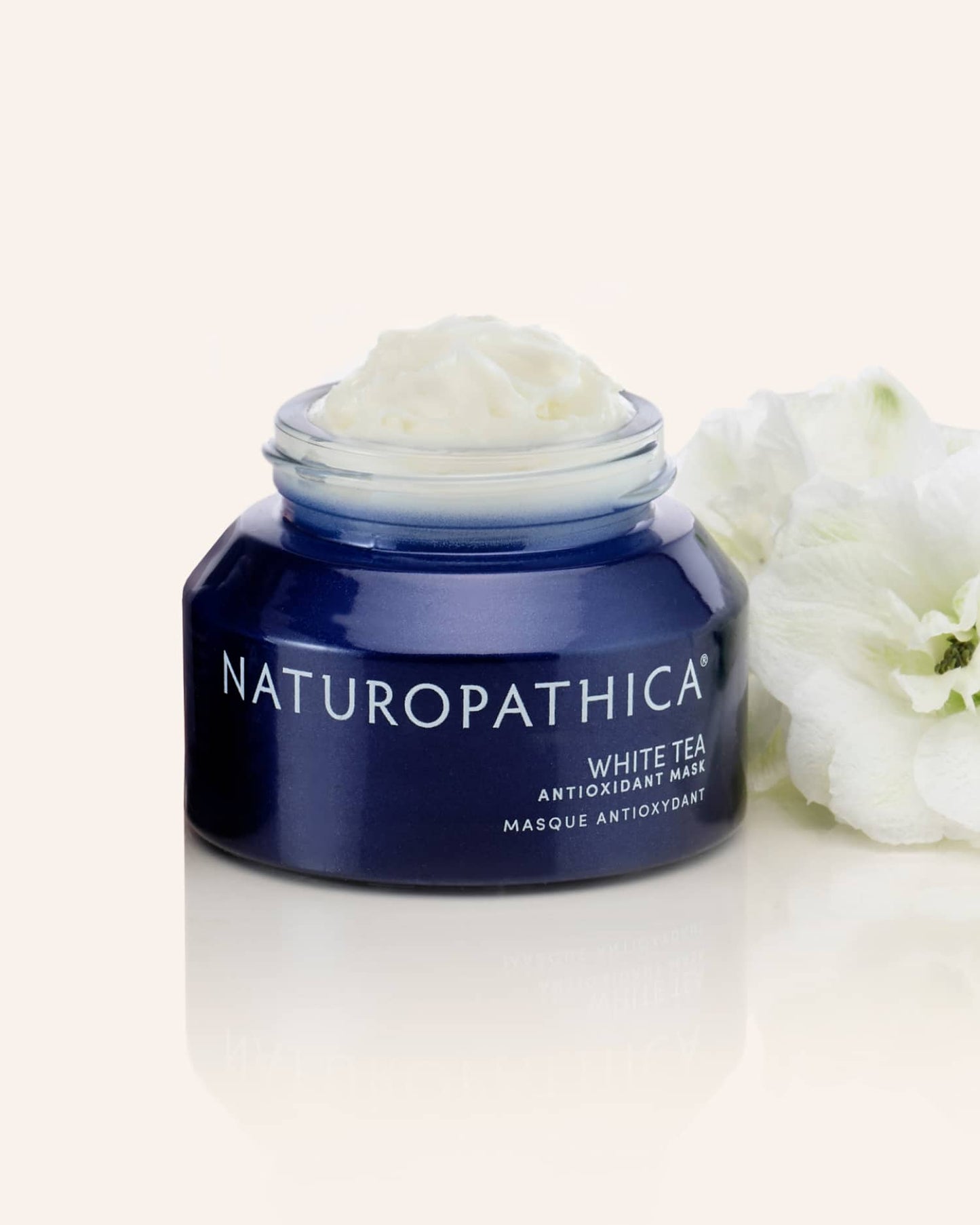
White Tea Antioxidant Mask

White Tea Antioxidant Mask
Naturopathica
white-tea-antioxidant-mask
Face Mask
9784768397605
Morning or Evening?
How often will you use this product?
Notes


Highlights
WHAT IS IT?
Antioxidant face mask with 3 key ingredients
FEATURES
Creamy texture, nutrient-rich, hydrating, firming, and replenishing
BEST FOR
dry
CHECKS
Clean beauty formulation
Who Is It For?
Adults With Devitalized SkinWhat Does It Help With?
Hydration Firmness Skin RevitalizationBudget
Mid-range ($30-$75)How To Use
Which routine should it be used in?
Instructions:
Key Information


What Naturopathica Says
Product Description:
A creamy, nutrient-rich mask that blends antioxidant-rich White Tea, hydrating Borage Seed Oil and soothing Aloe Vera to hydrate, firm and replenish devitalized skin.
About the Brand:
Ingredients Overview
Ingredients List
water/aqua/eau, helianthus annuus (sunflower) seed oil, aloe barbadensis (aloe vera) leaf juice, cetearyl alcohol, cetearyl glucoside, xylitylglucoside, anhydroxylitol, xylitol, populus tremuloides (aspen) bark extract, arachidyl alcohol, behenyl alcohol, arachidyl glucoside, glycerin, crithmum maritimum extract, oryza sativa (rice) seed extract, camellia sinensis (white tea) leaf extract, borago officinalis (borage) seed extract, bisabolol, rosmarinus officinalis (rosemary) leaf extract, cananga odorata (ylang ylang) flower oil, rosa damascena (rose) flower oil, sodium anisate, xanthan gum, lactic acid
Key Ingredients
White Tea, Borage Seed Oil, Aloe Vera
Ingredients Details
Aloe Barbadensis Aloe Vera Leaf Juice
Common Name(s): Aloe barbadensis aloe vera leaf juice extract
DESCRIPTION
What It Does: Provides antioxidant protection, soothing anti-inflammatory effects, and skin-conditioning benefits through plant-derived polyphenols and phytochemicals.
Why It's Used: Plant extracts concentrate bioactive phytochemicals evolved for environmental protection — uv, microbial, and oxidative stressors — that translate to skin benefits.
How It Works: Polyphenols (flavonoids, phenolic acids) inhibit nf-κb-mediated inflammatory signaling, scavenge reactive oxygen species through electron donation, and chelate pro-oxidant metal ions to reduce oxidative skin damage.
Typically Found In: Serums,toners,moisturizers,masks,essences
TECHNICAL DETAILS
Primary Category: Botanical extracts
Secondary Functions: Antioxidant,anti-inflammatory
Application Areas:

Facial Skincare

Body Care
Hair Care
Beard Care
Color Cosmetics (Makeup)
Dietary/Oral Supplements
Typical Concentration Range: 0.1–10%
SOURCING & ETHICS
Vegan Status: Yes
Halal Status: Yes
Source Notes: Plant-derived extract; no animal components.
SKIN COMPATIBILITY
Irritancy Rating: 1899-12-31 00:00:00 -0800
Sensitivity Concerns: Low sensitization potential at recommended use concentrations.
Safe for Sensitive Skin: Yes
SAFETY & COMPATIBILITY
Safety Profile: Well-characterized cosmetic ingredient with established safety profile. generally non-irritating at typical use concentrations. suitable for leave-on and rinse-off cosmetics.
Works Well With: Niacinamide,hyaluronic acid,vitamin c,ceramides
Avoid Combining With: Strong oxidizing agents
SCIENTIFIC NOTE
Plant secondary metabolites (flavonoids, terpenes, phenolic acids) are biosynthesized as defense compounds against uv, herbivores, and pathogens. their anti-inflammatory activity typically derives from competitive inhibition of cox-2 and 5-lox enzymes (ic50 1–50 µm), while antioxidant activity involves single electron transfer (set) and hydrogen atom transfer (hat) mechanisms with structure-dependent rate constants.
Last Verified: Cosing eu database; pcpc cosmetic ingredient safety reviews; phytochemical and ethnobotanical literature
Primary Sources: 2025-01-15
Anhydroxylitol
Common Name(s): Anhydroxylitol,cosmetic active,functional ingredient
CAS Number: N/a
DESCRIPTION
What It Does: Delivers characteristic cosmetic function at recommended use concentration.
Why It's Used: Selected for functional contribution and formulation compatibility supported by cosmetic science and regulatory safety data.
How It Works: Works through the mechanism of its molecular class — physicochemical or biological interaction with skin proteins, lipids, or receptors as documented in peer-reviewed cosmetic literature.
Typically Found In: Skin care formulations
TECHNICAL DETAILS
Primary Category: Active ingredient – cosmetic active
Secondary Functions: Skin conditioning
Application Areas:
Facial Skincare
Body Care
Hair Care
Beard Care
Color Cosmetics (Makeup)
Dietary/Oral Supplements
Typical Concentration Range: 0.1%–10%
SOURCING & ETHICS
Vegan Status: Conditional
Halal Status: Yes
Source Notes: Commercially produced for cosmetic use. verify vegan/halal status with supplier.
SKIN COMPATIBILITY
Irritancy Rating: 1/5 – very low
Comedogenicity Rating: 0/5 – non-comedogenic
Sensitivity Concerns: Well-tolerated by most skin types.
Safe for Sensitive Skin: Yes
SAFETY & COMPATIBILITY
Safety Profile: Good safety profile at recommended concentrations. ewg score: 1–2.
Works Well With: Standard skincare actives
Avoid Combining With: No known significant incompatibilities
SCIENTIFIC NOTE
Anhydroxylitol has an established safety and efficacy profile within the cosmetic regulatory framework at standard use concentrations.
Last Verified: Cosing database,anhydroxylitol technical literature
Primary Sources: 2026-03-12
Arachidyl Alcohol
Common Name(s): Fatty alcohol,co-emulsifier thickener,emollient emulsion stabiliser
CAS Number: N/a
DESCRIPTION
What It Does: Thickens o/w emulsions by forming a lamellar crystal gel network with nonionic emulsifiers, provides co-emulsifier activity at the oil-water interface, and conditions skin from the c16-c18 chain's sc lipid compatibility.
Why It's Used: Fatty alcohols are irreplaceable in conventional o/w cream formulation — the lamellar gel network they form with peg emulsifiers provides the thick, stable cream texture that consumers expect, while delivering emolliency unavailable from wax-only structuring.
How It Works: Cetyl/stearyl alcohol packs into α-gel or β-gel crystal phases with peg surfactants (ceteareth-20, polysorbates) at 60–80°c, forming an ordered lamellar bilayer network on cooling. this network provides zero-shear viscosity (cream texture) and mechanical emulsion stability simultaneously — the fundamental mechanism of classical o/w cream formulation.
Typically Found In: Creams,lotions,o/w emulsions
TECHNICAL DETAILS
Primary Category: Functional ingredient – emollient
Secondary Functions: Barrier sealing,softening
Application Areas:
Facial Skincare
Body Care
Hair Care
Beard Care
Color Cosmetics (Makeup)
Dietary/Oral Supplements
Typical Concentration Range: 1%–15%
SOURCING & ETHICS
Vegan Status: Yes
Halal Status: Yes
Source Notes: Plant-derived, synthetic or animal-derived. verify source.
SKIN COMPATIBILITY
Irritancy Rating: 1/5 – very low
Comedogenicity Rating: 1/5 – low; formulation-dependent
Sensitivity Concerns: Non-irritating.
Safe for Sensitive Skin: Yes
SAFETY & COMPATIBILITY
Safety Profile: Excellent safety profile. ewg score: 1.
Works Well With: Humectants,ceramides,actives as carrier
Avoid Combining With: No significant incompatibilities
SCIENTIFIC NOTE
The fatty alcohol + peg emulsifier ratio is critical: 1:3 (fatty alcohol:peg emulsifier by weight) typically provides optimal lamellar gel network formation and cream texture. deviating from this ratio shifts the phase structure from lamellar gel to micellar, reducing viscosity.
Last Verified: Cosing database,fatty alcohol lamellar gel cream texture review
Primary Sources: 2026-03-12
Arachidyl Glucoside
Common Name(s): C20 glucoside,arachidyl alkyl glucoside
CAS Number: N/a
DESCRIPTION
What It Does: Provides long-chain glucoside emulsification with premium skin feel for natural-certified products.
Why It's Used: Premium long-chain apg emulsifier providing superior skin feel and elegance compared to shorter-chain glucoside emulsifiers in natural-certified luxury formulations.
How It Works: C20 chain length provides effective o/w emulsification with rich emollient feel from long-chain fatty alcohol backbone. glucose head group provides natural-certification compatibility. better substantivity than shorter-chain glucoside emulsifiers. excellent skin tolerance.
Typically Found In: Premium natural cosmetics,luxury clean beauty
TECHNICAL DETAILS
Primary Category: Functional ingredient – long-chain glucoside emulsifier
Secondary Functions: Skin conditioning
Application Areas:
Facial Skincare
Body Care
Hair Care
Beard Care
Color Cosmetics (Makeup)
Dietary/Oral Supplements
Typical Concentration Range: 1%–5%
SOURCING & ETHICS
Vegan Status: Yes – from arachidyl alcohol (peanut or fish) + glucose
Halal Status: Conditional – verify arachidyl alcohol source
Source Notes: Commercially produced for cosmetic use. verify vegan/halal status with supplier.
SKIN COMPATIBILITY
Irritancy Rating: 1/5 – very low
Comedogenicity Rating: 0/5 – non-comedogenic
Sensitivity Concerns: Well-tolerated by most skin types.
Safe for Sensitive Skin: Yes
SAFETY & COMPATIBILITY
Safety Profile: Good safety profile at recommended concentrations. ewg score: 1–2.
Works Well With: Standard skincare actives
Avoid Combining With: No known significant incompatibilities
SCIENTIFIC NOTE
The progression from c8 (caprylic) to c12 (lauryl) to c16 (cetyl) to c20 (arachidyl) in alkyl glucoside emulsifiers provides incrementally richer, more emollient skin feel from longer hydrophobic chain. c20 arachidyl glucoside provides the richest emollient character of common glucoside emulsifiers — positioning it for premium luxury formulations despite higher cost.
Last Verified: Cosing database,cir safety assessment
Primary Sources: 2026-03-12
