

Nykaa E retail limited
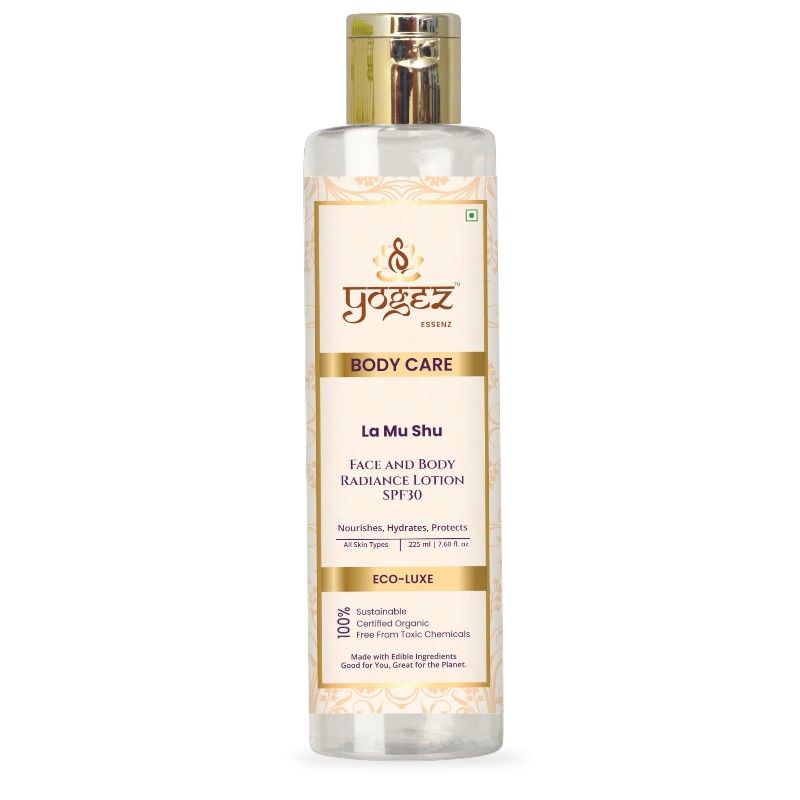
YOGEZ Organic Face And Body Radiance Lotion SPF 30

YOGEZ Organic Face And Body Radiance Lotion SPF 30
Nykaa E retail limited
yogez-organic-face-and-body-radiance-lotion-spf-30
Moisturize
10085086658853
Morning or Evening?
How often will you use this product?
Notes


Highlights
WHAT IS IT?
Face and Body Radiance Lotion with 11 key ingredients
FEATURES
Broad-spectrum SPF 30 protection, hydration with natural oils and extracts, improves skin radiance and tone, soothes irritation, fast absorption, certified organic, FDA approved, vegan and cruelty-free, free from harmful chemicals
BEST FOR
sensitive
CHECKS
No parabens, sulfates, formaldehyde, phthalates, triclosan, synthetic fragrances, mineral oil, petrolatum, PEGs, oxybenzone, physical and organic sunscreens, HA/BHT, propylene glycol
Who Is It For?
What Does It Help With?
Sun Protection Hydration Skin Tone Clarity Soothing IrritationBudget
Mid-range ($30-$75)How To Use
Which routine should it be used in?
Instructions:
Key Information


What Nykaa E retail limited Says
Product Description:
La Mu Shu Face and Body Radiance Lotion SPF 30 provides broad-spectrum sun protection, hydration, and a radiant glow for face and body using natural hydrosols, botanical extracts, and essential oils. It absorbs quickly without heaviness, soothes irritation, enhances skin radiance, and is certified organic and FDA approved. Free from parabens, sulfates, synthetic fragrances, mineral oil, petrolatum, PEGs, oxybenzone, physical and organic sunscreens, and vegan and cruelty-free.
About the Brand:
Ingredients Overview
Ingredients List
aloe-vera-juice,rose-hydrosol,dm-water-infused-with-green-tea,cetearyl-alcohol,coconut-oil,vegetable-glycerin,squalane-from-olive-oil,red-raspberry-seed-oil,carrot-seed-oil,moringa-oil,sea-buckthorn-oil,inulin,lactobacillus-ferment,sensicare,lavender-essential-oil,geranium-essential-oil,peppermint-essential-oil,vitamin-e-from-sunflower-oil,phytic-acid
Key Ingredients
Aloe vera juice,Rose hydrosol,Green Tea,Red Raspberry Seed Oil,Carrot Seed Oil,Moringa Oil,Sea Buckthorn Oil,Vitamin E,Phytic Acid
Ingredients Details
Inulin
Common Name(s): Chicory inulin,polyfructose,fructan
CAS Number: 9005-80-5
DESCRIPTION
What It Does: Provides prebiotic microbiome feeding alongside humectant hydration from natural chicory fructan.
Why It's Used: The skin prebiotic — inulin selectively feeds bifidobacterium and lactobacillus beneficial skin bacteria, supporting a healthy skin microbiome that improves barrier function and reduces inflammatory skin conditions.
How It Works: Beta-2,1-fructosidic bonds provide selective fermentation by beneficial bacteria (bifidobacterium, lactobacillus) but not pathogens (s. aureus). prebiotic selectivity supports healthy microbiome composition. multiple hydroxyl groups provide humectant water binding. film-forming property provides hair detangling.
Typically Found In: Prebiotic skin care,microbiome-supporting products,natural conditioners
TECHNICAL DETAILS
Primary Category: Active ingredient – prebiotic polysaccharide
Secondary Functions: Tewl reduction,skin plumping
Application Areas:

Facial Skincare
Body Care
Hair Care

Beard Care
Color Cosmetics (Makeup)
Dietary/Oral Supplements
Typical Concentration Range: 0.5%–5%
SOURCING & ETHICS
Vegan Status: Yes – from cichorium intybus (chicory) root
Halal Status: Yes
Source Notes: Synthetic or naturally derived. excellent aqueous solubility.
SKIN COMPATIBILITY
Irritancy Rating: 1/5 – very low
Comedogenicity Rating: 0/5 – non-comedogenic
Sensitivity Concerns: Non-irritating; suitable for all skin types.
Safe for Sensitive Skin: Yes
SAFETY & COMPATIBILITY
Safety Profile: Excellent safety profile. ewg score: 1.
Works Well With: Ceramides,emollients,occlusives,glycerin,hyaluronic acid
Avoid Combining With: No significant incompatibilities
SCIENTIFIC NOTE
Inulin's prebiotic selectivity on skin microbiome mirrors its well-documented gut prebiotic activity: the beta-2,1-fructosidic bond can only be cleaved by inulinase enzymes present in bifidobacterium and lactobacillus but not in pathogenic bacteria lacking this enzyme. topical application provides selective nutrition that shifts microbiome composition toward beneficial bacteria — the cosmetic application of the same prebiotics science that transformed gut health understanding.
Last Verified: 2026-03-12
Primary Sources: Cosing database,callewaert et al. skin microbiome prebiotic study